
Ngarkat Conservation Park, SA
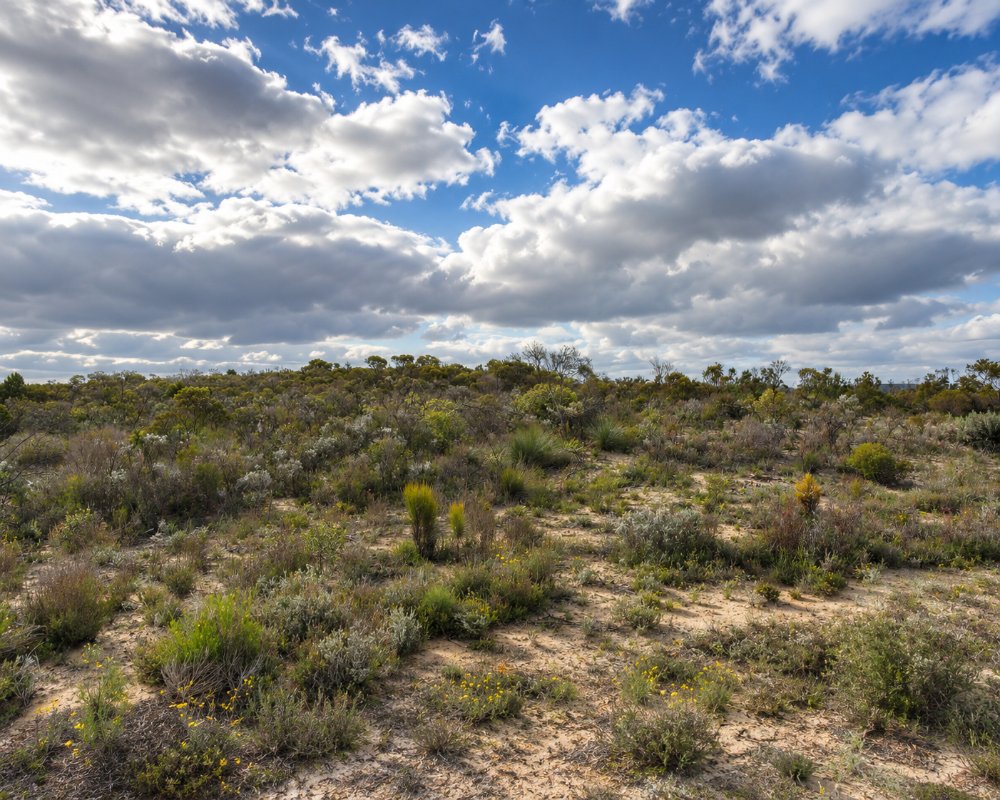
Ngarkat Conservation Park covers about 270,000 hectares of mallee, heath and sand dunes between the Mallee Highway and the Dukes Highway, running east to the Victorian border. It is the largest area of native vegetation left in the settled part of South Australia, about 200 kilometres from Adelaide.
The park takes its name from the Ngarkat people. It is dry, sandy country with no surface water apart from a few soaks and old wells, and almost all of it can be reached only by four-wheel drive. For those equipped for it, Ngarkat offers real solitude, big skies and one of the best known sand tracks in the state.
There is no mobile phone reception in or near the park, no drinking water and no fuel. Fill up and stock up at Pinnaroo, Lameroo, Tintinara, Keith or Bordertown before going in.
Known For
- The Border Track and other four-wheel drive routes
- Bush campgrounds in mallee and heath
- Malleefowl, orchids and spring wildflowers
Things To Do in Ngarkat
Pertendi Hut
The one part of the park open to ordinary cars is Pertendi Hut, off the sealed Ngarkat Highway between Pinnaroo and Bordertown. A short walking trail loops through the mallee from the campground, and it gives a fair taste of the country.
The Border Track
The track follows the fence along the Victorian border over a long series of soft dunes. Its northern section is one-way, from north to south, and is open only from 1 April to 31 October; the closure is sometimes extended in dry years. It is rated very difficult. Lower your tyre pressures, carry recovery gear and travel with another vehicle. The Centre Track is the alternative in summer.
Walks
Short walks lead to lookouts and soaks across the park: Mount Shaugh, the highest point, and Mount Rescue are each about two kilometres or less, Tyms Lookout is five kilometres and the Scorpion Springs loop is eight. Bucks Camp and Box Flat have ruins from sheep runs abandoned in the 1890s.
Wildlife and Wildflowers
Malleefowl build their mounds around Scorpion Springs, and emus, western grey kangaroos and pygmy possums live in the heath. More than 50 kinds of orchid have been recorded. August and September are best for flowers, and March and April are also pleasant. Summer is extremely hot.
Bees
Beekeepers have worked this country for generations, and hundreds of hive sites are leased in the park. Bees gather at any water in the warmer months.
Where To Stay
Camping is allowed only at the marked campgrounds and must be booked and paid for online, along with a vehicle entry fee, before you arrive. Pertendi Hut, with three sites, toilets and tables, is the only campground suited to two-wheel drives and the only one listed for caravans. Comet Bore can be reached by ordinary car in dry weather and takes tents and camper trailers.
The rest, including Pine Hut Soak, Box Flat, Bucks Camp, Rabbit Island Soak and the Border Track camps, are for four-wheel drives with tents or off-road campers. Facilities are minimal: a toilet at some, untreated water at one or two, no bins. Dogs, generators and chainsaws are not allowed, and fires are permitted only in season in the rings provided. Pinnaroo, Lameroo and Tintinara have caravan parks.
Eat & Drink
There is nothing in the park. Bring all food and at least several litres of water per person per day.
History
The Ngarkat people lived around the soaks and native wells of this country. Pastoralists tried to run sheep here from the 1870s but gave up within 20 years, beaten by rabbits, dingoes and poor feed. The park was proclaimed in 1979 and enlarged in 2004 when three neighbouring parks were added. Bushfires started by lightning burn large areas every few years.
Getting to Ngarkat
From Pinnaroo, take the Ngarkat Highway south for 28 kilometres to the Pertendi Hut area. From Lameroo, Baan Hill Road leads south to the park edge, and from Tintinara and Keith several gravel roads enter from the south-west. The park closes on days of catastrophic fire danger.
Experiences
- Eco Tourism
- Nature based
- Remote
Popular Activities
- Bush Walking
- Caravan and Camping
- National Park
- Wildlife
About Ngarkat Conservation Park
- Locality: Rural locality
- Ngarkat Conservation Park Postcode: 5302
- State: South Australia
- Region: Murray River Lakes and Coorong
- Latitude: -35.76304
- Longitude: 140.87685
- Elevation: 140m
- Timezone: Australia/Adelaide
