
Brisbane City Centre, QLD
Brisbane City Centre occupies a compact peninsula wrapped by a loop of the Brisbane River, the heart of the capital of Queensland. Sandstone buildings from the colonial era stand among glass towers, the main shopping street is a pedestrian mall, and the river is never more than a few blocks away, lined with gardens, ferry wharves and waterfront dining.
Known For
- Queen Street Mall and the heritage arcades
- City Hall, the Botanic Gardens and the riverside walk
- Howard Smith Wharves and the Queen’s Wharf precinct
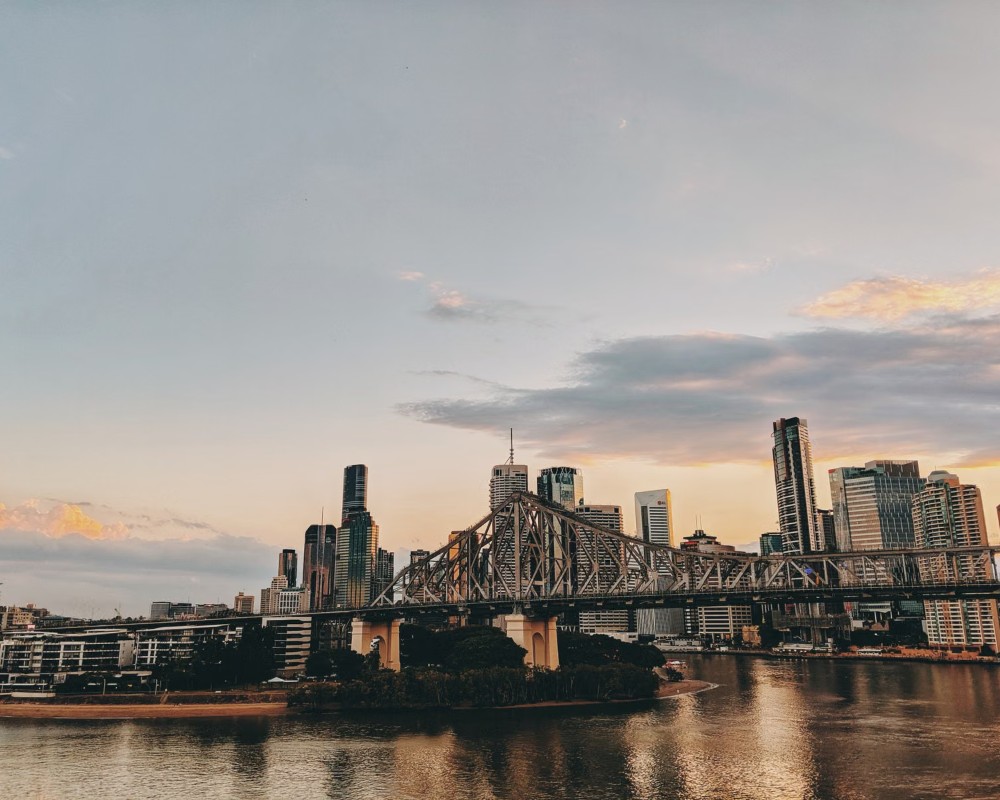
The centre is easy to understand. Streets named after queens and princesses run one way and those named after kings and princes run the other, with Queen Street at the middle. The river forms the boundary on three sides, crossed by a series of bridges to South Bank and Kangaroo Point, and the nightlife district of Fortitude Valley begins at the north-eastern edge.
With a warm climate and a growing list of things to do, the city centre is the natural base for a first visit to Brisbane. Most of it can be covered on foot, and the ferries make the river itself part of the experience.
Things To Do in Brisbane City Centre
Queen Street Mall and the Arcades
Queen Street Mall is the retail centre of Queensland, a pedestrian street of department stores, shopping centres and outdoor cafes with hundreds of shops trading seven days a week. Leading off it are the Brisbane Arcade of 1923, with its galleries of jewellers and designers, and a network of laneways. Burnett Lane and Albert Lane hide small bars and coffee spots that are easy to miss.
City Hall and King George Square
Brisbane City Hall, opened in 1930, is the grandest civic building in the state. Inside, the Museum of Brisbane tells the story of the city and runs free tours of the clock tower, reached by a vintage lift, with views over King George Square. The domed main auditorium hosts free concerts. A short walk away are Anzac Square and its Shrine of Remembrance, and the Gothic revival St John’s Cathedral.
City Botanic Gardens and Riverside
The City Botanic Gardens fill the tip of the peninsula, with avenues of fig, bunya and palm trees first planted in the 1850s, a mangrove boardwalk and riverside lawns. Beside them are Parliament House and Old Government House, both open to visitors. A riverside path leads from the gardens past the financial district towards the Story Bridge, and the Kangaroo Point Bridge, opened in 2024, gives walkers and cyclists a direct crossing to the cliffs opposite.
Howard Smith Wharves
Beneath the Story Bridge, a row of 1930s wharf sheds has been turned into one of the liveliest precincts in the city. Howard Smith Wharves has a brewery, restaurants, bars, a hotel and lawns facing the river, with the cliffs and the bridge lit above at night. From here the Riverwalk, a path built out over the water, continues to New Farm. The Story Bridge Adventure Climb takes guided groups to the top of the span.
Queen’s Wharf and the Heritage Precinct
Queen’s Wharf, which began opening in 2024, has remade the western side of the centre. The complex includes hotels, a casino, restaurants and the Sky Deck, a public viewing platform about 100 metres above the river. The Neville Bonner Bridge links it to South Bank on foot. Around it stand some of the finest nineteenth-century buildings in Brisbane, including the former Treasury and Land Administration buildings.
Roma Street Parkland
On the north-western edge of the centre, Roma Street Parkland covers 16 hectares of subtropical gardens, lakes and lawns on former railway yards. The Spectacle Garden is the showpiece, and there are barbecues, playgrounds and an amphitheatre.
Commissariat Store and William Street
The Commissariat Store on William Street, finished by convicts in 1829, is one of the two buildings left from the penal settlement. It now houses the museum of the Royal Historical Society of Queensland, with displays on the convict era and a section of the original stone walls. It sits a short walk from Queen’s Wharf, so it fits easily into a stroll along the heritage end of the centre.
Where To Stay
The city centre has the largest concentration of hotels in Queensland, across every price range.
At the top end, the W Brisbane and the hotels of the Queen’s Wharf precinct face the river and South Bank, while the Westin, the Sofitel above Central Station and the Hilton off Queen Street Mall are established five-star choices. Crystalbrook Vincent, at Howard Smith Wharves, sits directly under the Story Bridge.
Mid-range hotels and serviced apartments are plentiful around George, Ann and Mary streets, and many apartment towers offer kitchens and river views that suit families and longer stays. Backpacker hostels cluster near Roma Street station and along Upper Roma Street.
Weekend rates are often lower than midweek, when business travel fills the hotels. Prices rise for major events at the stadiums and during the Brisbane Festival in September.
The Star Grand, inside the Queen’s Wharf complex, has rooms and suites above the river with direct access to the casino, the Sky Deck and the restaurants of The Terrace; two more hotels in the precinct are still to open. Crystalbrook Vincent at Howard Smith Wharves has the Fiume rooftop bar and puts the brewery, the Riverwalk and the Story Bridge on the doorstep, which suits couples on a short break. For families, the apartment hotels around George, Mary and Margaret streets give kitchens, laundries and separate bedrooms, and several have pools. Budget travellers have the hostels near Roma Street station, a short walk from the Airtrain and the long-distance coach terminal.
Booking for a Friday or Saturday night is often cheaper than midweek, but rooms fill quickly when there is a Test match at the Gabba, a State of Origin game at Suncorp Stadium or a big concert. The city centre has no caravan or camping sites; the nearest is Newmarket Gardens Caravan Park at Ashgrove, about 5 km north-west, which has powered sites and cabins and is on bus routes into the city.
Eat & Drink
Dining in the centre follows the river. Howard Smith Wharves is the busiest precinct, with a brewery hall, Greek, Japanese, Cantonese and Italian restaurants and bars that spill onto the lawns. The Terrace at Queen’s Wharf has a line of restaurants with views across to South Bank, and the riverside near the financial district has long been home to some of the smartest dining rooms in the city.
Away from the water, the laneways reward exploration. Burnett Lane, the oldest in the city, has small bars, wine rooms and a much-loved cafe, and the streets around the mall have food courts, dumpling houses and espresso bars for a quick lunch. Rooftop bars on several hotels open in the late afternoon.
For pubs, the heritage hotels on George, Elizabeth and Ann streets serve counter meals and Queensland beer. Fortitude Valley, South Bank and Fish Lane are each a ten to fifteen minute walk for a wider night out.
The centre has more good places to eat than most visitors expect, and much of the best of it is on the river. Since 2024 the Queen’s Wharf precinct has added dozens of restaurants and bars to the western side, while Howard Smith Wharves holds the eastern end under the Story Bridge. In between, laneway bars, old banks turned into cocktail rooms and long-running pubs fill the blocks around Queen Street Mall. Book ahead for Friday and Saturday dinner at the better-known restaurants, as walk-in tables are scarce.
Howard Smith Wharves
The wharf sheds under the Story Bridge hold the biggest cluster of riverside dining in the city. Felons Brewing Co. brews on site and serves pub food in a hall with tables facing the water, with the larger Felons Barrel Hall beside it. Stanley serves Cantonese cooking in a two-storey heritage building, known for live seafood and Peking duck pancakes, with Stan’s Lounge upstairs for cocktails. Greca does Greek share plates, Yoko Dining serves Japanese dishes, and CIAO handles pasta. Mr Percival’s is an open-air bar on a deck over the river, and Fiume, on the roof of Crystalbrook Vincent, looks straight up at the bridge.
Queen’s Wharf and The Terrace
The new precinct has restaurants on several levels, most with views across the river to South Bank. Sokyo, on Level 2 of The Star Grand, is a Japanese fine-dining room. On Level 4, The Terrace holds Cucina Regina for Italian and Black Hide Steak and Seafood, which moved here from the old Treasury casino. Fat Noodle serves South-East Asian noodles, pho and laksa inside the casino and is for over-18s only. Aloria, up on the Sky Deck about 100 metres above the river, cooks over wood and suits a special night out. Check opening hours before you go, as some venues open only for dinner.
Restaurants in the business district
Away from the two big precincts, the business district has several dining rooms worth seeking out. Golden Avenue on Edward Street cooks Levantine food over charcoal and in wood ovens in a large room with retractable roofs. Opa Bar & Mezze on Eagle Street serves Greek share plates and chargrilled meats on a terrace above the river. Bar Miette on Queen Street does European-style bites and martinis on a terrace, a good choice for a light meal before a show.
Laneway and cocktail bars
The small bars are the centre’s strong suit. Death & Taxes, in a cavernous former warehouse on Burnett Lane, is a whisky bar with more than a thousand bottles. Antico, a few doors along in the same lane, pours Italian-inspired cocktails over several levels. The Gresham, in an old bank building, is known for rare whisky and old fashioneds, and Le Royale serves Champagne and classic cocktails in an old-world room. Milquetoast hides behind a garage door with wine, house cocktails and a long martini list, and The Boom Boom Room sits in the basement of a heritage bank building under Donna Chang, with sake flights and jazz and soul. For a pool and a view, the WET Deck at the W Brisbane overlooks the river.
Markets and quick bites
The Brisbane City Markets set up in Reddacliff Place, at the top of Queen Street Mall, each Wednesday, with fruit and vegetables, bread, flowers and food stalls for a city lunch. Food courts in the shopping centres off Queen Street Mall cover cheap and fast meals, and dumpling and noodle houses fill Elizabeth and Albert streets.
History
The river bend is known as Meanjin to the Turrbal and Yuggera peoples, the traditional custodians of the area. In 1825 a penal settlement was moved here from Redcliffe, and convicts built the first stone buildings, of which the windmill on Wickham Terrace and the Commissariat Store survive. The district opened to free settlers in 1842, and Brisbane became the capital of the new colony of Queensland in 1859.
The city has been shaped by floods, notably in 1893, 1974, 2011 and 2022, and by two events that changed its view of itself: World Expo 88 and the award of the 2032 Olympic and Paralympic Games.
Getting to Brisbane City Centre
Central and Roma Street stations are the hubs of the suburban rail network, and the Airtrain runs from Brisbane Airport to Central in about 20 minutes. Buses use the underground stations at King George Square and Queen Street, and Brisbane Metro services stop at King George Square and Roma Street.
CityCat ferries stop at Riverside, QUT Gardens Point and North Quay, and the small CityHopper ferry is free. Free loop buses circle the centre on weekdays. Parking is expensive, so visitors staying in the city rarely need a car.
Experiences
- City
- Cultural
- Food and Wine
- Historic/Heritage
Popular Activities
- City Sightseeing
- Cycling
- Food and Wine
- Nightlife
- Shopping
- Sightseeing
About Brisbane City Centre
- Locality: Suburb
- Brisbane City Centre Postcode: 4000
- State: Queensland
- Region: Brisbane
- Latitude: -27.46901
- Longitude: 153.02481
- Elevation: 19m
- Timezone: Australia/Brisbane
