
Carlton, VIC
Carlton begins at the northern edge of the city centre and is the suburb that taught Melbourne to drink coffee. Its main street, Lygon Street, has been the heart of the city’s Italian community since the 1950s, and its footpath tables, gelato bars and pasta restaurants are a local institution. Around it lie some of the finest Victorian terrace streets in Australia, the country’s first World Heritage listed building, and the state museum.
Known For
- Lygon Street, the home of Italian food and coffee in Melbourne
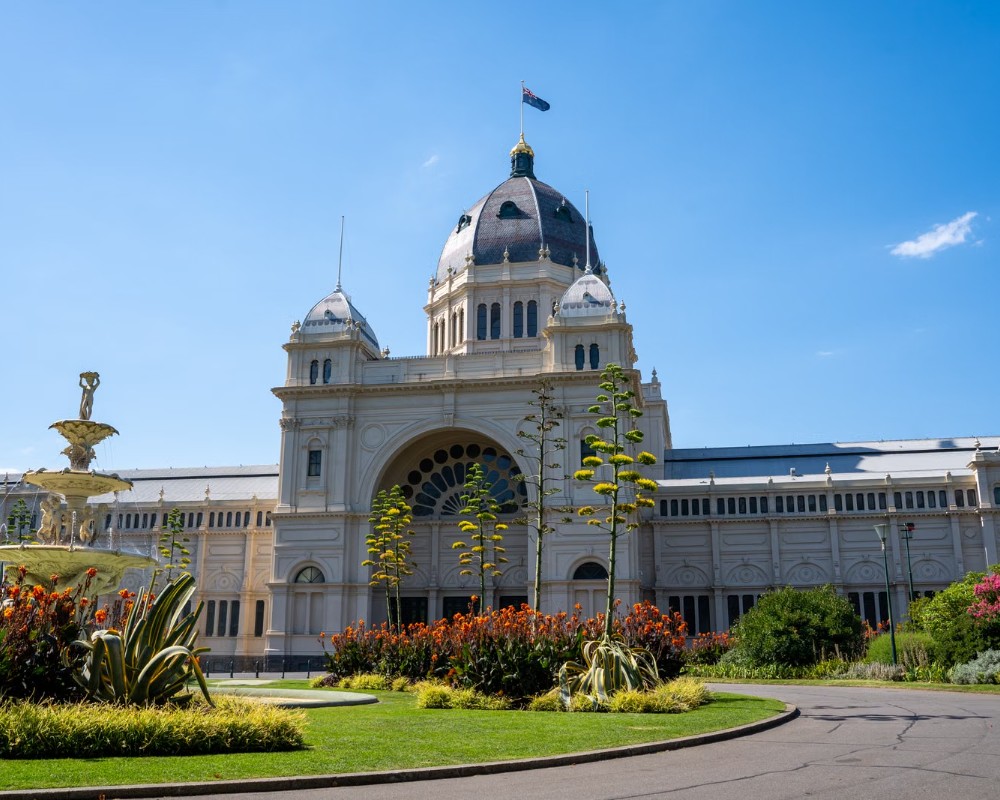
- The Royal Exhibition Building and Carlton Gardens
- Melbourne Museum and rows of Victorian terraces
Carlton has always been shaped by newcomers. Jewish families settled here early in the twentieth century, Italians after the Second World War, and students and academics from the neighbouring university ever since. The result is a suburb that feels both grand and lived-in, where a bookshop, a cinema and a wine bar are never more than a few doors apart.
It is an easy walk or a short tram ride from the middle of Melbourne, and makes a good half-day outing: a morning at the museum and the gardens, followed by a long lunch on Lygon Street.
History and Heritage
Carlton stands on the Country of the Wurundjeri Woi-wurrung people of the Kulin Nation. It was laid out by government surveyors in the early 1850s as a northern extension of the town, with wide streets and garden squares.
Terraces and Squares
The gold rush filled the new suburb quickly. Between the 1860s and the 1880s, builders put up street after street of terrace houses, from modest single-storey cottages to three-storey rows dripping with cast-iron lace. Drummond Street, Rathdowne Street and the squares around Murchison and Macarthur are among the best preserved Victorian streetscapes anywhere.
The Great Exhibition
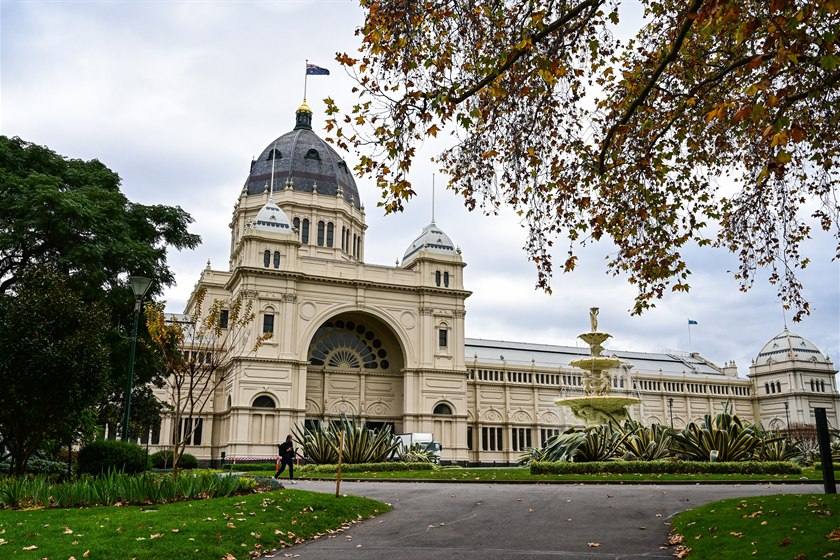
In 1880 Melbourne hosted an international exhibition to show the world how far the young colony had come. The Royal Exhibition Building was erected in Carlton Gardens for the occasion, and more than a million people visited. It was used again for the larger Centennial Exhibition of 1888. On 9 May 1901 the first Parliament of the new Commonwealth of Australia was opened beneath its dome.
Little Italy
By the early twentieth century Carlton was a crowded working-class district, home to a large Jewish community. After 1945, Italian migrants arrived in great numbers and opened cafes, grocers, tailors and restaurants along Lygon Street. They brought espresso machines, pizza and pasta to a city that had known little of any of them, and changed the way Melbourne ate.
Saved by its Residents
In the 1960s the government declared much of Carlton a slum and began demolishing terraces to build high-rise public housing. Residents, students and unions fought the plans street by street, and most of the suburb was saved. In the same years Carlton became the centre of an alternative theatre scene, based at La Mama and the Pram Factory, that launched a generation of Australian playwrights and actors.
Attractions in Carlton
Carlton’s main sights sit close together at its southern end, with Lygon Street running north from them.
Royal Exhibition Building and Carlton Gardens
The Royal Exhibition Building is one of the last great nineteenth century exhibition halls left in the world, and in 2004 it became the first building in Australia to be placed on the World Heritage List. Its dome was modelled on that of Florence Cathedral. The hall is still used for exhibitions, fairs and university exams, and guided tours, including a visit to the promenade around the dome, can be booked through Melbourne Museum. The surrounding gardens, with their fountains, lakes and avenues of plane trees, are a favourite spot for a picnic.
Melbourne Museum
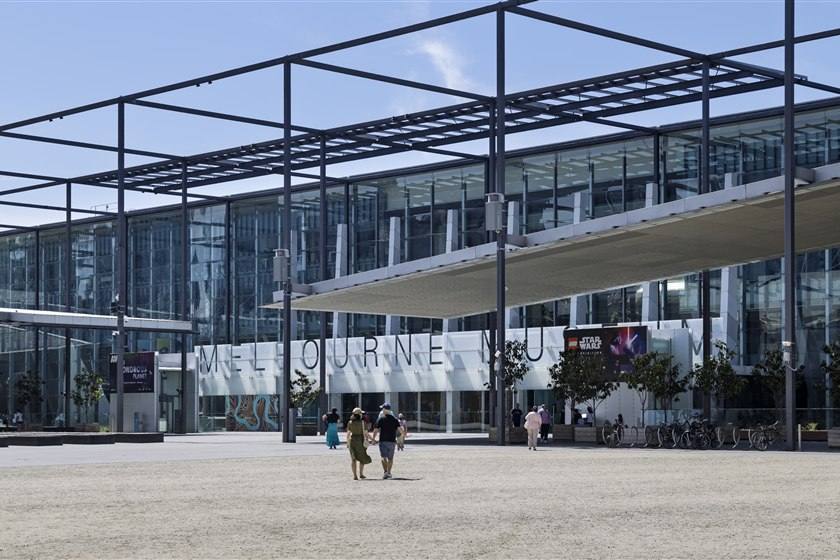
Behind the exhibition building, the museum is the largest in the southern hemisphere. Its highlights include a walk-through living rainforest, the Bunjilaka Aboriginal Cultural Centre, a remarkably complete Triceratops skeleton, and the preserved body of the racehorse Phar Lap, the most popular exhibit in the building. There is a large children’s gallery, and an IMAX cinema next door.
Lygon Street
The street is busiest between Queensberry and Elgin streets, where restaurants, cafes and gelaterias stand shoulder to shoulder and waiters call to passers-by. It is unashamedly touristy in parts, but there is real quality among the red-sauce classics. Look for Readings, one of the best independent bookshops in the country, the arthouse Cinema Nova, and King and Godfree, a landmark corner building that housed an Italian grocer from the 1880s until 2024 and now holds restaurants and bars. On weekend evenings, expensive cars cruise slowly up and down, a local ritual in itself.
Theatre and the Arts
La Mama, in a tiny former factory on Faraday Street, has been presenting new Australian plays since 1967 and was rebuilt after a fire in 2018. Trades Hall, on the corner of Lygon and Victoria streets, is one of the oldest trade union buildings in the world and now also hosts comedy and theatre, particularly during the comedy and fringe festivals.
Terrace Streets
To appreciate the architecture, walk a few blocks either side of Lygon Street. Drummond Street has some of the grandest terraces, and the streets north of Carlton Gardens are lined with plane trees and iron-laced verandahs.
Where To Stay
Carlton has fewer hotels than the city centre, but it is a pleasant and well-connected base, especially for anyone visiting the university or the nearby hospitals.
Zagame’s House, on Lygon Street, is a stylish boutique hotel with bold, dark interiors and is the most distinctive place to stay in the suburb. Elsewhere there are several mid-range hotels and motels on the main roads, and a good number of serviced apartments.
Budget travellers will find hostels and student-style accommodation around the edges of the suburb. The hotels of the city centre are only a tram stop or two away.
Zagame’s House is at 66 Lygon Street, near the city end of the strip. It has 97 rooms, its own wine bar and restaurant, the Lord Lygon, and a coffee shop, Zagame Bros Coffee Co, and it welcomes dogs. Crowne Plaza Melbourne Carlton opened in 2026 at 701 Swanston Street, on Lincoln Square, in the fully refurbished former Rydges on Swanston. It has 107 rooms, a restaurant and bar called Fico and meeting rooms, and the university and the Parkville hospitals are a short walk away.
On the far side of Carlton Gardens, at 116 Nicholson Street in Fitzroy, the Nunnery is a backpacker hostel in a three-storey building that was once the home of the Daughters of Charity. It has dorms, private rooms, a shared kitchen and a lounge, and its separate two-storey guesthouse can be booked whole by families and groups.
Hotel parking in Carlton is limited, so ask about it when you book if you are coming by car. There is no caravan park in the inner suburbs. The nearest is BIG4 Melbourne Holiday Park at 265 Elizabeth Street, Coburg, about 8 km north, with powered and ensuite sites, cabins and villas, and trams into the city close by.
Eat & Drink
People come to Carlton to eat, and the choice is wide.
For coffee and cake, Brunetti is a Carlton landmark, a vast and noisy Italian pasticceria with long glass counters of pastries. DOC is known for its Naples-style pizza and its mozzarella bar, and Tiamo is a much-loved, no-frills trattoria that has fed generations of students. Pidapipo makes some of the best gelato in the city.
Jimmy Watson’s, a wine bar founded in 1935 and housed in a whitewashed building by architect Robin Boyd, is a piece of Melbourne history and gives its name to the country’s best known red wine trophy. Above King and Godfree, a rooftop bar looks over the terraces to the city skyline. Away from Lygon Street, Abla’s has been serving Lebanese banquets on Elgin Street since the 1970s.
Restaurants change often, so check before making a special trip.
The King and Godfree building came back to life in 2026. Garfield, the first of its new venues, opened in February with pizza bases stretched in the Tokyo style, soft serve and takeaway cocktails. Delmonte followed in July on the corner of Faraday Street, cooking northern Italian food, from salumi and wood-fired focaccia to house-made tagliatelle bolognese, with a Piedmont-heavy list of about 300 wines and gelato sundaes from Pidapipo next door. A basement cocktail and music bar is still to come.
Jimmy Watson’s has a courtyard for long lunches and a rooftop bar, Wolf’s Lair. A block west of Lygon Street, the Lincoln, on the corner of Cardigan and Queensberry streets, has been a pub since 1854 and is known for its bistro and its Sunday roast beef.
The southern end of Rathdowne Street has become a dining strip of its own. Bar Bellamy, at number 164, is a neighbourhood bar known for its Martinis and changing European menu, and its casual sibling, Melitta Next Door, cooks Mediterranean barbecue to DJ sets. Fenton, at 158, serves big breakfasts and harvest dinners using produce from its owners’ Gippsland farm, Cordelia, at 180, has a seafood menu that changes with the catch, and further north Capitano, at 421, does deep-dish pizza squares with an almost all-Italian wine list.
Small supermarkets and grocers are dotted around Lygon Street. Fuel stations are scarce in the inner suburbs, so fill up before you drive in.
Getting to Carlton
Carlton is about fifteen minutes on foot from the centre of the city. Walk north up Swanston Street or Russell Street, which becomes Lygon Street once it crosses Victoria Street.
Trams run along Swanston Street past the university, and along Nicholson Street past the museum and the exhibition building. The Free Tram Zone ends at Victoria Street, so you will need a myki card for most of Carlton. The closest train stations are Melbourne Central and the new Parkville Station on the Metro Tunnel.
Street parking is limited and metered. There is a large car park beneath the museum.
Experiences
- City
- Cultural
- Food and Wine
- Historic/Heritage
Popular Activities
- City Sightseeing
- Cycling
- Food and Wine
- Nightlife
- Shopping
