
Melbourne Chinatown, VIC
Melbourne’s Chinatown runs along Little Bourke Street in the centre of the city, a narrow strip of red archways, lanterns, restaurants and nineteenth century brick buildings squeezed between the office towers. It dates from the gold rush of the 1850s and is regarded as the oldest Chinatown in Australia and the longest continuously settled Chinese quarter in the Western world.
Known For
- The oldest Chinatown in Australia, dating from the 1850s gold rush
- Dumplings, yum cha and late-night Cantonese restaurants
- The Chinese Museum and the Chinese New Year dragon parade
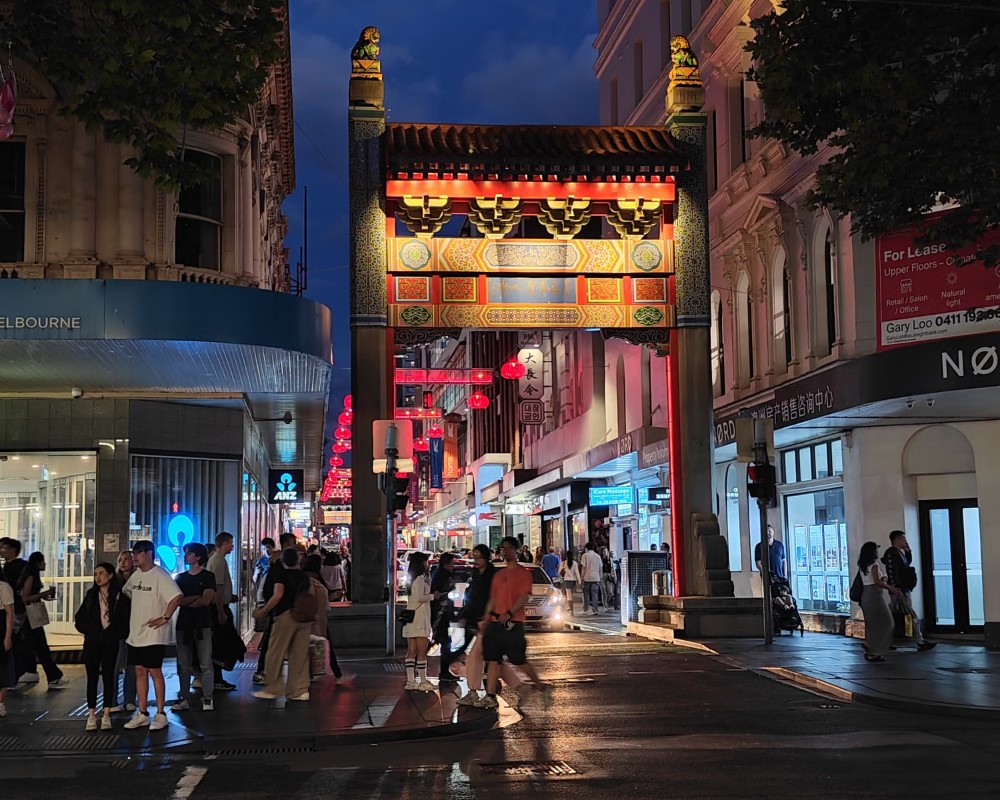
The precinct is small. Its core is the three blocks of Little Bourke Street between Swanston Street and Spring Street, together with the lanes that branch off on either side. You can walk its length in ten minutes, though few people manage to do so without stopping to eat.
What sets it apart from many Chinatowns is its age and its setting. The street is one of the little streets of the original city grid, only ten metres wide, and many of its buildings were put up by Chinese merchants and societies in the second half of the 1800s. It is part of the fabric of central Melbourne rather than a district apart, and it is busy from lunch until the early hours.
History and Heritage
Little Bourke Street lies on the Country of the Wurundjeri Woi-wurrung people of the Kulin Nation. The story of its Chinese community begins soon after the founding of the city.
The Gold Rush
When gold was discovered in Victoria in 1851, the news travelled quickly to southern China. Tens of thousands of men, most of them from villages in Guangdong province, sailed for what they called New Gold Mountain. Many landed in Melbourne and needed somewhere to stay, buy supplies and find news from home before walking to the diggings. Little Bourke Street, then a cheap and unfashionable back street, became that place. Lodging houses, provision stores and gambling rooms opened, and by the end of the decade it was an established Chinese quarter.
Societies, Merchants and Furniture Makers
As the easy gold ran out, many miners returned to the city. District societies, formed by men from the same part of China, built clubhouses that offered lodging, help in hard times and a place to worship. The Num Pon Soon Society building, completed in 1861, still stands and is among the oldest Chinese society buildings in the country. Chinese merchants controlled much of the fruit trade, especially bananas, and by the 1880s the street and its lanes were also crowded with cabinet makers, laundries, herbalists and tea merchants. A Chinese mission church, opened in 1872, survives on the street.
Hard Times
Anti-Chinese feeling grew through the late nineteenth century and was written into law with the Immigration Restriction Act of 1901, the foundation of the White Australia policy. With new arrivals all but stopped and few women among the original settlers, the community aged and shrank. By the middle of the twentieth century Chinatown had dwindled to a handful of businesses and many of its buildings had been taken over for other uses.
Revival
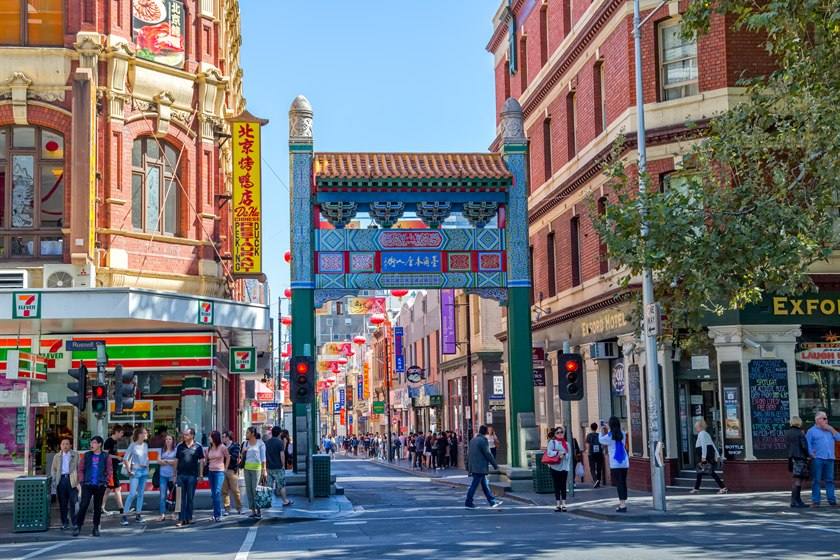
The easing and eventual end of the White Australia policy brought new migrants from Hong Kong, Malaysia, Singapore, Vietnam and later mainland China. In the 1970s, local business leaders and the city council set out to revive Little Bourke Street as a destination. The ceremonial archways that span the street were erected in 1976, restaurants multiplied, and the Chinese Museum opened in 1985. Chinatown is now one of the most visited parts of the city and remains a centre of community life.
Attractions in Chinatown
Chinatown is best explored slowly and on foot, looking up at the facades and ducking into the lanes.
Little Bourke Street and its Archways
Red and gold gateways mark each block of the street, and strings of lanterns hang overhead. Behind the restaurant signs are some fine Victorian buildings, including former warehouses, society halls and shops with Chinese characters still visible in the brickwork. The street is at its most atmospheric after dark, when the neon comes on and the footpaths fill.
Chinese Museum
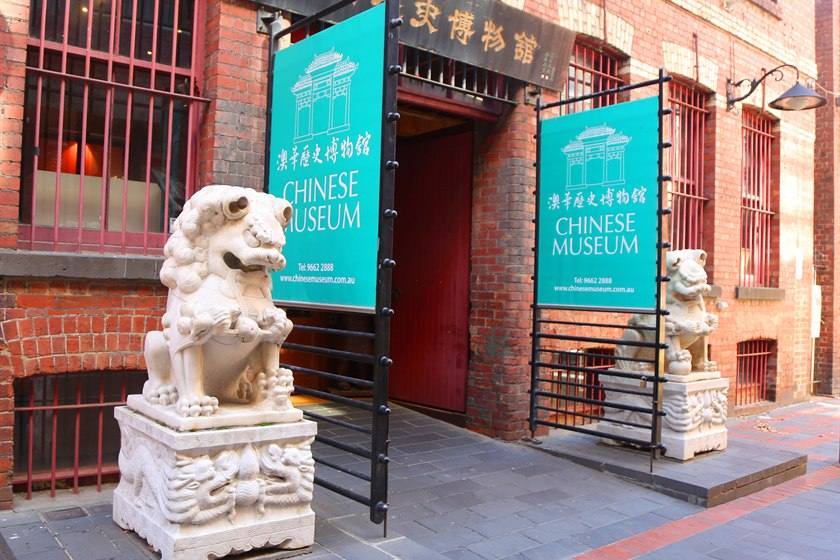
The Museum of Chinese Australian History occupies a former warehouse in Cohen Place, just off Little Bourke Street. Over several floors it tells the story of Chinese people in Australia from the gold rush to the present, with a recreated goldfields scene in the basement. Its most famous residents are the processional dragons, among them Dai Loong and the enormous Millennium Dragon, which is more than a hundred metres long and needs a large team to carry it through the streets. The Facing Heaven Archway outside the museum is modelled on a gateway in Nanjing.
The Lanes
Much of the character of Chinatown lies in its side lanes. Market Lane and Celestial Avenue are lined with restaurants. Heffernan Lane, Corrs Lane and Tattersalls Lane mix eateries with small bars and street art. Some lanes are barely wide enough for a delivery van, and several lead to places you would never find by accident.
Chinese New Year
The biggest event of the year is the Chinese New Year festival, held in late January or February. Little Bourke Street is closed to traffic for stalls, performances, firecrackers and lion dances, and the highlight is the dragon parade, when the great dragon from the museum is woken and carried through the streets. Smaller celebrations mark the Mid-Autumn Festival later in the year.
Theatres and Gardens
Chinatown backs onto the East End theatre district. Her Majesty’s Theatre and the Comedy Theatre are on Exhibition Street, and the Princess Theatre is a block away on Spring Street, which makes the area popular for a meal before a show. At the Spring Street end, the small Tianjin Garden, a gift from the Chinese sister city of Melbourne, offers a quiet place to sit beside a traditional gateway and stone lions.
Where To Stay
There are few hotels on Little Bourke Street itself, but Chinatown is surrounded by them, and staying nearby puts you within a few minutes’ walk of the restaurants, the theatres and the main shopping streets.
Close to the eastern end, the Grand Hyatt and the Sofitel Melbourne on Collins are large luxury hotels, and The Hotel Windsor on Spring Street is the grand old lady of the city. QT Melbourne, on Russell Street, is a stylish design hotel just south of the precinct.
For mid-range stays, The Victoria Hotel on Little Collins Street has been operating since 1880 and is well placed and reasonably priced, and there are serviced apartments and chain hotels on Little Bourke, Lonsdale and Exhibition streets. Rooms facing the lanes can be noisy late at night, especially at weekends, so ask for a higher floor if you are a light sleeper.
Eat & Drink
Food is the main reason to come, and the range runs from cheap plates of dumplings to one of the most celebrated Chinese restaurants in the country.
Flower Drum, upstairs in Market Lane, has been serving refined Cantonese food since 1975 and is famous for its Peking duck and its formal, old-school service. It is expensive and needs to be booked well ahead. At the other end of the scale, Supper Inn on Celestial Avenue has fed late-night diners for decades with congee, roast meats and seafood until the small hours.
Dumplings are a Chinatown staple. HuTong Dumpling Bar, opposite Flower Drum, is known for its soup-filled xiao long bao, made in an open kitchen. Shanghai Village is a cheap, cheerful and chaotic favourite with students, and ShanDong MaMa, in an arcade off Bourke Street, specialises in fish dumplings.
Yum cha is served at several large restaurants at lunchtime, particularly on weekends, when queues are common. The precinct also has Sichuan hotpot, Malaysian, Japanese, Korean barbecue and Thai restaurants, along with bubble tea shops and bakeries.
For a drink, Section 8 is an open-air bar built from shipping containers and pallets in Tattersalls Lane, and Solace, a cocktail and electronic music bar at the end of graffiti-covered Croft Alley, has replaced The Croft Institute, which was fitted out like a science laboratory. Restaurants here open and close often, so check before making a special trip.
Getting to Chinatown
Chinatown is in the middle of the city and easy to reach. Trams run along Swanston Street and Bourke Street, one block away, and all travel within the city centre is free. Get off at the Bourke Street Mall or Russell Street stops and walk north to Little Bourke Street.
By train, Parliament Station is at the eastern end of the precinct and Melbourne Central is two blocks from the western end. From Flinders Street Station it is a ten minute walk up Swanston Street.
Little Bourke Street is narrow and often congested, so driving is not recommended. If you must, there are several commercial car parks on Lonsdale Street and Little Bourke Street, some with cheaper evening rates.
Experiences
- City
- Cultural
- Food and Wine
- Historic/Heritage
Popular Activities
- City Sightseeing
- Food and Wine
- Nightlife
- Shopping
