
Hallett Cove, SA
Hallett Cove holds one of the most important geological sites in Australia, 22 kilometres south of the centre of Adelaide and a few minutes’ walk from a suburban railway station. In the conservation park above the beach, smooth rock pavements carry the scratches of a glacier that ground across this land about 280 million years ago, when Australia lay close to the South Pole. Add a striking eroded amphitheatre, a clifftop boardwalk and a quiet cove, and it makes an excellent half-day out.
Known For
- Glacial pavements recognised around the world
- The Sugarloaf and its coloured amphitheatre
- The boardwalk along the cliffs to Marino
The suburb covers the hills behind the cove and is mostly modern housing. The conservation park takes up the northern headland, and south of it a small beach of sand and shingle curves around to the mouth of Waterfall Creek.
This is a place for walking shoes more than bathers. Take water, a hat and a camera, and allow time to read the signs, which explain the story in the rocks clearly.
Things To Do in Hallett Cove
Hallett Cove Conservation Park
A signed interpretive trail of about two kilometres loops through the park, mostly on boardwalk, with stairs in places. It passes the polished glacial pavement on the clifftop at Black Cliff, where grooves show the direction the ice moved, and large boulders that the glacier carried from as far away as the Victor Harbor district. Entry is free and the walk takes about an hour.
The Sugarloaf and Amphitheatre
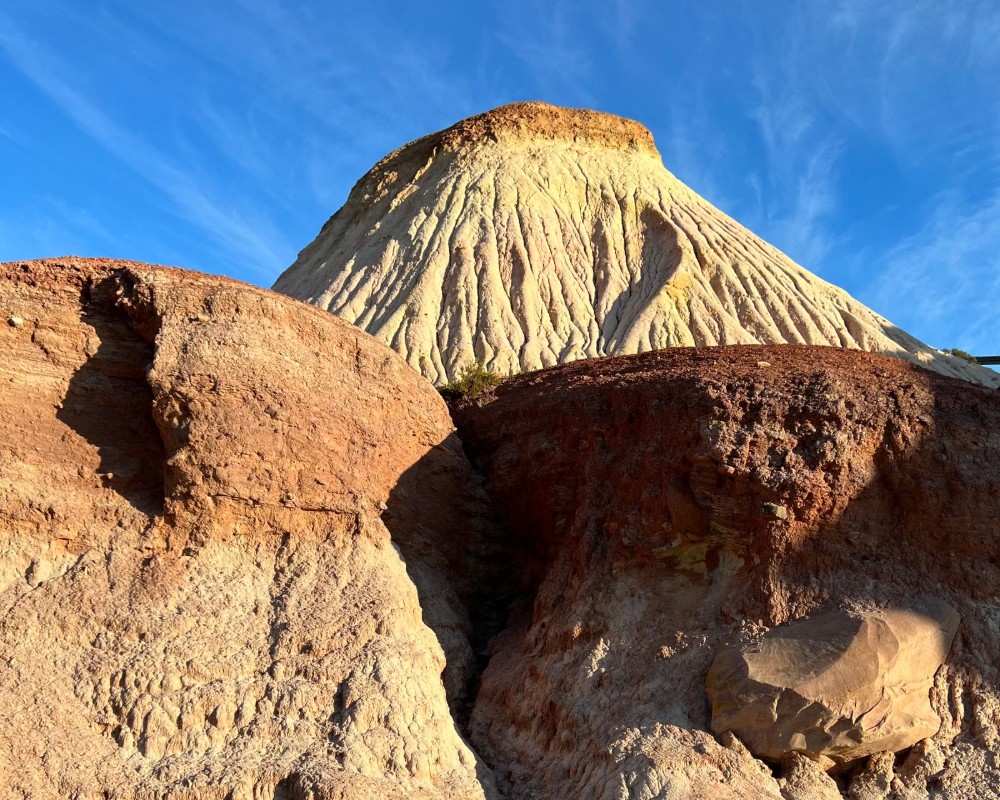
In the middle of the park, rain has carved soft sediments into a natural bowl banded in white, cream and deep red. At its centre stands the Sugarloaf, a cone of pale sand and clay laid down in a lake fed by the melting glacier. Late afternoon light brings out the colours.
Coastal Walkway to Marino
From the northern edge of the park a boardwalk follows the cliffs north for about seven kilometres to Marino Rocks. It climbs in and out of gullies on long flights of steps and crosses two suspension bridges opened in 2024. The views over Gulf St Vincent are superb. Trains from Marino Rocks bring you back.
Hallett Cove Beach
The cove has a mix of sand and smooth stones and is better for rock pooling, snorkelling on calm days and watching the sunset than for long swims. A foreshore reserve has lawns, a playground and barbecues.
Sunset from the Headland
The lookouts on Black Cliff face west across the gulf. On clear evenings the low hills of Yorke Peninsula show on the horizon.
Glenthorne National Park
Five minutes inland at O’Halloran Hill, Glenthorne National Park is the newest national park in Adelaide, with a very large nature playground, easy walking trails and views over the gulf.
Where To Stay
Hallett Cove is a residential suburb with almost no visitor accommodation other than private holiday rentals, some with fine sea views.
Most people visit for the day from the city or from Glenelg, 20 minutes north. The nearest holiday parks are at Kingston Park, near Brighton, and at Christies Beach to the south.
Eat & Drink
The Boatshed Cafe on the foreshore, beside the southern entrance to the park, is the place for breakfast, lunch or coffee with a view of the cove, and it is busy at weekends. The surf lifesaving club opens for meals on some evenings.
The shopping centre near the top of the hill has a tavern, takeaway shops and supermarkets for picnic supplies.
History
Kaurna people camped here for thousands of years, and more than 1,700 stone tools have been collected from the area. The cove is named after John Hallett, a settler who came across it in 1837 while looking for stray stock.
In 1875 the geologist Ralph Tate recognised the scratched rocks as the work of ice, one of the first proofs of an ancient ice age in Australia. When housing threatened the site in the 1960s a long public campaign followed, and the conservation park was declared in 1976.
Getting to Hallett Cove
Seaford line trains from Adelaide Railway Station take about 35 minutes. Get off at Hallett Cove station for the northern end of the park, or at Hallett Cove Beach station for the beach and cafe; each is a ten minute walk. By car, allow 35 to 40 minutes from the city via Brighton Road or the Southern Expressway.
Experiences
- Environmental
- Nature based
Popular Activities
- Beach
- Bush Walking
- National Park
- Sightseeing
About Hallett Cove
- Locality: Suburb
- Hallett Cove Postcode: 5158
- State: South Australia
- Region: Adelaide
- Latitude: -35.07704
- Longitude: 138.51803
- Elevation: 126m
- Timezone: Australia/Adelaide
