
Castlemaine, VIC
Castlemaine is a lively, creative town of about 7,500 people in the Mount Alexander hills, about 123 km north-west of Melbourne and 39 km south of Bendigo. It grew from the richest shallow goldfield in the world, the Mount Alexander diggings of the 1850s, and its streets are still lined with handsome gold-rush buildings, from the colonnaded Market Building to the old hotels and banks of Barker and Mostyn streets.
Today it is known as one of Victoria’s most creative country towns, home to artists, musicians and makers, with an excellent art museum, a historic theatre, a converted woollen mill full of small businesses and some of the best cafes and restaurants in the Goldfields. The forests and old diggings of the Castlemaine Diggings National Heritage Park start at the edge of town.
Known For
- The Theatre Royal, art and live music
- The Mill, markets and a great food scene
- Gold-rush heritage and the steam train to Maldon
Things To Do in Castlemaine
Castlemaine Art Museum
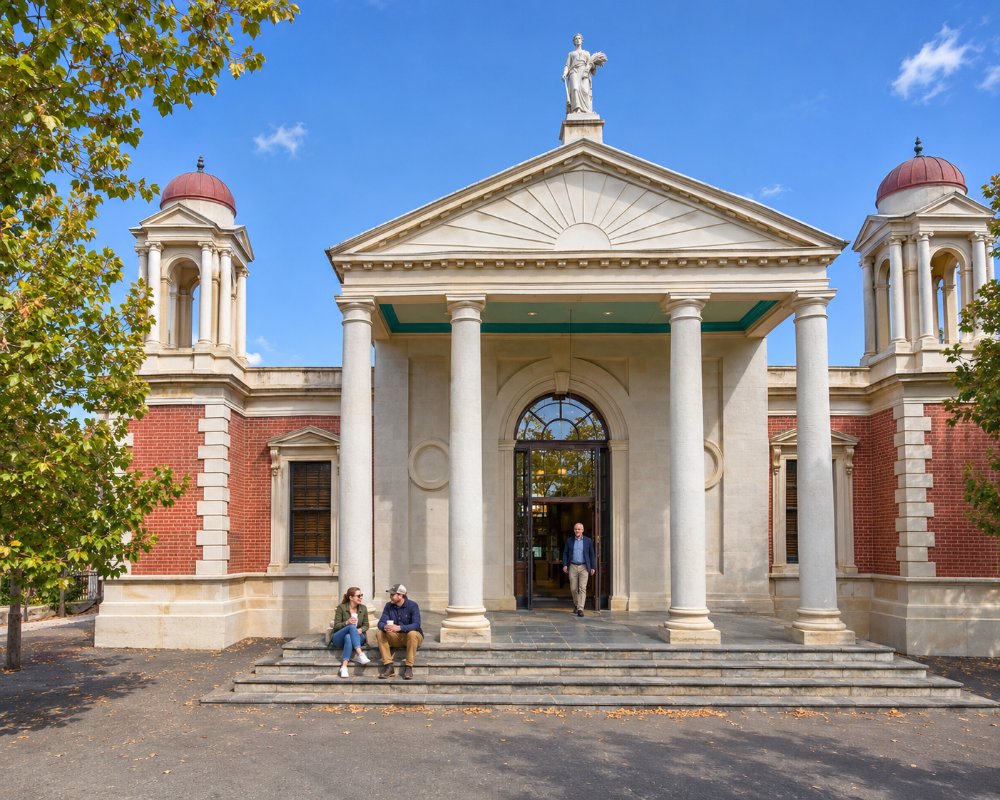
The Castlemaine Art Museum, in a 1931 Art Deco building on Lyttleton Street, holds more than 2,000 artworks, with a fine collection of Australian art and a historical museum in the basement. Entry is free and it opens from Thursday to Sunday. A redevelopment of the building has been funded, so check for any closures.
Theatre Royal
The Theatre Royal on Hargraves Street opened in 1856 and is said to be the oldest continuously operating theatre on mainland Australia. It hosts gigs, films and comedy most weeks, with pizza served inside.
The Mill
The Mill, a woollen mill of 1875 on Walker Street, has been converted into a precinct of more than 40 businesses, including the Shedshaker Brewing taproom with live music, a coffee house, a vintage bazaar, antique dealers and makers’ studios. It is opposite the Botanical Gardens.
Botanical Gardens and Buda
The Castlemaine Botanical Gardens, laid out from 1860, are among the finest in regional Victoria, with a lake, old elms and oaks and a heritage fernery. Buda, a historic home on Hunter Street lived in by the Leviny family from 1863 to 1981, has a beautiful garden and original furnishings.
Victorian Goldfields Railway
Steam and heritage diesel trains of the Victorian Goldfields Railway run from Castlemaine to Maldon, usually on Wednesdays and Sundays, with extra trains in school holidays. The trip through the box-ironbark forest takes about 45 minutes.
Markets
The Wesley Hill Market, held every Saturday morning on the Pyrenees Highway, is a local institution, with produce, plants and secondhand goods. The 1862 Market Building in the town centre is now the visitor centre.
Castlemaine State Festival
The Castlemaine State Festival, one of Victoria’s leading arts festivals, is held every second March; it celebrated its 50th anniversary in 2026, and the next is due in March 2028. The Castlemaine Documentary Festival runs in June.
The Diggings and the Goldfields Track
The Castlemaine Diggings National Heritage Park surrounds the town, with walks to the Garfield Water Wheel, Eureka Reef, Specimen Gully, where gold was first found in 1851, and the Pennyweight Flat children’s cemetery. The Goldfields Track, a long walking and riding trail between Ballarat and Bendigo, passes through.
Where To Stay
Castlemaine has heritage B&Bs such as the Midland Hotel, a former coffee palace of 1879, the boutique Northern Arts Hotel, and motels including the Albion Hotel Motel and Campbell Street Motor Lodge. Book ahead for festival and long weekends.
For caravans and campers, the BIG4 Castlemaine Gardens Holiday Park sits beside the Botanical Gardens, and the Castlemaine Central Cabin and Van Park is on Barker Street. There are free bush camps in the national heritage park at Vaughan Springs.
Temperance House on Mostyn Street, an 1855 building revived as a guesthouse, has four suites, a shared parlour and library, and its own dining room and bar. The Midland Hotel has only three bedrooms and one suite, with a two-night minimum, and Bar Midland and the Maurocco cocktail bar are downstairs. The Northern Arts Hotel on Barker Street is an arts-minded guesthouse that runs music, film and theatre nights in its Coolroom. In Chewton, 5 km east, the Red Hill Hotel lets a self-contained apartment for up to four behind the pub.
The BIG4 Castlemaine Gardens Holiday Park has glamping tents, villas (one of them accessible), cabins and pet-friendly powered and unpowered sites, and The Mill is a five-minute walk away. The Castlemaine Central Cabin and Van Park, near the station, has ensuite cabins, a pool and a coin laundry. For free bush camping, Chokem Flat on Fryers Creek and Warburtons Bridge on the Loddon are in the national heritage park south of town, and the Leanganook Camping Area on Mount Alexander has flush toilets. The nearest public dump point is on Bridge Street in Harcourt, beside the swimming pool, about 9 km north.
Eat & Drink
Castlemaine punches well above its size for food and drink.
Restaurants
Bar Midland is a small bar and restaurant serving Victorian produce and listed in the Good Food Guide, Origini serves northern Italian food in a courtyard on Barker Street, and Wild cooks in the old fire station.
Cafes and Bakeries
Johnny Baker is famous for its pastries and bread, and Saffs, Togs Place, Lazy Bones and Tortoise Espresso are favourite cafes. Superhero does banh mi at lunchtime.
Pubs and Breweries
Shedshaker Brewing at The Mill and Love Shack Brewing pour local beers, and the Railway Hotel and the Bridge Hotel serve pub meals.
Castlemaine’s food and drink sits in a few clusters: Templeton Street opposite the station, Hargraves Street around the Theatre Royal, the main shopping streets of Barker and Mostyn, and The Mill on Walker Street, where a brewery, a winery and a coffee house share the old woollen mill. Many of the best kitchens open only from Thursday or Friday to Sunday, so mid-week dinners take some planning, and booking is wise on weekends. Two farmers’ markets, the orchards of Harcourt and the small wineries of the Mount Alexander district keep local produce on most menus.
Restaurants and Dining Rooms
Bar Midland, in the 1879 Midland Hotel on Templeton Street, is a hatted dining room that builds its set menus around organic, biodynamic and regeneratively farmed Victorian produce, with dinner on Friday and Saturday and lunch on weekends. Mrs Finch is a newer farm-to-table chophouse that serves ethically reared meat from Goldfields growers. Table Records at 16 Hargraves Street is a bar, bistro and independent record shop in one, open from Thursday to Sunday. The bistro at Boomtown, in The Mill, writes a new share-plate menu every week, and the dining room at Temperance House on Mostyn Street suits a quieter evening. Klua Sathorn on Barker Street cooks Thai food to eat in or take away.
Cafes and Bakeries
Johnny Baker now has two shops, Downtown on Forest Street and Uptown behind the Northern Arts Hotel on Barker Street, and its croissants and pastries often sell out well before closing time. Das Kaffeehaus is the coffee house inside The Mill and opens every day. Saint Florian on Templeton Street is a licensed weekday cafe, Blackbird on Barker Street opens from Wednesday to Sunday, and Maine Foodstore, also on Barker Street, is an early weekday stop for coffee and breakfast. Green Folly, a cafe inside a plant nursery on Duke Street, and Taste Kitchen on Mostyn Street round out the daytime choices.
Pubs and Bars
The Railway Hotel on Gingell Street has a cosy bistro, a kids’ menu and craft beers and ciders on tap; it is closed on Wednesdays. The Bridge Hotel on Walker Street, across from The Mill, is one of the town’s main live music rooms, with regular gigs by touring and local acts. Love Shack Public Bar and Brewery on Hargraves Street brews its own pale ale, IPA and lager and serves a pub menu built around burgers. Next door, the Theatre Royal makes slow-fermented, semi-sourdough pizza from Tuesday to Sunday, to eat in or take away. The Maurocco Bar at the Midland Hotel is a cocktail bar with live music, and The Albion on Duke Street, beside the Wesley Hill Market, is a historic hotel with a bar and bistro.
Breweries, Wineries and Cideries
The Shedshaker Brewing taproom at The Mill opens from Tuesday to Sunday and pours a core range from a hazy pale ale to an espresso lager, plus small-batch releases. Boomtown Winery and Bistro, a few doors along at The Mill, makes wine from local vineyards and runs a cellar door from Thursday to Sunday with tastings, snacks and bottle sales. Grafting Cellars pours wines from the Heathcote, Macedon and Pyrenees regions, and Gornelly’s on Barker Street is a cafe and wine bar that stays open into the evening from Friday to Monday. Harcourt, about 10 minutes north, has cideries and the Harcourt Valley, Blackjack and Bress cellar doors.
Markets and Takeaway
The Castlemaine Farmers’ Market runs on the first Sunday morning of most months at the Western Reserve, and a weekly farmers’ market is held every Wednesday afternoon at Camp Reserve on Forest Street. For a quick meal, McShanag’s Pie Shop on Barker Street bakes pies on weekdays and Saturday mornings, and Papa’s and Blue Sea, both on Mostyn Street, fry fish and chips. Lunchbox Sushi on Mostyn Street makes sushi for lunch from Tuesday to Saturday, and the Castlemaine Noodle Bar on Barker Street stays open for dinner every night.
History
This is Dja Dja Wurrung Country. On 20 July 1851 the shepherd Christopher Thomas Peters found gold at Specimen Gully, just north of the town, and the Mount Alexander diggings soon drew tens of thousands of people; in December 1851 the Monster Meeting at nearby Chewton protested the miners’ licence fee.
In 1852 the settlement was named Castlemaine by Commissioner W. Wright after his uncle, Viscount Castlemaine. The railway arrived in 1862, and as the gold ran out the town turned to industry, including the woollen mill and the Castlemaine Brewery, founded here by the Fitzgerald brothers in 1857, whose name lives on in Queensland’s Castlemaine XXXX beer.
Getting to Castlemaine
Castlemaine is about 123 km north-west of Melbourne, around an hour and a half’s drive via the Calder Freeway. V/Line trains on the Bendigo line run from Southern Cross Station roughly every hour, taking about 1 hour 25 minutes. V/Line coaches connect with Maldon and Daylesford.
Experiences
- Cultural
- Food and Wine
- Historic/Heritage
- Rural/Country
- Self-Drive
Popular Activities
- Bush Walking
- Caravan and Camping
- Food and Wine
- Gold prospecting
- Shopping
- Sightseeing
About Castlemaine
- Locality: Urban locality
- Castlemaine Postcode: 3450
- State: Victoria
- Region: Goldfields
- Latitude: -37.06387
- Longitude: 144.21710
- Elevation: 291m
- Timezone: Australia/Melbourne
Accommodation In Castlemaine
Discover some of the accommodation in and around Castlemaine
