
Cape Borda, SA
When you think of Kangaroo Island, visions of pristine wilderness and coastal beauty likely come to mind. But Cape Borda offers something distinct—an unforgettable mix of rugged cliffs, maritime heritage, and panoramic ocean views that set it apart from the rest of the island.
Known For
- Historic Cape Borda Lighthouse
- Spectacular Coastal Cliffs
- Unique Wildlife Encounters
Things To Do in Cape Borda
Located on the island’s north-western corner, this iconic spot is not only a haven for nature enthusiasts but also a gateway to Australia’s rich seafaring past.
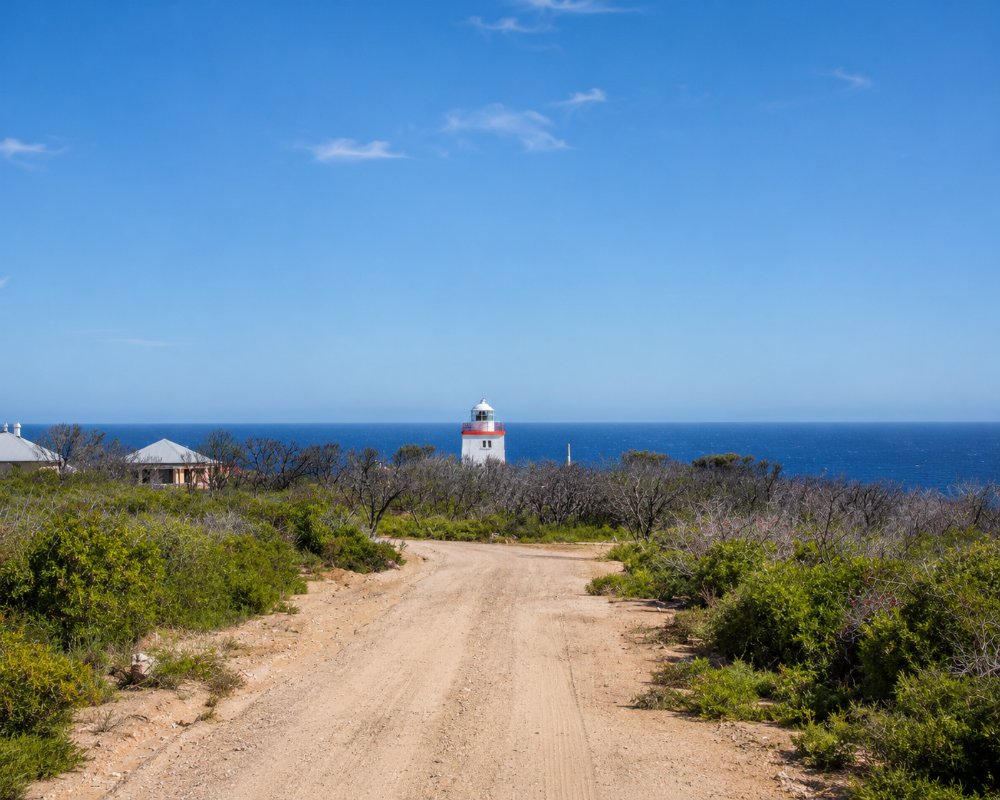
The Cape Borda Lighthouse stands as a sentinel over the dramatic coastline, its stark white structure a striking contrast against the azure waters. Built in 1858, this historic lighthouse is the only square stone lighthouse in South Australia, offering a unique perspective on Australia’s maritime history. Signs around the settlement tell stories of shipwrecks and of the keepers who once lived here in isolation; visits are now self-guided, should be booked online before you go, and are covered by the Flinders Chase National Park entry fee.
The old signal cannon, once fired to warn ships in fog, still stands beside the tower, though the daily firing for visitors is no longer advertised. The surrounding area, complete with quaint heritage cottages, provides insight into life in a bygone era.
Cape Borda is renowned for its rugged cliffs, which tower over Investigator Strait. The dramatic scenery offers countless vantage points for photography, with waves crashing against the rock faces below. The walking trails here provide a closer look at the native flora and fauna, including wildflowers that blanket the cliffs in vibrant colours during spring.
Hikers will appreciate the Ravine des Casoars hike nearby—a more challenging trek that rewards adventurers with serene landscapes and glimpses of wildlife. Birdwatchers, too, will find Cape Borda a haven for spotting rare species, from ospreys to peregrine falcons.
Cape Borda’s surroundings are alive with wildlife, making it a magnet for animal lovers. Kangaroos and wallabies roam freely, while echidnas can often be spotted foraging near the trails. Look out over the ocean, and you might catch sight of seals basking on the rocky shores or even pods of dolphins and migrating whales during the right season.
The nearby Flinders Chase National Park adds to the allure, offering visitors a chance to explore additional landmarks such as Remarkable Rocks and Admirals Arch. These destinations, along with Cape Borda, create an immersive experience that highlights the raw beauty of Kangaroo Island.
A Gateway to Adventure
Cape Borda isn’t just a destination; it’s an invitation to adventure. Whether you’re intrigued by its storied past, captivated by its untamed coastlines, or drawn to its vibrant wildlife, this unique corner of Kangaroo Island has something for everyone. Perfect for day trips or as part of a longer stay, Cape Borda offers an enriching escape that showcases the best of Australia’s natural and cultural heritage.
Activities for Families
Cape Borda is an excellent choice for families looking to combine education and outdoor adventure. The lightstation is easy for children to explore, with the cannon, the museum displays and the little cemetery to find. The surrounding trails are manageable for families with older kids, and the abundance of wildlife keeps young explorers entertained.
Pack a picnic and enjoy lunch with a view—designated picnic spots around the area provide a relaxing way to take in the scenery. Younger visitors may also enjoy a scavenger hunt for spotting native plants and animals, turning the visit into an interactive learning experience.
Photography and Scenic Lookouts
Cape Borda’s landscapes provide a paradise for photographers. Whether you’re a professional or simply love capturing the beauty of nature, the area delivers countless opportunities. Sunrise and sunset are particularly magical times when the light dances across the cliffs and waters, creating a golden glow.
Some of the best lookout points include Harveys Return, a site with historical significance where goods and supplies were delivered to the lighthouse. Here, sweeping views of the rugged coastline meet the vast horizon, making it an idyllic spot for contemplation and photos.
Nearby Attractions
While Cape Borda is a highlight in itself, its location makes it an ideal starting point for discovering more of Kangaroo Island’s west. The famous Remarkable Rocks, a geological wonder, are in the opposite corner of Flinders Chase, 80 to 90 kilometres and well over an hour away, so allow a separate day for them. These sculpted granite boulders are perched atop a cliff, providing yet another stunning backdrop for photography.
Admirals Arch is another must-visit destination. This natural rock formation serves as a frame for observing long-nosed fur seals lounging below. The boardwalk to the arch is well-maintained and offers incredible ocean views along the way.
Additionally, Hanson Bay Sanctuary is within reach, known for its koala walks and tranquil bushland setting. For those seeking a mix of activities, this combination of coastal and inland attractions offers a well-rounded itinerary.
Return Road Hike and the Keepers’ Cemetery
This 9 km return walk, about three hours, follows the old cart track the lightkeepers used to bring stores from the landing at Harveys Return to the lightstation, through sugar gum woodland and past the small cemetery where keepers and their families are buried. Start at either end, and finish with the short Clifftop Hike at Cape Borda, which leads through a rock garden to a stone lookout over Investigator Strait.
Harveys Return Hike
A steep 1 km track drops from the campground to the cove where supply ships once landed the lightstation’s stores, which were hauled up the cliff on a steel railway every three months. It is short but hard on the knees, and the view along the north coast is worth the climb back.
Ravine des Casoars and Scott Cove
The Ravine Hike, 7 km and about three hours return, follows a shaded valley and then the creek to a remote sandy beach; the valley was named by Baudin’s expedition for the dwarf emus it saw here, a bird now extinct. A 4WD is recommended on Ravine Road. Scott Cove Lookout, in the same wilderness area, is a good spot to watch for southern right whales from May to October.
Where To Stay
The last stretch of road to the lightstation is unsealed and can be corrugated, and many hire-car agreements exclude it, so check yours. The nearest campground is Harveys Return, a basic National Parks camp a few kilometres east, with a long-drop toilet. There is no food, fuel or water at Cape Borda; the closest cafe is at the Flinders Chase visitor centre on the South Coast Road, and the closest fuel is at Parndana, about 65 km east, or at Discovery Parks – Kangaroo Island near the Flinders Chase visitor centre, open 24 hours.
While Cape Borda itself provides a sense of isolation and untouched beauty, several options nearby allow you to extend your stay and immerse yourself in the region. For an authentic experience, the Cape Borda Lightstation cottages have long been the place to stay, but National Parks lists them as not currently available for hire, so check before planning around them. These heritage accommodations place you right in the heart of history, offering unparalleled views of the coastline and an opportunity to experience life as the lighthouse keepers once did.
For those seeking more contemporary comforts, Kangaroo Island’s western region features a selection of eco-friendly lodges and boutique stays. Properties like Discovery Parks – Kangaroo Island (the former Western KI Caravan Park) provide a base for exploring both Cape Borda and nearby attractions such as Flinders Chase National Park.
Harveys Return campground sits above the old landing a few kilometres east of the lightstation, near the keepers’ cemetery. Sites must be booked before you arrive, and a 4WD is recommended because the gravel road in is often corrugated; 2WD access depends on conditions. There is no power or showers, so carry drinking water and use a gas stove. Wood fires are allowed only in the fire pits outside the fire danger season, and not at all from 1 December 2026 to 24 March 2027 or on total fire ban days. The nearest caravan park is Discovery Parks – Kangaroo Island at Karatta, beside the Flinders Chase visitor centre, with powered sites, cabins, a bunkhouse and 24-hour fuel.
Rocky River campground in Flinders Chase takes caravans and has hot showers, and the restored May’s Homestead and Postman’s Cottage nearby offer heritage stays. To the east, the Parndana Hotel has self-contained cabins about 65 km away, and the council campgrounds at Western River and Stokes Bay on the north coast can be booked ahead. Caravans are best left at a park, as the last stretch of road to Cape Borda is gravel.
Eat & Drink
No trip to Kangaroo Island is complete without indulging in its culinary offerings. While Cape Borda itself doesn’t host eateries, the island has several notable stops for food enthusiasts on the way out or back. The island is also known for its marron, the freshwater crayfish, which Samphire at American River serves on its tasting menu.
On the north coast near Snelling Beach, The Fig Tree (formerly the Enchanted Fig Tree) has offered a seasonal dining experience over summer, with meals served under the canopy of a 120-year-old fig tree; check whether it is running this season. This is a memorable way to end a day of exploration.
There is no food, water or fuel at Cape Borda, only picnic tables around the lightstation, so pack lunch and plenty of water. The nearest meals are in Parndana, about 65 km east along the Playford Highway: pub meals at the Parndana Hotel, takeaway and fuel at Davo’s Deli, and bread and groceries at the IGA bakery. On the north coast the Rockpool Cafe at Stokes Bay serves local seafood, chips and coffee, and to the south The Rocks Cafe at the Flinders Chase visitor centre opens seven days.
History
Cape Borda’s history is deeply tied to its role as a critical navigation point for sailors. Its position at the north-western corner of Kangaroo Island made it a guiding light for ships navigating the treacherous waters of Investigator Strait. The lighthouse, designed to warn mariners of rocky outcrops and submerged hazards, worked with oil and kerosene lamps for more than a century and was automated in 1989.
The stories of shipwrecks near Cape Borda are haunting yet fascinating, offering a glimpse into the dangers of seafaring in the 19th century. Visitors can explore museum exhibits and artifacts that tell these tales, bringing history to life in a way that resonates with all ages.
Nicolas Baudin’s French expedition charted this coast in 1802-03 and named the cape after Jean-Charles de Borda, the French mathematician and naval scientist; Baudin’s men also named the Ravine des Casoars for the dwarf emus they saw there. The lighthouse, first called the Flinders Light, was lit in 1858, the third in the colony after Cape Willoughby (1852) and Troubridge Shoal (1856), to guide ships arriving on the Roaring Forties into Investigator Strait.
With no road to the rest of the island, stores were landed at Harveys Return every three months and hauled up the cliff. In 1906 the government set the lighthouse reserve aside as a nature reserve, and it is now part of Flinders Chase National Park. The light was automated in 1989, the signal cannon was restored in 1999, and the lightstation reopened in September 2020 after the 2019-20 bushfires closed it.
Getting to Cape Borda
Cape Borda is best explored with some advance planning. The site is self-guided, so check the National Parks website before you go for what is open. Pack sturdy walking shoes, sunscreen, and water, as many of the trails are exposed to the elements. The region’s remote nature means limited mobile reception, but that’s part of its charm—encouraging visitors to disconnect and fully embrace the natural surroundings.
For those traveling from the mainland, the Kangaroo Island ferry to Penneshaw provides easy access, and rental cars are available on the island to make the journey westward. Whether visiting for a day or staying longer, Cape Borda promises an unforgettable adventure.
From the SeaLink ferry at Penneshaw or the airport near Kingscote, head west on the Playford Highway through Parndana. Cape Borda is about 103 km from Kingscote, and the last 20 to 30 km, on Cape Borda Road, is gravel that can be corrugated. From the Flinders Chase visitor centre, drive north on the West End Highway to the Playford Highway; Shackle Road through the park is shorter but can close after rain. There is no public transport, so you need your own vehicle or a tour; allow at least two and a half hours from Penneshaw.
Experiences
- Caravan and Camping
- Historic/Heritage
- Island
- Nature based
- Relaxation
- Remote
- Rural/Country
- Self-Drive
Popular Activities
- Bush Walking
- Caravan and Camping
- National Park
- Sightseeing
- Wilderness
- Wildlife
About Cape Borda
- Locality: Rural
- Cape Borda Postcode: 5223
- State: South Australia
- Region: Kangaroo Island
- Latitude: -35.77082
- Longitude: 136.7579
- Area (Sq/km): 65.523
- Timezone: Australia/Adelaide
