
Shorncliffe, QLD
Shorncliffe is a small bayside suburb on a headland beside Sandgate, about 21 kilometres north-east of the centre of Brisbane. It is one of the prettiest corners of the Brisbane bayside, with the longest timber pier in the city, a cliff-top walk under old trees, streets of colonial houses and a creek full of fishing trawlers and yachts.
Known For
- The Shorncliffe pier
- Lovers Walk and the bayside parks
- Cabbage Tree Creek, its trawlers and the Easter yacht race
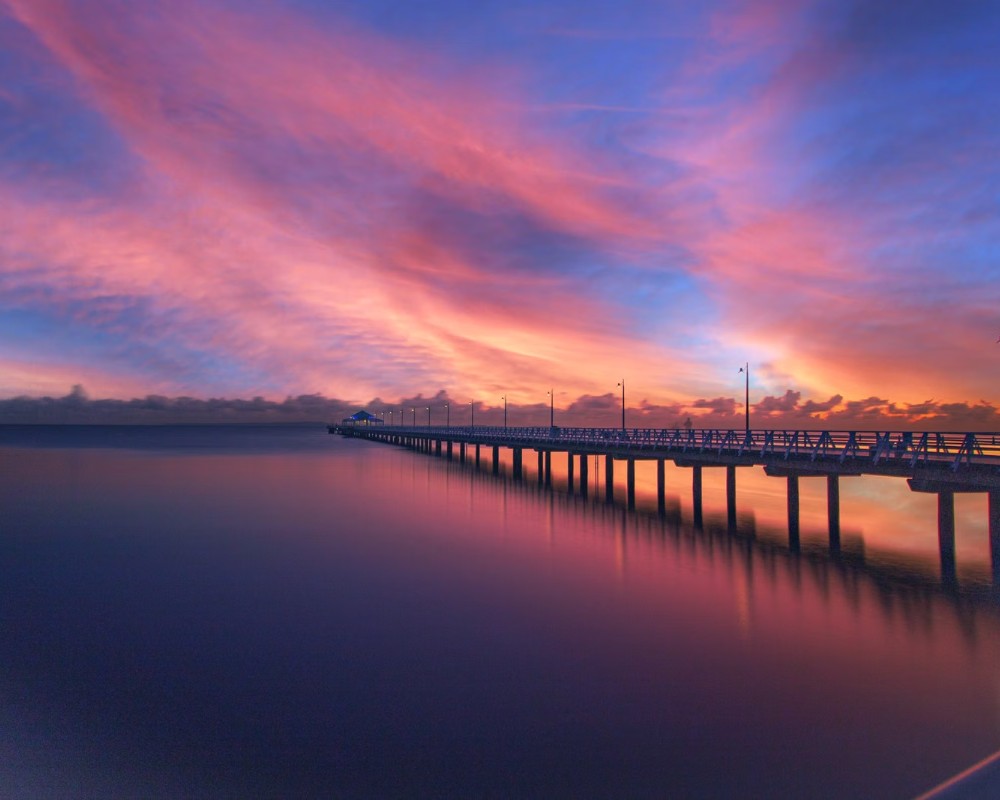
The headland looks north-east over Bramble Bay to the Redcliffe Peninsula and Moreton Island. The pier and a sandy beach lie on its northern side, below a wooded park. To the south, Cabbage Tree Creek forms a sheltered harbour, and the Boondall Wetlands stretch beyond it. The end of the suburban railway is a short walk from the water.
Shorncliffe is ideal for a lazy half day: a walk on the pier, fish and chips in the park and a look at the boats.
Things To Do in Shorncliffe
Shorncliffe Pier
The pier reaches about 350 metres into the bay, its white timber rails and old-fashioned lamps making it one of the most photographed spots on the bayside. A pier has stood here since the 1880s, when Shorncliffe and Sandgate were the fashionable seaside resorts of the colony; the present one was rebuilt to the original design and reopened in 2016. It is popular for fishing, with bream, whiting, flathead and the occasional mackerel, and for sunrise walks.
Lovers Walk and Moora Park
Above the pier, Moora Park has lawns, barbecues, a playground and a kiosk beneath spreading fig and cotton trees, with a sandy beach and a tidal swimming area below. From here Lovers Walk follows the foot of the cliffs along the shore to the Sandgate foreshore, a shaded, level path of about 15 minutes that has been a promenade since Victorian times.
Cabbage Tree Creek
The creek on the southern side of the headland shelters prawn trawlers, a yacht club, a marina and public boat ramps. Fresh seafood is sold from outlets near the wharves. On Good Friday each year the fleet for the Brisbane to Gladstone yacht race gathers here before the start in the bay, and crowds line the pier and the headland to watch.
Heritage Streets
Shorncliffe has some of the best-preserved colonial housing in Brisbane. A walk along the streets above the pier passes grand timber villas with towers and wide verandahs, built as seaside homes for wealthy families in the 1880s and 1890s, along with a hilltop college and old churches.
Cycling and Wetlands
The Moreton Bay cycleway runs through Shorncliffe. To the north it follows the Sandgate foreshore to the bridge to Redcliffe, and to the south it crosses the creek into the Boondall Wetlands, with boardwalks and bird hides on the way to Nudgee Beach.
Where To Stay
Shorncliffe is residential, with very little visitor accommodation.
A few bed and breakfasts and holiday rentals operate in heritage houses on the headland, some with bay views. They offer a quiet stay with the pier and the train close by.
Sandgate, next door, has guesthouses, motels and pub rooms, and there are hotels near the airport, about 20 minutes away.
Most visitors come for the day from the city by train.
The closest pub rooms are at the Brighton Hotel on Brighton Terrace, about 4 km north, a pub with motel rooms, a bistro and live music on Friday nights. The Redcliffe Peninsula, about 12 km north across the Ted Smout Bridge, has the nearest hotels and apartments on the water: The Sebel Brisbane Margate Beach, with balcony rooms and a rooftop pool, Oaks Redcliffe Mon Komo Suites above The Komo at Redcliffe, and Proximity Waterfront Apartments on Redcliffe Parade, with an indoor heated pool and gym.
The nearest caravan park is the council’s Bells Caravan Park at Clontarf, at the peninsula end of the bridge, with powered and drive-through sites but no cabins and no pets. Accommodation around Shorncliffe and Sandgate fills early at Easter, when crowds come to watch the start of the Brisbane to Gladstone yacht race from the pier and the headland, so book well ahead for that weekend.
Eat & Drink
Fish and chips in Moora Park is the classic Shorncliffe meal, and the seafood outlets beside Cabbage Tree Creek sell prawns and fish straight from the boats. A cafe near the pier serves breakfast and coffee with a view of the bay.
The yacht club on the creek welcomes visitors to its bistro and bar. A wider choice of cafes, restaurants and historic pubs is found in the centre of Sandgate, a 20-minute walk or one stop by train.
Shelley Inn, in a roomy old building with a verandah on Allpass Parade facing Cabbage Tree Creek, serves fish and chips, calamari, prawns and good coffee, with old photos of Shorncliffe on the walls; take your order across the road for a picnic on the grass. Elvy’s Cafe on Park Parade, opposite Moora Park and its playground, is the family breakfast stop, known for pancakes and cooked breakfasts. The yacht club on the creek is the Queensland Cruising Yacht Club, on Sinbad Street, whose waterfront restaurant and bar serves breakfast, lunch and dinner with brunch on the deck over the marina.
On the cliff top towards Sandgate, Matthew Thomas fills the old Masonic hall on Eagle Terrace with a cafe and a homewares and gift shop, and the Full Moon Hotel, a pub since the 1860s, is a little further along with a deck facing Bramble Bay. Sandgate Fishmonger and Doug’s Seafood Cafe on Flinders Parade are about 2 km away along Lovers Walk.
Groceries and fuel are in Sandgate and along Sandgate Road.
History
Shorncliffe is in the country of the Turrbal people, who called the headland Warra. Europeans named it after Shorncliffe in Kent, close to the English town of Sandgate. A police station was established on the bluff in the 1850s, and after the railway reached Sandgate in 1882 the headland filled with holiday homes, boarding houses and a pier where bay steamers called.
The railway was extended to Shorncliffe in 1897. As seaside holidays moved to the surf beaches, the suburb became a quiet residential area and kept its historic character.
Getting to Shorncliffe
Shorncliffe is the terminus of a suburban railway line, about 40 minutes from Central. The pier is a ten-minute walk from the station.
By car it is about 30 minutes from the city centre by Sandgate Road or the Gateway Motorway. Parking near the pier is free but limited on weekends.
Experiences
- Historic/Heritage
- Relaxation
- Self-Drive
Popular Activities
- Bird Watching
- Cycling
- Fishing
- Food and Wine
- Sailing
- Sightseeing
- Swimming
About Shorncliffe
- Locality: Suburb
- Shorncliffe Postcode: 4017
- State: Queensland
- Region: Brisbane
- Latitude: -27.32759
- Longitude: 153.08610
- Elevation: 10m
- Timezone: Australia/Brisbane
