
Fitzroy, VIC
Fitzroy is the oldest suburb in Melbourne, the smallest, and for many people the most interesting. Two kilometres north-east of the city centre, it is a tight grid of terrace houses, old factories and corner pubs that has reinvented itself several times, from respectable address to notorious slum to the capital of the city’s alternative culture. Today it is where Melbourne goes for vintage clothes, independent galleries, live bands, craft beer and some of the best eating and drinking in the country.
Known For
- Brunswick Street’s bars, cafes, bookshops and vintage stores
- Gertrude Street galleries, boutiques and restaurants
- Street art, live music and a long history of Aboriginal activism
The suburb is barely a square kilometre in size, bounded by Nicholson Street, Alexandra Parade, Smith Street and Victoria Parade, and it is best seen on foot. Its two main strips could hardly be more different. Brunswick Street is loud, scruffy and colourful, and has been the city’s bohemian high street since the 1980s. Gertrude Street, running across its southern end, is quieter and more polished, with designer shops and serious restaurants in restored Victorian shopfronts.
Fitzroy has gentrified a great deal, and rents have pushed out many of the artists and musicians who made its name. Even so, it has held on to more of its character than most inner suburbs of Melbourne, helped by its pubs, its public housing and a stubbornly independent streak.
History and Heritage
Fitzroy lies on the Country of the Wurundjeri Woi-wurrung people of the Kulin Nation, and its Aboriginal history did not end with European settlement. In the twentieth century the suburb became one of the most important centres of Aboriginal life and politics in Australia.
The First Suburb
Land here was sold in 1839, only four years after Melbourne was founded, and the district, first called Newtown, became the city’s first suburb. Its southern end, close to town, attracted wealthy residents, and Royal Terrace, a bluestone row built on Nicholson Street in the 1850s, survives from that period. Further north, the blocks were cut into ever smaller allotments and filled with workers’ cottages, boot factories, breweries and chocolate works.
Slums and Survival
By the early 1900s Fitzroy was among the poorest and most crowded places in Australia. Its narrow lanes were a byword for poverty and crime, and reformers campaigned for decades to have them cleared. In the 1960s whole blocks were demolished and replaced by the tower blocks of the Atherton Gardens estate, which still stand.
Aboriginal Fitzroy
From the 1920s, Aboriginal people from across Victoria and southern New South Wales moved to Fitzroy in search of work and community, many of them from missions and reserves. Gertrude Street became the meeting place. Pastor Doug Nicholls, later knighted and appointed Governor of South Australia, preached at a church in Gore Street, and some of the country’s first Aboriginal-run organisations were founded here in the 1970s, including a health service and a legal service. A signposted Aboriginal history trail marks the key sites.
Bohemia
Cheap rents brought migrants after the war, particularly from Italy, Greece, Spain and later Vietnam, and from the 1970s students, artists and musicians. Brunswick Street filled with cafes, band venues and second-hand shops, and by the 1990s Fitzroy was the centre of Melbourne’s independent music and arts scene, a reputation it still trades on.
Attractions in Fitzroy
Fitzroy is a place to wander rather than tick off sights, but these are the things not to miss.
Brunswick Street
The main drag runs north from Victoria Parade for more than a kilometre. Between Gertrude Street and Alexandra Parade it is an almost unbroken run of cafes, bars, pubs, bookshops, record stores, vintage clothing shops and tattoo parlours. It is lively at any time and positively heaving on Friday and Saturday nights. Look up at the painted shopfronts and mosaic-covered benches, the work of local artists.
Gertrude Street
A few minutes’ walk south, Gertrude Street has become one of the most fashionable streets in the city, with independent fashion and homewares stores, small galleries, wine bars and several of Melbourne’s most admired restaurants. For fifteen winters, most recently in 2023, the Gertrude Street Projection Festival lit up its buildings after dark.
Street Art
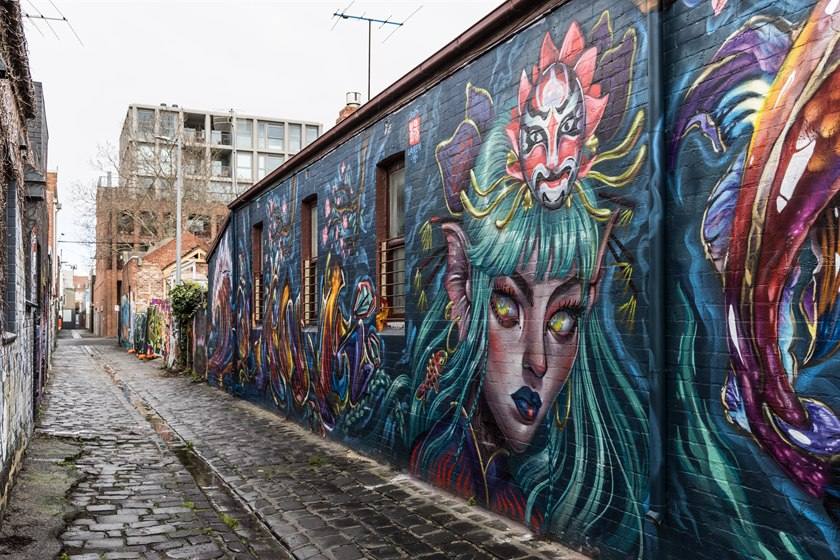
The lanes and side streets of Fitzroy are an open-air gallery. Large murals cover the walls around Rose Street, Johnston Street and the car parks behind Brunswick Street, and new work appears constantly. Several operators run guided street art walks led by working artists.
Rose Street Artists’ Market
Every weekend, a former junkyard off Brunswick Street hosts dozens of stalls selling handmade jewellery, clothing, prints, ceramics and homewares directly from the people who make them. It is a good place to find a gift that did not come from a souvenir shop.
Pubs and Live Music
Fitzroy has one of the densest collections of historic pubs in Australia, many of them with beer gardens and band rooms. Bands play most nights of the week at venues along Brunswick and Johnston streets, and the suburb has launched the careers of many well-known Australian acts.
Fitzroy Pool and Town Hall
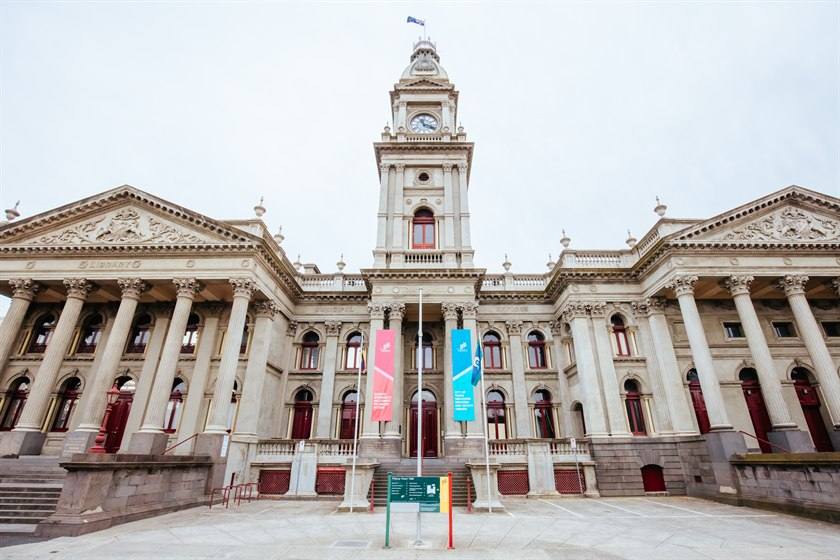
The outdoor Fitzroy Swimming Pool, saved from closure by a community campaign in the 1990s, is a local icon, known for the sign painted on its wall that warns of deep water in Italian. The grand Fitzroy Town Hall on Napier Street, completed in the 1880s, speaks of the confidence of the boom years.
Johnston Street
Once the centre of the Spanish community, Johnston Street still has a few tapas bars and flamenco venues, and hosts a Hispanic street festival each February.
Where To Stay
Fitzroy has only a handful of hotels, though more have opened in recent years, and staying here puts you in the thick of things.
The StandardX, on Rose Street, brought an international boutique hotel brand to the suburb in 2024 and has a Thai restaurant and a guests-only rooftop bar with city views. The Nunnery, in a former convent building on Nicholson Street opposite Carlton Gardens, is one of the best known hostels in Melbourne.
There are also serviced apartments scattered through the suburb. Fitzroy can be noisy at night, particularly near Brunswick Street, so light sleepers should choose a room on a side street. The city centre, with far more accommodation, is ten minutes away by tram.
The StandardX, at 62 Rose Street, has 125 rooms in an industrial-style building filled with art, a short walk from the Rose Street Artists’ Market and the Brunswick Street trams. Its ground-floor restaurant, Bang, serves Thai street food all day and is open to everyone, while the Roof upstairs serves tacos, ceviche and cocktails to hotel guests only. The Nunnery’s budget building was once the home of the Daughters of Charity and has three storeys of dorms and private rooms with shared kitchens and lounges. Its separate guesthouse, a self-contained two-storey house, suits families and groups.
Two newer hotels are a short tram ride away in Carlton: Crowne Plaza Melbourne Carlton, which opened in 2026 on Swanston Street with 107 rooms, and Zagame’s House on Lygon Street, which welcomes dogs. Pullman Melbourne on the Park, in East Melbourne, is about 1.5 km south of Gertrude Street and looks over Yarra Park to the MCG.
There is no caravan park in the inner suburbs. The nearest is BIG4 Melbourne Holiday Park at 265 Elizabeth Street, Coburg, about 8 km north, with powered and ensuite sites, cabins and villas.
Eat & Drink
The choice in Fitzroy is enormous, and standards are high at every price.
For breakfast, the queue outside Lune Croissanterie on Rose Street is part of the experience, and its croissants have been described as among the best in the world. Industry Beans, nearby, is a specialist coffee roaster with an inventive brunch menu. The Vegie Bar has been a Brunswick Street fixture since the late 1980s, long before meat-free dining was fashionable.
On Gertrude Street, Cutler, long known as Cutler and Co., is one of the leading fine dining restaurants in Melbourne, and its neighbour Marion is a relaxed wine bar from the same owner. The Builders Arms Hotel, a pub with a proud place in the suburb’s Aboriginal history, serves polished pub food.
For a drink, Naked for Satan has a rooftop terrace with sweeping views over the terraces to the city, and Black Pearl is a cocktail bar that has regularly been ranked among the best in the world. Old corner pubs such as the Napier, the Standard and the Marquis of Lorne are perfect for a quieter beer and a meal.
Venues change often, so check before making a special trip.
Gertrude Street keeps adding places to eat. Poodle Bar and Bistro, at 81-83 Gertrude Street, spreads over two floors of nooks, leather banquettes and velvet couches, and dresses up hotel dining-room classics such as vol-au-vents and charcoal-grilled steaks. Further along at number 224, Ladro Gertrude is a relaxed pizza restaurant with a long list of toppings. Around the corner at 165 Gore Street, Carnation Canteen cooks a menu that changes every week, with a whole King George whiting the one constant.
Lune’s sister shop, Moon, at 50 Rose Street, is given over to crullers, twisted rings of fried choux pastry. For a Parisian-style day, from the morning espresso to an evening aperitivo, try Napier Quarter at 359 Napier Street. Fitzroy Oyster House, on George Street, shucks up to five kinds of oysters to order alongside Martinis, and El Columpio, upstairs at 52 Johnston Street, is a casual Mexican spot known for its pozole, a hominy soup that is hard to find in Melbourne.
Among the pubs, the Napier, on the corner of Napier and Moor streets, sticks to local produce and pub classics, the Marquis of Lorne has a small rooftop and a menu of rock oysters, sirloin and a rockling burger, and the Standard’s leafy beer garden has heaters for cooler days. The Builders Arms runs steak and rotisserie chicken nights early in the week.
Coles is at 172 Smith Street, on the Collingwood side of the street, and fuel is on the main roads around the edge of the suburb, such as Alexandra Parade and Hoddle Street.
Getting to Fitzroy
Fitzroy is about twenty minutes on foot from the centre of the city, through Carlton Gardens or along Victoria Parade.
Tram route 11 runs from Collins Street up the length of Brunswick Street. Route 86 runs from Bourke Street along Gertrude Street and up Smith Street, and route 96 follows Nicholson Street on the western side. All of Fitzroy is outside the Free Tram Zone.
There is no train station in the suburb. Parking is scarce and tightly restricted, so it is best to leave the car behind.
Experiences
- 18-35's
- City
- Cultural
- Food and Wine
Popular Activities
- City Sightseeing
- Food and Wine
- Nightlife
- Shopping
About Fitzroy
Accommodation In Fitzroy
Discover some of the accommodation in and around Fitzroy
