
Collingwood, VIC
Collingwood sits on the low ground east of Fitzroy, three kilometres from the centre of Melbourne. For most of its history it was the toughest, poorest and proudest suburb in the city, a place of boot factories, breweries and fierce football loyalties. The factories have become apartments, studios and breweries of a newer kind, and Smith Street, its main thoroughfare, has been named among the coolest streets in the world. Yet Collingwood still has a rougher edge than its neighbours, and that is much of its appeal.
Known For
- Smith Street’s restaurants, bars and independent shops
- Craft breweries, galleries and studios in old factories
- Live music pubs and the Keith Haring mural
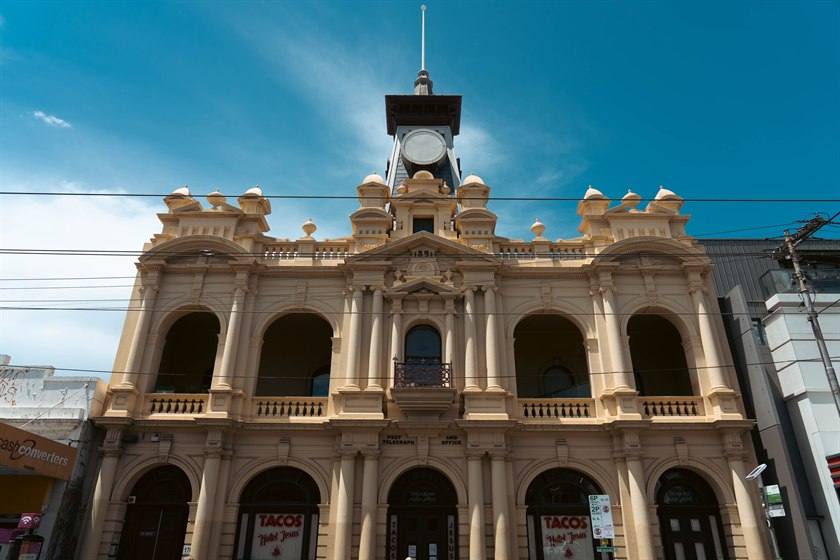
The suburb is a flat grid of narrow streets between Smith Street and Hoddle Street. Its buildings tell its story at a glance: tiny workers’ cottages, corner pubs on almost every block, and the red-brick bulk of nineteenth century warehouses and mills. Many of these now house architects, designers, galleries and start-ups, which gives the area a busy weekday life as well as a lively night-time one.
Collingwood is not a place of famous sights. People come to eat and drink, to hear bands, to browse galleries and design stores, and to see a part of Melbourne that has changed quickly without quite losing its identity.
History and Heritage
Collingwood lies on the Country of the Wurundjeri Woi-wurrung people of the Kulin Nation, on the flats that drain towards the Yarra River.
The Flat
The area was subdivided in the late 1830s and grew fast during the gold rush. Because it lay outside the city boundary, building rules did not apply, and landowners crammed in as many small houses as they could. The low-lying land flooded and drained poorly, and noxious trades such as tanneries, wool washers and slaughter yards lined the nearby river. Locals called their suburb the Flat, and outsiders considered it a slum almost from the start.
Boots, Beer and Foy and Gibson
By the late nineteenth century Collingwood was one of the main manufacturing districts in Australia. It made much of the country’s footwear and a good deal of its beer. The Foy and Gibson company built an enormous complex of factories and warehouses here to supply its department stores, producing everything from clothing and bedding to furniture and hardware. Its buildings, which fill several blocks around Oxford and Cambridge streets, are among the finest industrial architecture in the city.
John Wren and the Tote
Collingwood’s most notorious figure was John Wren, who from 1893 ran an illegal betting shop, known as the Tote, behind a tea shop on Johnston Street. Protected by lookouts, escape tunnels and friendly policemen, it made him a fortune before it was finally closed in 1906. His life inspired Frank Hardy’s novel Power Without Glory, which led to a famous libel trial.
The Magpies
The Collingwood Football Club was founded in 1892 and quickly became the best supported, and most resented, team in the country. For a suburb with little else to celebrate, its success was a source of immense pride. The club has long since moved its base, but the black and white stripes remain everywhere.
Reinvention
Factories closed from the 1970s, and for a time Collingwood was known mainly for cheap rents and a hard drug trade on Smith Street. Artists and musicians moved in, followed by cafes, bars and developers. The transformation since 2000 has been dramatic, though public housing towers and long-running community services ensure it remains a mixed neighbourhood.
Attractions in Collingwood
Most of what is worth seeing lies within a few blocks of Smith Street.
Smith Street
The boundary between Collingwood and Fitzroy is one of the best eating and shopping streets in Melbourne. Its Victorian shopfronts hold a mix that is hard to find elsewhere: Vietnamese bakeries beside natural wine bars, outdoor and camping stores, vintage dealers, record shops, bookshops and gay bars. The southern end, near Gertrude Street, is the most polished, and it becomes more eclectic as you head north.
Keith Haring Mural
In 1984 the New York artist Keith Haring painted a large mural on the wall of the Collingwood Technical School on Johnston Street. It is one of only a few of his outdoor works to survive anywhere in the world and has been carefully restored.
Collingwood Yards
The former technical school behind the mural reopened in 2021 as an arts precinct. Its three buildings and courtyard house dozens of studios, galleries, record labels, community radio and a bar, and visitors are welcome to wander through.
Galleries and Design
Collingwood has one of the highest concentrations of commercial art galleries in Australia, mostly in converted warehouses in the back streets. Several leading contemporary dealers are here, along with furniture and lighting showrooms. Openings are often held on weekday evenings and are free.
Breweries
Brewing has returned to the suburb in a big way. Stomping Ground, in a huge warehouse on Gipps Street, has a beer hall, a garden with a retractable roof and a children’s play area, and several smaller breweries and taprooms operate within walking distance.
Live Music Pubs
The Tote, on the corner of Johnston and Wellington streets, is the spiritual home of Melbourne rock and has twice been saved from closure by public campaigns. The Smith St Hotel, the former Gasometer, also hosts bands in its band room. The Grace Darling Hotel, built in the 1850s, is one of the oldest pubs in Melbourne and was the site of the meeting at which the football club was formed.
Peel Street
The area around Peel Street has long been a centre of gay nightlife, with several pubs and clubs that have been welcoming the community for decades.
Where To Stay
Accommodation in Collingwood is limited but growing, and it suits travellers who would rather be among bars and restaurants than office towers.
Most options are modern apartment hotels in new or converted buildings close to Smith Street, with kitchens and laundries that suit longer stays. There are also private apartments and a few rooms above pubs.
Neighbouring Fitzroy has a small number of boutique hotels and a well-known hostel, and the city centre is ten minutes away by tram. Friday and Saturday nights are noisy near the main streets.
The StandardX, at 62 Rose Street on the Fitzroy side of Smith Street, is the nearest full hotel. It has 125 rooms in an industrial-style building, with Bang, an all-day Thai restaurant, on the ground floor and a rooftop for guests. On the far side of Fitzroy, the Nunnery on Nicholson Street is a long-running backpacker hostel with dorms, private rooms and a self-contained guesthouse for groups.
Pullman Melbourne on the Park, at 192 Wellington Parade, East Melbourne, is about 2 km south-west, with a pool, a day spa and views over Yarra Park to the MCG, and Jolimont station a couple of minutes’ walk away; it suits anyone in town for the football or the cricket. Crowne Plaza Melbourne Carlton, which opened in 2026 on Swanston Street, is a short tram ride west.
If you are driving, look for an apartment with its own parking, as almost every street in Collingwood has permit or time limits. There is no caravan park nearby. The closest is BIG4 Melbourne Holiday Park at 265 Elizabeth Street, Coburg, about 9 km north, with powered and ensuite sites, cabins and villas.
Eat & Drink
Collingwood is one of the best places in Melbourne for casual, interesting food, and it changes constantly.
Coffee is taken seriously. Proud Mary, on Oxford Street, is one of the pioneers of specialty coffee in Australia and draws queues for brunch. Smith Street has everything from Vietnamese pho and banh mi to Italian delis and gelato at Gelato Messina.
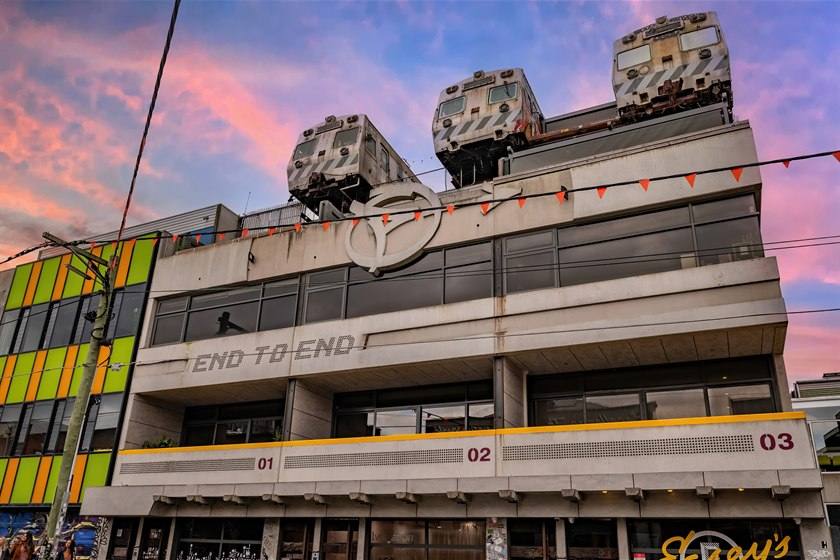
Easey’s, on Easey Street, serves burgers inside old train carriages perched on the roof of a five-storey building, with views to match. For a beer, choose between the big, family-friendly brewery halls and classic corner pubs such as the Grace Darling, the Gem and the Fox.
Venues open and close frequently here, so check before making a special trip.
Proud Mary’s cafe on Oxford Street opens every day from early morning to mid-afternoon, and its roastery cafe, Aunty Peg’s, is around the corner at 200 Wellington Street. Jim’s Greek Tavern, at 32 Johnston Street, has been serving saganaki, dips and lamb from the spit for more than 40 years, and the Pontian Club, at 8 Smith Street, is a Greek restaurant known for moussaka, charred lamb chops and olive oil cake. Santito, at 174 Smith Street, is a lively Mexican restaurant and bar that makes its tortillas from scratch.
For drinks, the Moon, at 28 Stanley Street, is a small wine bar with more than 400 wines and Japanese and Filipino plates, and Molly Rose Brewing, at 279 Wellington Street, brews sour and wine-like beers in an old furniture warehouse, with a South-East Asian restaurant and beer garden next door. At Collingwood Yards, Hope St Radio runs a wine and pasta bar on the courtyard, and Runner Up is a rooftop bar in the old caretaker’s residence. The Smith St Hotel, run by chef Scott Pickett since it reopened in 2026, keeps its band room and opening roof, and the Grace Darling has a candle-lit bar and regular live music.
Coles is at 172 Smith Street, and fuel is on Hoddle Street and Alexandra Parade.
Getting to Collingwood
Tram route 86 from Bourke Street runs the length of Smith Street, taking about ten minutes from the city centre. Collingwood is outside the Free Tram Zone.
By train, Collingwood Station, on the Mernda and Hurstbridge lines, is on the eastern side of the suburb near Hoddle Street, a ten minute walk from Smith Street. Buses run along Johnston Street and Hoddle Street.
From the city it is a pleasant thirty minute walk through Fitzroy Gardens and up Smith Street. Parking is restricted on most streets.
Experiences
- 18-35's
- City
- Cultural
- Food and Wine
Popular Activities
- City Sightseeing
- Food and Wine
- Nightlife
- Shopping
About Collingwood
Tours In Collingwood
Discover some of the tours options around Collingwood
