
Taronga Zoo and Bradleys Head, NSW
Taronga Zoo occupies a steep hillside on the northern shore of Sydney Harbour, directly across the water from the Opera House. It is one of the most visited attractions in Sydney, and the setting is as much a part of the experience as the animals. Next to it, the wooded headland of Bradleys Head has harbour walks, old fortifications and one of the best views of the city.
Known For
- A world-class zoo with harbour views
- The ferry ride from Circular Quay
- Bradleys Head walks and lookouts
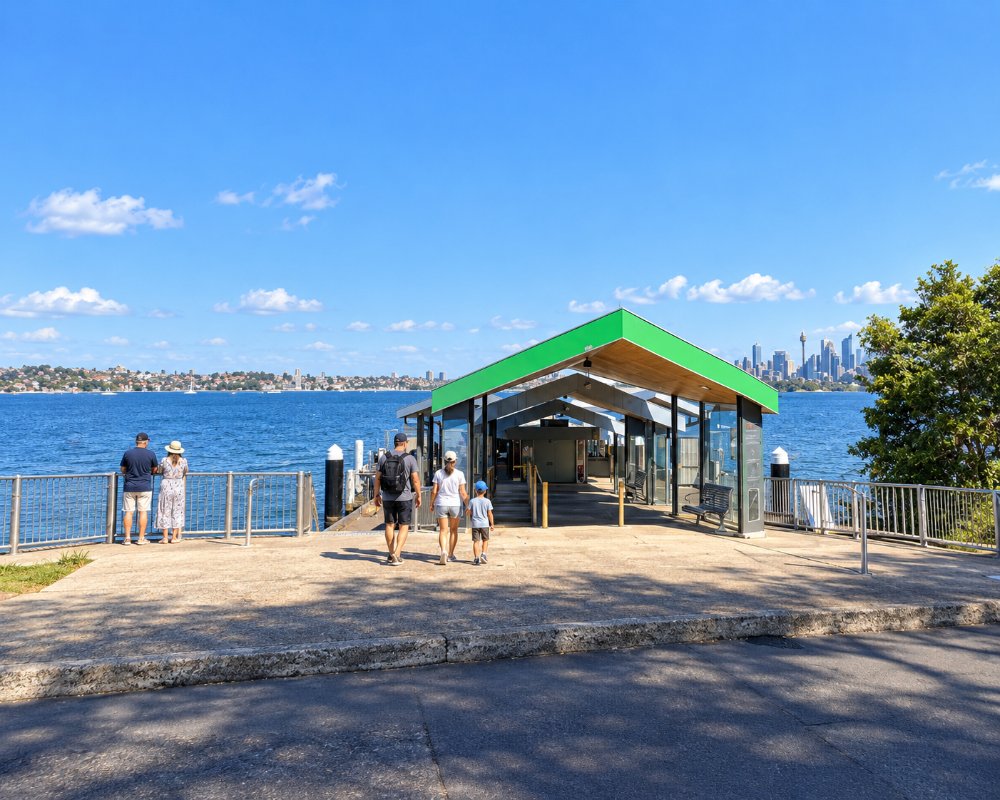
The zoo and the headland are both in the suburb of Mosman. The zoo has two entrances, one at the top of the hill on Bradleys Head Road and one at the bottom beside the ferry wharf. Bradleys Head juts into the harbour just to the east and is part of Sydney Harbour National Park.
Things To Do at Taronga Zoo and Bradleys Head
Taronga Zoo
Taronga opened in 1916 and cares for several thousand animals. The Australian section lets visitors walk among kangaroos and wallabies and see koalas, platypus, Tasmanian devils and a nocturnal house. Elsewhere are giraffes, with what must be the best view of any zoo enclosure in the world, along with lions, Sumatran tigers, gorillas, chimpanzees, a greater one-horned rhino, sea-lions and the Amphibian and Reptile Centre; the zoo’s last elephants moved to Monarto Safari Park in South Australia in 2025. The seal show and the free-flight bird show, staged in an amphitheatre above the harbour, are highlights. Allow at least four hours.
Getting Around the Zoo
The zoo is built on a slope, and most people start at the top and walk down. The old cable car closed in 2023, and a replacement is being built and is due to open in late 2027. Until then, the Wildlife Express train runs daily inside the zoo between the top entrance and the reptile centre, and a free shuttle bus links the wharf and the main entrance during NSW school holidays. Buying tickets online in advance is cheaper and saves queuing.
Stay Overnight
The Wildlife Retreat at Taronga is a lodge inside the zoo grounds, with rooms looking over a native animal sanctuary and the harbour. The zoo also runs Roar and Snore, a night in safari tents with behind-the-scenes tours after the crowds have gone.
Bradleys Head
A bush track leaves from beside the ferry wharf and follows the shore to the tip of the headland in about 20 minutes. Here the mast of HMAS Sydney, the cruiser that sank the German raider Emden in 1914, stands as a memorial to Australian sailors, beside gun pits and a stone jetty from the 1800s. A sandstone amphitheatre faces the city, and the view of the bridge, Opera House and skyline is one of the great panoramas of the harbour.
Walk to Chowder Bay
The track continues around Taylors Bay to Clifton Gardens and Chowder Bay, about four kilometres from the zoo wharf, through angophora forest with water views most of the way. In the other direction, the foreshore track west to Sirius Cove is closed between the zoo wharf and Whiting Beach while the Sky Safari is rebuilt, until late 2027.
Where To Stay
The Wildlife Retreat and the zoo’s Roar and Snore sleepovers are the only accommodation on the spot.
Otherwise, stay in the city and come by ferry, or look at the hotels of North Sydney and Neutral Bay.
Roar and Snore is an overnight safari-tent stay with animal encounters for ages 5 and up. Otherwise the area is residential Mosman, so stay in the city and come by ferry, or in North Sydney. The zoo car park has a 2.1 m height limit, so campervans and caravans will not fit; the nearest tourist park is Discovery Parks – Lane Cove at Macquarie Park.
Eat & Drink
Forage and Graze, a cafe by the main entrance, needs no zoo ticket, and inside are the Taronga Food Market and the Saltwater Bistro with harbour views. Picnics are welcome, and there are lawns set aside for them. On Bradleys Head, a historic hall above the track operates as a cafe and function centre at times. Mosman village, five minutes up the road by bus, has many cafes and restaurants.
Taronga is cashless, and picnics are welcome on the lawns. On Bradleys Head, Athol Hall has a cafe and kiosk, though it is mainly a function venue, and Balmoral Beach on the 238 bus has the Bathers’ Pavilion.
History
The headland, known as Booraghee, is the country of the Borogegal and Cammeraigal people. It was named after William Bradley, a lieutenant on the First Fleet flagship Sirius, and was fortified from the 1840s. The first zoo in Sydney was at Moore Park, and when it outgrew the site the animals were ferried across the harbour to the new grounds, the elephant included. The name Taronga is said to come from an Aboriginal word meaning beautiful view.
Getting to Taronga Zoo and Bradleys Head
Ferries leave Circular Quay every half hour or so and take 12 minutes to the zoo wharf. Buses run from the city via the Harbour Bridge to the top entrance. There is a large paid car park at the top, which fills on weekends and holidays. Balmoral Beach is a short bus ride away.
The zoo opens every day from 9.30 am, closing at 5 pm from September to April and 4.30 pm in winter. Bus 100 runs from the QVB, and the 238 links Balmoral Beach with the zoo and its wharf.
Experiences
- City
- Eco Tourism
- Historic/Heritage
- Nature based
Popular Activities
- Bush Walking
- National Park
- Sightseeing
- Wildlife
About Taronga Zoo and Bradleys Head
- Locality: Urban locality
- Taronga Zoo and Bradleys Head Postcode: 2088
- State: New South Wales
- Region: Sydney
- Latitude: -33.8433
- Longitude: 151.2411
- Timezone: Australia/Sydney
