
South Melbourne, VIC
South Melbourne is one of the oldest suburbs in the city, a couple of kilometres south of the Yarra, and one of the best for anyone who likes food. Its covered market has been trading since 1867 and is a favourite of local cooks. Around it are wide streets of Victorian shops with cast-iron verandahs, rows of terrace houses, converted warehouses full of design studios, and the cafe that did as much as any other to start the specialty coffee movement in Australia.
Known For
- South Melbourne Market and its famous dim sims
- Clarendon Street’s Victorian shopfronts and iron lace
- Specialty coffee, bakeries and homewares stores
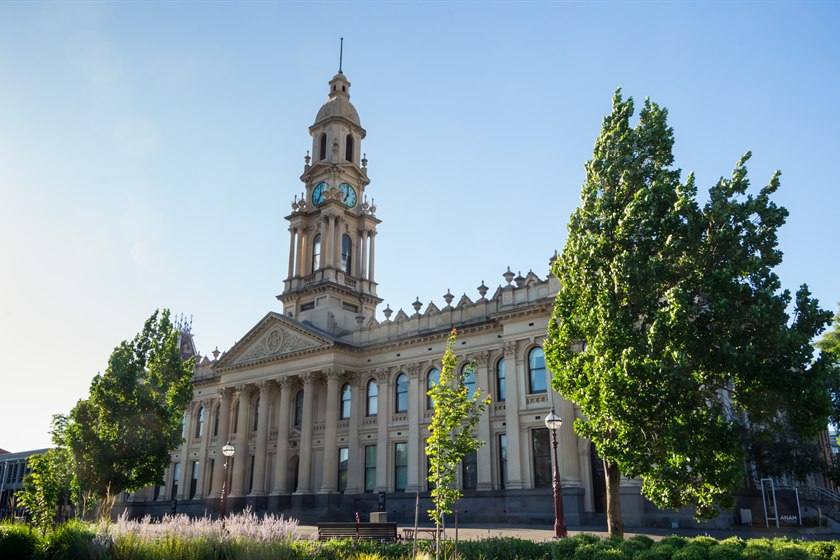
The suburb sits on and around a low rise once known as Emerald Hill, the only high ground between the river and the bay. The town hall crowns the hill, and the streets fall away from it in a neat grid. It is compact, flat enough to walk, and has a relaxed village atmosphere despite being so close to the city towers.
South Melbourne is ten minutes by tram from the centre of Melbourne and a short walk from Southbank, and it is at its liveliest on market days.
History and Heritage
South Melbourne lies on the Country of the Bunurong people of the Kulin Nation. Emerald Hill, a grassy knoll rising above the surrounding swamps, was a traditional gathering place where ceremonies were held, and early settlers recorded seeing large corroborees there.
Canvas Town
When the gold rush began in 1851, ships arrived in Port Phillip faster than Melbourne could house their passengers. The government allowed newcomers to pitch tents on the flat ground south of the river, and within months a settlement of several thousand people, known as Canvas Town, had sprung up, with its own streets, shops and lodging tents. It lasted until 1854.
Emerald Hill
The first land sales on the hill were held in 1852, and the district, at first called Emerald Hill, grew rapidly. It became a separate municipality in 1855 and was renamed South Melbourne in 1883. Its grand town hall, opened in 1880, and the well-proportioned terraces and shops around it were laid out as a single scheme and survive as one of the finest Victorian civic precincts in Australia.
Prefabricated Houses and a Chinese Temple
So great was the shortage of buildings in the 1850s that houses were imported in pieces from Britain. Three of these portable iron houses, made of corrugated iron on a timber or iron frame, still stand in Coventry Street and are cared for by the National Trust. In 1866, Chinese miners from the See Yup district built a temple in Raglan Street. Extended in the following decades, it remains in use and is regarded as the oldest surviving Chinese temple in Australia that is still used for worship, though its main hall was badly damaged by fire in February 2024.
Industry and Football
South Melbourne became a busy working suburb of factories, foundries and warehouses, served by the port and the railways. Its football club, known as the Bloods and later the Swans, was one of the strongest in the league until financial trouble forced it to move to Sydney in 1982. From the 1980s the warehouses were taken over by advertising agencies, architects and photographers, and the terraces were restored.
Attractions in South Melbourne
Plan your visit for a market day if you can.
South Melbourne Market
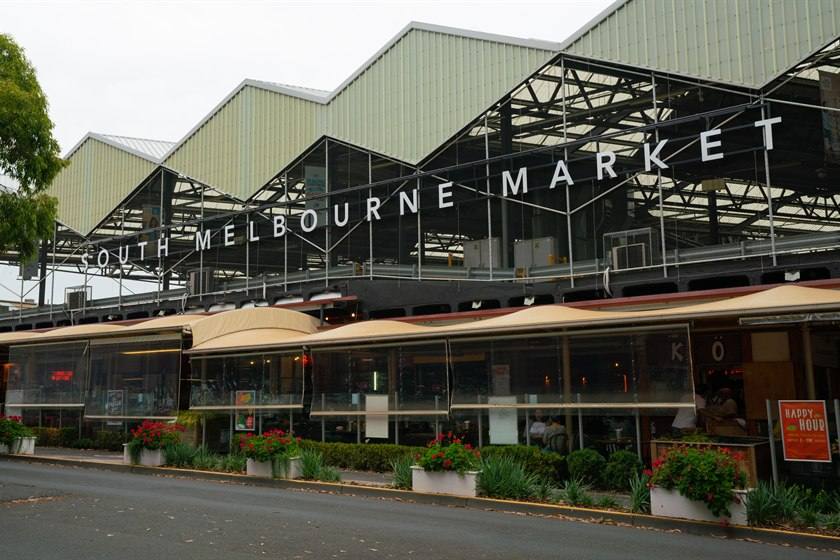
The market is open on Wednesdays, Fridays, Saturdays and Sundays. Under its long roofs are greengrocers, butchers, fishmongers, cheese shops, delicatessens and bakers, together with stalls selling clothing, plants, books and homewares. Along Cecil Street, a row of restaurants and oyster bars spills onto the footpath. The market is famous above all for its dim sims, large steamed or fried dumplings that have been sold from the same stall since 1949 and are a Melbourne obsession. In summer a night market adds music and street food.
Clarendon Street
The main street runs north to south over the hill and has one of the longest continuous stretches of Victorian shopfronts in Melbourne, many of them shaded by deep verandahs trimmed with cast-iron lace. It has a good mix of shops, pubs and cafes.
Emerald Hill Precinct
The town hall, with its clock tower and Corinthian columns, stands at the top of Bank Street surrounded by matching terraces, banks and a former post office. The building, the home of a national academy for young classical musicians, has been closed for a major restoration since 2020, with the academy working from the Abbotsford Convent in the meantime, and is not due to reopen to the public until 2028.
Coventry Street
This street, leading from the market towards Clarendon Street, is known for its homewares, kitchenware and design shops, along with bakeries and cafes. The portable iron houses are here and open to the public on selected days.
See Yup Temple
Visitors are welcome at the temple on Saturdays and Sundays; it is set back from Raglan Street behind a garden, where a temporary shrine to Kwan Tai stands while the main hall is restored. Its halls contain elaborately carved altars and thousands of memorial tablets commemorating Chinese people who died in Victoria.
St Vincent Gardens
On the border with Albert Park, this garden square was laid out in the 1850s on the model of the residential squares of London. The curved streets around it are lined with some of the most elegant terraces in the city.
Portable Iron Houses
The National Trust opens the Portable Iron Houses at 399 Coventry Street on the first Sunday afternoon of each month, except in January, with guided tours through the rooms. The three prefabricated houses were made in Britain in the 1850s and shipped out during the gold rush, and two were moved here from North Melbourne and Fitzroy to sit beside the one already on the site. Bellhouse House, first put up in Fitzroy in 1854, was made at a Manchester foundry, and the tours explain how families lived in them.
Where To Stay
South Melbourne is a convenient and characterful base, close to the city, the arts precinct and the bay.
The Coppersmith, on Clarendon Street, is a boutique hotel above a smartly renovated pub, with a rooftop terrace. There are many apartment hotels in the streets between the market and the city, popular with business travellers during the week and good value at weekends.
Prices rise sharply during the Grand Prix in March, when the circuit at neighbouring Albert Park brings large crowds.
The Coppersmith occupies a restored 1850s landmark on Clarendon Street and has fifteen boutique rooms above its bar and bistro, so it suits couples who want to walk to the market and the restaurants. For a bigger hotel, Crown’s three hotels on Whiteman Street, from the luxury Crown Towers to the more affordable Crown Promenade, are about 1.5 km north, and the newer Hannah St Hotel in Southbank, with nearly 200 suites and a pool, is a similar distance. The Pan Pacific Melbourne and the Novotel Melbourne South Wharf, beside the convention centre, are a 20 minute walk or a short ride on tram 12 or 96.
There are no caravan parks nearby; the closest are Discovery Parks – Melbourne in Braybrook, about 12 km north-west, and the Melbourne BIG4 Holiday Park in Coburg, about 11 km north. Street parking around the market is metered and unsuited to vans.
Eat & Drink
South Melbourne is a serious food suburb, and the market is only the beginning.
St Ali, in a converted warehouse in a back lane, opened in 2005 and was one of the pioneers of specialty coffee in Australia. It remains one of the most influential cafes in the city and is busy from early morning. The surrounding streets have numerous other excellent cafes and several notable bakeries and patisseries.
At the market, try the dim sims, freshly shucked oysters, paella cooked in giant pans, borek and Turkish gozleme. For dinner, the suburb has good wine bars, Italian restaurants and a number of handsome old corner pubs with modern kitchens.
Venues change often, so check before making a special trip.
St Ali at 12-18 Yarra Place has grown from a back-lane cafe into a coffee roaster with venues as far away as Bali, and its South Melbourne home is still a busy breakfast stop. The Kettle Black at 50 Albert Road is a popular cafe and kitchen for brunch, open every day. At the market, Simply Spanish has cooked its paella in giant pans since 2007 and has won awards for it, and the dim sim shop’s big steamed and fried dim sims are now also sold at its Preston Market store.
Bellota Wine Bar at 181 Bank Street is a European-style wine bar and restaurant. The Emerald Hotel on Clarendon Street is a family-run pub with a bar, bistro and a small restaurant overlooking the street, and the Coppersmith’s bistro and rooftop bar are a few doors along. The market is the best place for fresh produce, and bread, meat, fish and cheese can all be bought there on trading days.
Getting to South Melbourne
Tram route 96, which runs on a former railway line from Bourke Street, stops beside the market and takes about ten minutes from the city. Routes 1 and 12 run along Clarendon Street and Park Street. South Melbourne is outside the Free Tram Zone.
On foot, it is about twenty minutes from Southbank, heading south down Clarendon Street.
There is a rooftop car park at the market, which is very busy on Saturdays. Street parking is metered.
Experiences
- City
- Cultural
- Food and Wine
- Historic/Heritage
Popular Activities
- Bush Walking
- City Sightseeing
- Cycling
- Food and Wine
- Shopping
About South Melbourne
Tours In South Melbourne
Discover some of the tours options around South Melbourne
