
Albert Park, VIC
Albert Park is both a suburb and the large park from which it takes its name, three kilometres south of the centre of Melbourne. The park, with its long lake, is one of the most popular places in the city for exercise, and for four days each autumn, in March or early April, its ring road becomes the circuit for the Australian Formula One Grand Prix. The suburb beside it is a picture of Victorian prosperity, with terrace houses, a village high street and a beach on Port Phillip at the end of the road.
Known For
- Albert Park Lake and its walking and running circuit
- The Australian Grand Prix street circuit
- Victorian terraces, a village shopping strip and a bay beach
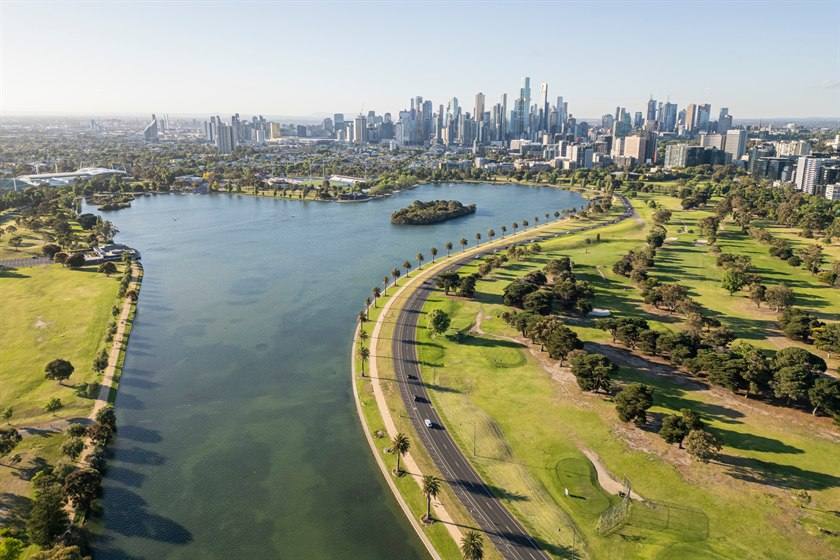
Few suburbs offer so much within such a small area. In a morning you can walk around the lake with the city skyline reflected in the water, browse the shops in the village, and be on the sand ten minutes later. It is flat, leafy and very easy to like.
Albert Park is fifteen minutes by tram from the middle of Melbourne and lies between South Melbourne and St Kilda, which makes it simple to combine with either.
History and Heritage
Albert Park lies on the Country of the Bunurong people of the Kulin Nation. Before the city was built, the area was a chain of shallow lagoons and swamps behind the beach, full of fish, eels and waterbirds, and it was a favoured camping and meeting place.
Park and Lake
The swampland was reserved as a public park in the 1840s and named in 1864 after Prince Albert, the husband of Queen Victoria. Over the following decades the lagoon was dredged and shaped into the present lake, and trees were planted around it. Parts of the reserve were sold off for housing, and others were taken at various times for military camps, rubbish tips and sports grounds, but about 225 hectares remain.
The Suburb
Housing spread along the edges of the park from the 1860s. The streets nearest the beach and the lake were built up during the boom of the 1880s with two-storey terraces and villas, and the area has been one of the most sought-after in the inner city ever since. Much of it is protected, and the streetscapes are remarkably complete.
Motor Racing
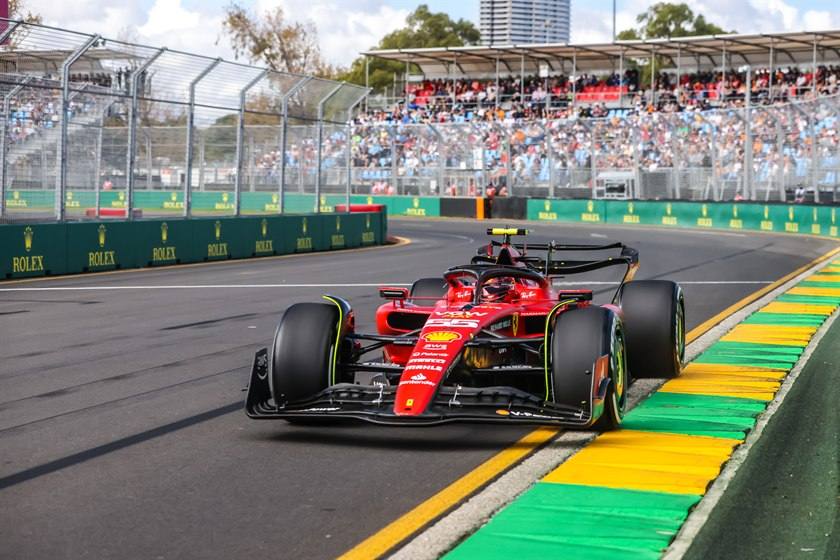
The road around the lake was used for the Australian Grand Prix in 1953 and 1956, when the sport was in its infancy. Racing returned in 1996, when the Formula One championship moved to Melbourne from Adelaide. The decision was fiercely opposed by a local protest group, and the argument over the use of public parkland continues, though the race has become one of the biggest events on the Victorian calendar.
Attractions in Albert Park
The park, the village and the beach each deserve an hour or two.
Albert Park Lake
A flat gravel and bitumen path runs right around the lake, a distance of just under five kilometres, and it is busy from dawn with walkers, runners and cyclists. Black swans nest along the banks, and sailing dinghies and rowing shells are usually out on the water. Boats can be hired, and there are barbecues, playgrounds and picnic lawns along the shore. The view north across the lake to the city towers is one of the best in Melbourne.
The Grand Prix Circuit
For most of the year the track is an ordinary public road, and you can drive, cycle or walk the same corners as the racing drivers at a rather lower speed. Preparations for the race begin in January, when grandstands and barriers start to go up, and parts of the park are closed for several weeks either side of the event.
Sport in the Park
The reserve holds a public golf course and driving range, dozens of playing fields, and the Melbourne Sports and Aquatic Centre, a huge complex of swimming pools, wave pool, water slides and indoor courts that is open to casual visitors. The home ground of the South Melbourne soccer club, with an athletics track, is beside the lake.
The Village
The shopping centre is spread along Bridport Street and Victoria Avenue, meeting at a small square called Dundas Place. It has bakeries, delicatessens, bookshops, boutiques and plenty of footpath cafes beneath Victorian verandahs.
The Beach and Kerferd Road Pier
Kerferd Road, a wide boulevard with a central garden, runs from the village to the bay. At its end is a long timber pier built in the 1880s, popular for fishing and for a stroll over the water. The beach is clean and sheltered, with a broad promenade that forms part of the Bay Trail between Port Melbourne and St Kilda.
Gasworks Arts Park
The site of a nineteenth century gasworks has been turned into a park and arts centre, with studios, a theatre, galleries, sculptures in the grounds and a monthly farmers’ market.
Where To Stay
Albert Park has a few large hotels along the eastern side of the park, facing the lake and the city.
These are modern, full-service hotels with pools and parking, and their upper floors have wide views. They are especially popular during the Grand Prix, when rates multiply and rooms are booked many months ahead.
There are also bed and breakfasts and holiday rentals in the terraces near the village. St Kilda Road and South Melbourne, close by, add many more options.
The largest of the lakeside hotels is the Pullman Melbourne Albert Park on Queens Road, on the eastern side of the lake and a short walk from the St Kilda Road trams, which suits business travellers and Grand Prix visitors who want to walk to the circuit. For something smaller, the Middle Park Hotel, about 1.5 km south-west on Canterbury Road, has 25 rooms above the pub, designed by the Melbourne practice Six Degrees; they suit couples who want the lake, the beach and a good pub meal within a few minutes’ walk, though there is no lift. Quest St Kilda Bayside, about 2 km south in St Kilda, has self-contained apartments with kitchens that work well for families and longer stays.
Grand Prix week, now held in March or early April, is the one time of year to book many months ahead, as every suburb around the park fills and many places set minimum stays. Parking in the village streets is metered and tight, and there is no room for caravans or large motorhomes in the inner streets. The closest caravan park is BIG4 Melbourne Holiday Park in Coburg, about 15 km north by road, with powered sites and cabins.
Eat & Drink
The village is full of cafes for breakfast and lunch, and the queue for weekend brunch is part of local life.
Andrew’s Hamburgers, on Bridport Street, has been making old-fashioned burgers since 1939 and regularly features in lists of the best in Melbourne. Jock’s Ice Cream, on Victoria Avenue, is a neighbourhood institution with a devoted following. The Albert Park Hotel is a stylishly renovated pub with a well-regarded restaurant.
Kiosks and cafes are dotted around the lake and along the beach, and there are restaurants overlooking the water at the boatsheds.
Venues change, so check before making a special trip.
The village has a good run of restaurants beyond its brunch cafes. Chez Bagou, at 132 Bridport Street, is a softly lit French bistro known for seared scallops, boeuf bourguignon and tarte tatin. On Victoria Avenue, Atta (159-161 Victoria Avenue) serves upmarket modern Indian food in a striking dining room, Italian Artisans (135 Victoria Avenue) is a small pizzeria and espresso bar with an Italian wine list, and Lenny (113 Victoria Avenue) is a relaxed neighbourhood cafe with outdoor tables. Inside the Albert Park Hotel, on the corner of Montague Street and Dundas Place, Happy Valley serves modern Chinese dishes and weekend yum cha.
On the foreshore at 129a Beaconsfield Parade, Pipis Kiosk combines a seafood restaurant looking over the bay with a takeaway window for fish and chips and a wine cave of more than 200 bottles; it is closed early in the week. The Gasworks Farmers’ Market fills the arts park on Graham Street on the third Saturday of each month. For groceries, the South Melbourne Market (Wednesday, Friday, Saturday and Sunday) and the South Melbourne supermarkets are about 1.5 km north; fuel stations are on the main roads around the park rather than in the village.
Getting to Albert Park
Tram route 96 from Bourke Street stops at Albert Park Station, beside the park, on its way to St Kilda. Route 1 runs from Swanston Street through South Melbourne to the beach, and route 12 runs along the northern side of the suburb. Albert Park is outside the Free Tram Zone.
For the eastern side of the lake, take any tram along St Kilda Road and walk west.
There is paid parking around the lake. Cyclists can reach the park from the city along the St Kilda Road bike lanes or the Bay Trail.
Experiences
- Active
- City
- Historic/Heritage
- Relaxation
Popular Activities
- Beach
- Cycling
- Food and Wine
- Golfing
- Sailing
- Swimming
About Albert Park
Accommodation In Albert Park
Discover some of the accommodation in and around Albert Park
