
Ravensthorpe, WA
Ravensthorpe is a small town on the South Coast Highway in Western Australia, between Albany and Esperance and about 540 km south-east of Perth. It began as a gold and copper mining camp at the turn of the twentieth century and is now the centre of a wheat and sheep district. For travellers it is best known for its extraordinary wildflowers, celebrated each spring in one of the largest wildflower shows in the state.
Known For
- The Ravensthorpe Wildflower Show
- Giant banksia murals on the grain silos
- Mining heritage and the Ravensthorpe Range
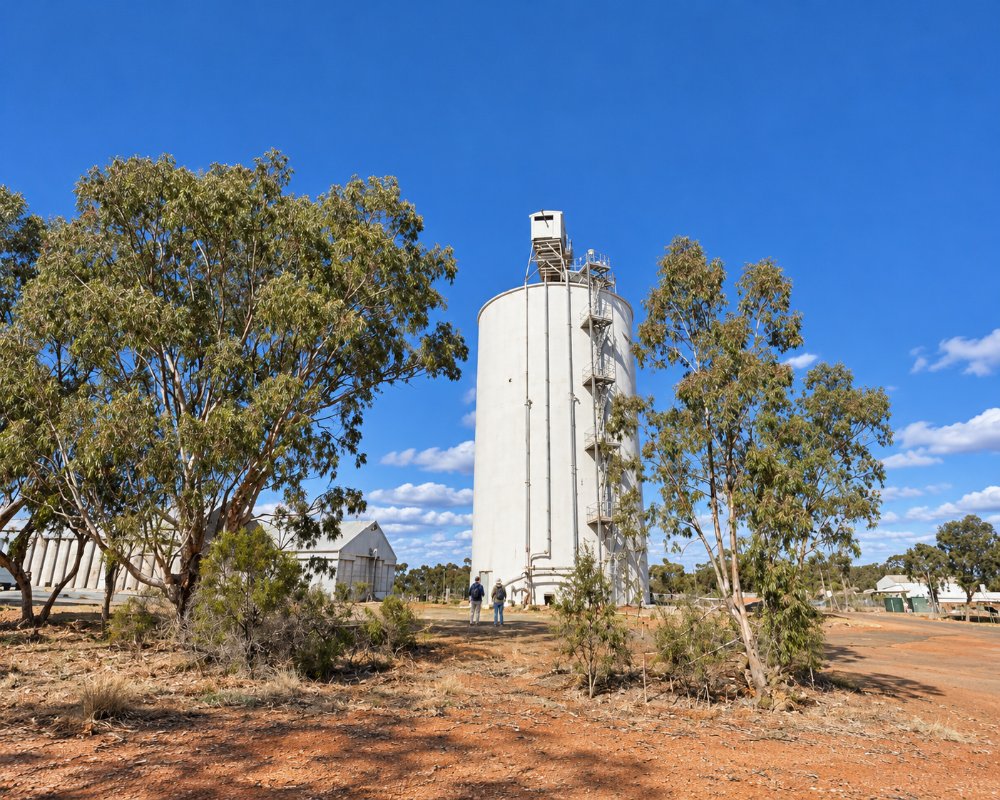
The town lies beside the low, wooded Ravensthorpe Range, at the meeting point of farmland, mallee and the coastal heath of Fitzgerald River National Park. That mix of soils and landscapes produces a huge variety of plants in a small area, and the district sits within an internationally recognised biosphere reserve.
Things To Do
Wildflower Show
For two weeks each September, volunteers collect and display hundreds of species of local wildflowers in the town hall, each labelled, with botanists on hand to answer questions. Guided tours, walks and other events run alongside it. Between August and November the roadsides and reserves around town put on a display of their own.
Silo Art
The grain silos at the western entrance to town carry a 25-metre-high mural by the artist Amok Island, completed in 2016. Called Six Stages of Banksia baxteri, it shows a local banksia from bud to seed, together with the honey possum and honeyeater that pollinate it. It is part of the Public Silo Trail across regional Western Australia.
Heritage Trail and Museum
The main street has several buildings from the mining boom, including the two-storey Palace Hotel of 1907, with its pressed-metal ceilings and stained glass, and the former Commercial Hotel, now the community centre. The historical society’s museum is based in Dance Cottage, built in 1901, and includes a railway carriage and mining relics. A signposted heritage trail links the sites.
Ravensthorpe Range
Scenic drives climb the range to lookouts over the farmland, the Fitzgerald River country and, on a clear day, the Southern Ocean. The ruins of the old government copper smelter stand a few kilometres south-east of town.
Kukenarup Memorial
West of town on the highway, this memorial acknowledges the Noongar people killed at Cocanarup in 1880 in reprisal for the death of a settler, and offers a place for reflection. Signs tell the story from the perspective of local Noongar families.
Fitzgerald River National Park and Hopetoun
The eastern side of the national park, with its peaks, beaches and royal hakeas, is under an hour away via the coastal town of Hopetoun, 50 km south on a sealed road. The January 2026 bushfire, which also burnt the Cocanarup area south-west of town, in January 2026 burnt more than half of Fitzgerald River National Park. The sealed Hamersley Drive to Hamersley Inlet, Cave Point and East Mount Barren is open, but the unsealed northern section of the drive, Quoin Head, Whalebone and Moir tracks and the Mamang Walk Trail were still closed in late 2026, so check Parks and Wildlife alerts first.
History
Ravensthorpe is in the country of the Wudjari Noongar people.
The Surveyor-General John Septimus Roe named the Ravensthorpe Range in 1848, after a village in Northamptonshire. The Dunn family took up a pastoral lease in 1868 and began running sheep at Cocanarup, west of town, in 1871. Gold was found in the district in the 1890s, starting the rush to the Phillips River goldfield, and the town was gazetted in 1901. Copper soon proved more important than gold. A government smelter opened in 1906, and a railway to the port at Hopetoun followed in 1909. At its peak the district had more than 3,000 people.
The mines closed after the First World War and the town declined until new farmland was cleared from the 1950s. Mining returned in the 2000s with large nickel and lithium projects, which have brought new waves of boom and bust; the nickel mine went into care and maintenance in 2024 and the Mount Cattlin lithium mine in 2025.
Where To Stay
Ravensthorpe has rooms at the Palace Hotel, motel units and Green Haven Tourist Park, which has powered sites, tent sites and chalets. Self-contained RVs can stay free for up to 48 hours opposite the BP roadhouse on Morgans Street, there is a dump point at the entertainment centre on Coleman Street, and drinking water is available at the information bay next to the BP.
There are also farm stays in the district, and a wider choice of holiday houses and beach camping at Hopetoun. Accommodation is tight during the wildflower show and when mining projects are busy, so book ahead.
Eat & Drink
Ravensthorpe’s main street, Morgans Street, has an old pub, a few cafés and two roadhouses, enough for a good stop on the South Coast Highway. During the wildflower show in September, volunteers also serve morning and afternoon teas and light lunches at the hall.
Pub and cafés
The two-storey Palace Hotel serves counter meals every evening and lunch at weekends, with cold beer, a beer garden and a bottle shop. Ravy Country Kitchen, under new management since December 2025, bakes on site and serves homemade food and coffee, with an all-day breakfast on Sundays; it is closed on Saturdays. Cafe Lounge, formerly the Bread and Butter Bar, does coffee and light meals except on Sundays, and Yummylicious Candy Shack mixes a lolly buffet with hot dogs, milkshakes and Italian coffee.
Roadhouses and supplies
Four Barell Cafe & Restaurant at the Shell roadhouse opens early and cooks curries, pizzas, garlic naan, fish and chips and roadside breakfasts, and the BP Ravensthorpe Roadhouse has rolls, salads and hot food. The town has had no supermarket since the FoodWorks closed in February 2025; a community fund has bought the building to reopen it, so check locally. Keen’s Mini Mart sells fresh basics, and the nearest supermarket is the IGA in Hopetoun, 50 km south.
When To Visit
Spring is the main season, with roadside wildflowers peaking from about August to October and the Ravensthorpe Wildflower Show running for around two weeks in mid-September; book accommodation early for show time, as rooms here and in Hopetoun fill fast. Summers are hot inland and bring bushfire risk, as the January 2026 fire showed, while winters are cool and gravel tracks in the range and the national park can close after rain. Autumn is mild and quiet, and suits the heritage trail and the silo art.
Getting There
Ravensthorpe is on the South Coast Highway, about 290 km east of Albany and 185 km west of Esperance. From Perth, the most direct route is via Brookton, Hyden and Lake King, about six hours.
Coach services between Perth, Albany and Esperance stop in town. A car is needed to explore the range and the national park.
Experiences
- Historic/Heritage
- Nature based
- Rural/Country
- Self-Drive
Popular Activities
- Bush Walking
- Driving
- National Park
- Sightseeing
About Ravensthorpe
- Locality: Urban locality
- Ravensthorpe Postcode: 6346
- State: Western Australia
- Region: Esperance & the Golden Outback
- Latitude: -33.58182
- Longitude: 120.04455
- Elevation: 234m
- Timezone: Australia/Perth
