
Bronte Park, TAS
Bronte Park offers a tranquil escape in the heart of Tasmania’s Central Highlands. Located about 154 kilometers from Hobart and a similar distance from Launceston, this quiet village is surrounded by breathtaking landscapes, making it a favored destination for outdoor enthusiasts and those seeking a peaceful retreat.
Known For
- Exceptional trout fishing opportunities.
- Historical significance tied to Tasmania’s hydroelectric projects.
- Proximity to Tasmania’s geographical center.
Bronte Park’s origins date back to the mid-20th century when it served as a residential hub for workers involved in Tasmania’s hydroelectric schemes. Built by the Hydro-Electric Commission, the village housed hundreds of workers and their families, complete with amenities like a cinema, hospital, and school. While many of these structures have disappeared, remnants of this era can still be seen, lending a nostalgic charm to the area.
Today, Bronte Park retains its historical essence, although the historic Bronte Park Chalet was destroyed by fire in 2018. For those interested in Tasmania’s industrial heritage, nearby sites like the Butlers Gorge Power Station provide fascinating insights into the state’s energy history.
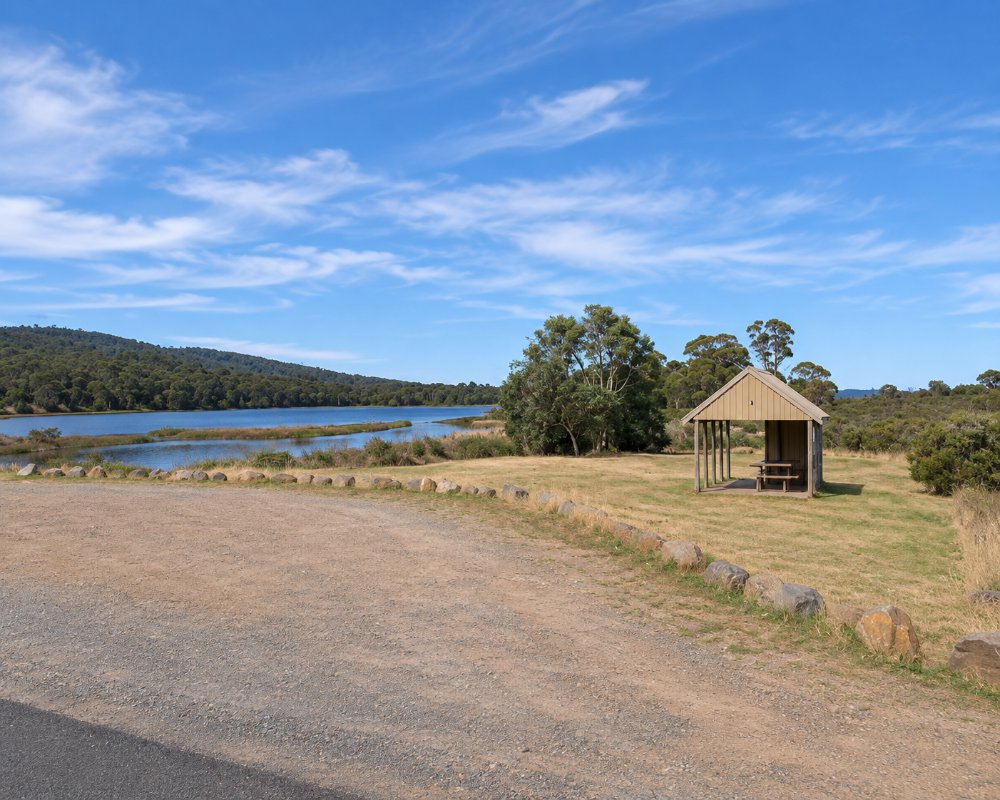
Nature lovers are drawn to Bronte Park for its idyllic setting and outdoor adventures. The surrounding lakes, including Bronte Lagoon, Bradys Lake, and Lake Binney, are renowned for trout fishing. Anglers travel from across the region to cast their lines in these pristine waters, where both brown and rainbow trout thrive.
Beyond fishing, the landscape invites exploration. Walking tracks around Bronte Lagoon reveal sweeping views and opportunities to spot native wildlife. Whether it’s a quiet stroll or a more vigorous hike, the area’s natural beauty never disappoints. For those who appreciate stargazing, the clear night skies offer stunning views of the Milky Way.
Things To Do in Bronte Park
Trout fishing on Bronte Lagoon
Bronte Lagoon, about 7 km south of the village, is run by the Inland Fisheries Service as a wild brown and rainbow trout fishery and is reserved for fly fishing and artificial lures, with trolling and spinning popular and fish tailing in the shallows early and late in the day. The season runs from the first Saturday in August to the Sunday nearest 30 April, and anglers 14 and over need a Tasmanian inland angling licence. The boat ramp is on the western shore near the dam wall.
The Bronte lakes and the Hydro story
Bronte Lagoon, Bradys Lake, Lake Binney and Tungatinah Lagoon were all made between 1952 and 1956 as storages for the Tungatinah Power Station on the Nive River. A drive around them shows the canals, dams and pipelines that still feed the Derwent power scheme, and Tarraleah‘s penstocks are about 30 km south.
Laughing Jack Lagoon
This remote lake west of Bronte Park, about half an hour’s drive from Derwent Bridge, has a free lakeside camping area with no facilities. The track in needs a four-wheel drive, so leave caravans behind.
The Marlborough Highway to Great Lake
The B11 runs about 31 km north-east from near Bronte Park to Miena on Great Lake, with no towns on the way. It is a shortcut between the West Coast and the lakes country, but it is mostly gravel and can be impassable in heavy snow, so check road conditions before towing.
Where To Stay
Bronte Park caters to a variety of accommodation preferences.
The Highland Cabins and Cottages provide modern comforts with options like studio apartments and spa cabins. Meanwhile, the Bronte Park Highland Village offers budget-friendly cottages surrounded by peaceful bushland.
For a more rustic experience, consider camping near the lakes. Several sites allow visitors to connect with nature while enjoying basic amenities. Each option ensures a comfortable base from which to explore the region.
Highland Cabins and Cottages, on the corner of Bronte Heights and the Marlborough Highway, has ten self-contained units: studio apartments, spa cabins (some for adults only) and two-bedroom family cabins, with cooking facilities, barbecues and wood fires. Some units take pets on request. It is about 3 km from the geographical centre of Tasmania.
Self-contained campers can use the informal lakeshore camping area on the western shore of Bronte Lagoon near the boat ramp, on Hydro land about 7 km south. There are no facilities, so bring a portable or chemical toilet and your own water, and check campfire rules, as seasonal fire bans apply across the Central Highlands from late October. Laughing Jack Lagoon also has free camping for four-wheel drives.
The nearest caravan park is the Highlander Caravan Park at Tarraleah, about 30 km south, with 15 powered sites booked by phone. Derwent Bridge, about 31 km west, has self-contained chalets, a hotel and a dump point; Hamilton also has one. The nearest confirmed fuel is at Derwent Bridge. Snow can close roads here in winter, and the Marlborough Highway north to Miena is mostly gravel.
Eat & Drink
Dining in Bronte Park is a cozy affair, with options that reflect the region’s laid-back vibe. Bronte Park has had no pub or restaurant since the chalet fire of 2018, and the Highland Cabins and Cottages are self-contained with their own kitchens.
The nearest cafe is the Battery Cafe at Tarraleah, about 30 km south, good for a relaxed lunch or coffee break. Visitors can also explore local produce markets in the Central Highlands area, where fresh ingredients and homemade goods highlight Tasmania’s culinary offerings.
Bronte Park has had no pub or restaurant since the chalet burned in 2018, so come stocked up. The nearest meals are at Tarraleah, about 30 km south, where the Battery Cafe serves coffee, cakes, toasties and pies by day and the Highlander Arms serves pub dinners; book the Highlander Arms ahead. About 31 km west at Derwent Bridge, the Derwent Bridge Wilderness Hotel serves lunch and dinner daily, and the Hungry Wombat Cafe sells fuel and snacks. The nearest supermarket is at Ouse, about 67 km south-east.
History
Bronte Park sits in the Central Highlands, the country of the Big River nation of the palawa, almost exactly in the centre of the island. The Hydro-Electric Commission set up the village in the 1940s to house workers on the Tungatinah and Nive River schemes, and by the 1950s more than 700 workers lived here, with a store, police station, school, cinema, hospital, dairy and church. The post office opened in July 1948 and closed in 1979. The Bronte lakes were flooded between 1952 and 1956. As the schemes were finished most buildings were taken away, and by 1991 the Hydro had sold the chalets into private hands. The 1940s chalet, the village’s pub and lodge, burned down in March 2018.
Getting There
Bronte Park is accessible by car, making it an easy two-hour drive from Hobart via the Lyell Highway, and a little longer from Launceston via the Highland Lakes Road and Miena. The journey itself is a scenic adventure, passing through some of Tasmania’s most picturesque landscapes. For those flying into Tasmania, rental cars are readily available at major airports.
Public transport options to Bronte Park are limited, reinforcing its appeal as a remote, peaceful destination. Travelers are encouraged to plan ahead and enjoy the journey as part of the experience.
Experiences
- Caravan and Camping
- Nature based
- Remote
- Self-Drive
Popular Activities
- Bush Walking
- Caravan and Camping
- Fishing
About Bronte Park
- Locality: Rural locality
- Bronte Park Postcode: 7140
- State: Tasmania
- Region: Hobart and South
- Latitude: -42.12959
- Longitude: 146.49517
- Timezone: Australia/Tasmania
