
Ascot, QLD
Ascot is an elegant inner-northern suburb of Brisbane, about seven kilometres from the city centre, and the home of thoroughbred racing in Queensland. Two racecourses sit side by side here, and the road that leads to them from the river has become one of the most popular cafe and dining strips on the north side.
Known For
- Eagle Farm and Doomben racecourses
- Racecourse Road cafes, bistros and boutiques
- Tree-lined streets of grand timber houses
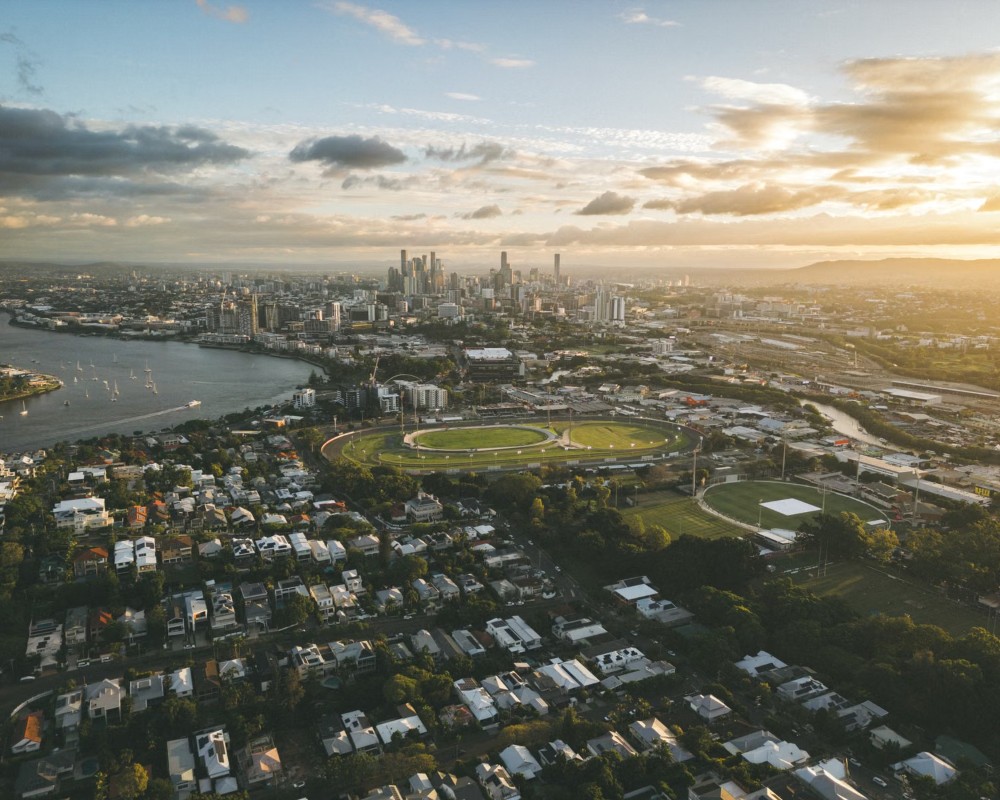
The suburb covers a low ridge behind Hamilton. Racecourse Road runs from the river to the gates of Eagle Farm, lined with shops and eateries, and the residential streets on either side are among the most expensive in the city, shaded by poinciana and fig trees. Doomben racecourse lies just to the east.
Ascot is busiest on Saturdays, when racegoers in their best clothes fill the footpaths, and during the winter carnival, when the biggest races of the Queensland calendar are run.
Things To Do in Ascot
Eagle Farm Racecourse
Racing has been held at Eagle Farm since 1865, and its heritage grandstands, gardens and long home straight make it one of the most attractive courses in Australia. The feature meetings are in late autumn and early winter, headed by the Stradbroke Handicap, the richest race in the state. Ordinary Saturday meetings are relaxed and inexpensive, and children are welcome.
Doomben Racecourse
Doomben, opened in 1933, shares the racing calendar with its neighbour. Its major races, including a famous sprint and a weight-for-age cup, are also run during the winter carnival. Midweek meetings are held throughout the year.
Racecourse Road
The strip runs for about a kilometre and has a village feel, with bakeries, delicatessens, fashion boutiques, florists and homewares shops between the cafes and restaurants. Weekend mornings are the liveliest, and on race days the bars and bistros fill before the first race and again after the last.
Heritage Streets
Ascot has some of the finest domestic architecture in Queensland. A walk along Sutherland Avenue, Windermere Road and the streets near Oriel Park passes large timber houses from the late 1800s and early 1900s, with wide verandahs, ornate fretwork and established gardens. Old timber tram shelters survive on some corners.
Riverside
At its southern end Racecourse Road meets the river at Hamilton, where a riverwalk leads to Portside Wharf in one direction and towards Newstead in the other. On weekend evenings the Eat Street Northshore night market is a few minutes away by car or bus.
Eagle Farm Farmers Market
Since May 2026 the Jan Powers Farmers Markets have run at Eagle Farm Racecourse every Sunday morning, with stalls of farm produce, bread and pastries, flowers, plants, coffee and hot breakfasts. Walkers enter at Gate 4, at the top of Racecourse Road where it meets Lancaster Road, and drivers use the free infield car park off Mein Street, behind the Racecourse Village shopping centre. Dogs on leads are welcome, and it pairs well with a coffee and a stroll along Racecourse Road.
Where To Stay
Ascot has little accommodation of its own, but there is plenty close by.
A few boutique guesthouses and bed and breakfasts operate in heritage houses in and around the suburb, offering a taste of old Brisbane.
Hotels and motels along Kingsford Smith Drive in neighbouring Hamilton are a short walk from Racecourse Road and convenient for the airport, ten minutes away. Serviced apartments at Portside Wharf are another option.
During the winter racing carnival and on major race days, rooms nearby are in demand and should be booked ahead.
The nearest hotels are on Kingsford Smith Drive in Hamilton, at the river end of Racecourse Road. The Kingsford, an Ascend Collection hotel at 510 Kingsford Smith Drive, is about 1.5 km from the Eagle Farm gates, close to Portside Wharf and the ferry, and runs a cruise terminal shuttle. Several motels and apartment hotels nearby suit racegoers who want to walk home after the last race, and families who want a pool and parking.
For a city base with a resort feel, The Calile on James Street is about 5 km south-west, and Rydges Fortitude Valley at the Bowen Hills showgrounds is a similar distance by car or train. From Ascot station, Doomben-line trains reach the inner city in about 20 minutes, so anywhere along the line works for a day at the races.
For Stradbroke Day in June and the other big winter carnival meetings, book months ahead, as the whole north-eastern riverfront fills up.
Inner Brisbane has had no caravan park since Newmarket Gardens at Ashgrove closed, so caravan travellers stay in the outer suburbs and come in by train.
Eat & Drink
Racecourse Road is the place to eat. Breakfast and brunch cafes open early, and through the day there are patisseries, sushi bars, pizzerias and gelato shops. In the evening the choice includes French and Italian bistros, modern Australian restaurants, Thai and Japanese kitchens and several wine bars.
Both racecourses have restaurants, bars and lawn areas open on race days, from casual public bars to dining rooms overlooking the track.
For a classic Queensland pub meal, the hotel at Breakfast Creek is five minutes away, and the waterfront restaurants of Portside Wharf are just down the hill.
Breakfast is Racecourse Road’s strength. Dicki’s Ascot, the sister of the New Farm cafe, pours coffee with a plant-based menu at the racecourse end of the strip, and the Sunday farmers market at Eagle Farm adds coffee carts and hot food. Verandah on Racecourse serves Australian dishes with a Vietnamese twist and has private dining rooms for groups. 5 Boroughs, a New York-style bar and grill, is known for its burgers, steaks and ginger-pepper caramel wings. Down the hill on Kingsford Smith Drive, the Hamilton Hotel has poured beers since 1865 and is a popular stop after the races.
Racecourse Village, off Nudgee Road beside the course, is the local shopping centre, and fuel is on the main roads towards the airport.
History
Ascot is in the country of the Turrbal people. The first race meeting at Eagle Farm was held in 1865, and the suburb that grew beside the course was named after the famous racecourse in England.
Trams reached Ascot in 1899, and wealthy families built large houses on the high ground. During the Second World War both racecourses were taken over as camps for American troops, and racing did not return to Eagle Farm until 1946.
Getting to Ascot
Ascot railway station is on the Doomben line, about 20 minutes from Central, with the racecourses a short walk away. Frequent buses run from the city and Fortitude Valley along Kingsford Smith Drive and up Racecourse Road.
CityCat ferries stop at Bretts Wharf, at the river end of Racecourse Road. On major race days extra trains and buses operate, and parking near the courses is restricted.
Experiences
- City
- Food and Wine
- Historic/Heritage
- Indulgence/Luxury
Popular Activities
- Bush Walking
- Food and Wine
- Shopping
- Sightseeing
About Ascot
- Locality: Suburb
- Ascot Postcode: 4007
- State: Queensland
- Region: Brisbane
- Latitude: -27.43027
- Longitude: 153.05868
- Elevation: 35m
- Timezone: Australia/Brisbane
