
Lower Glenelg National Park, VIC
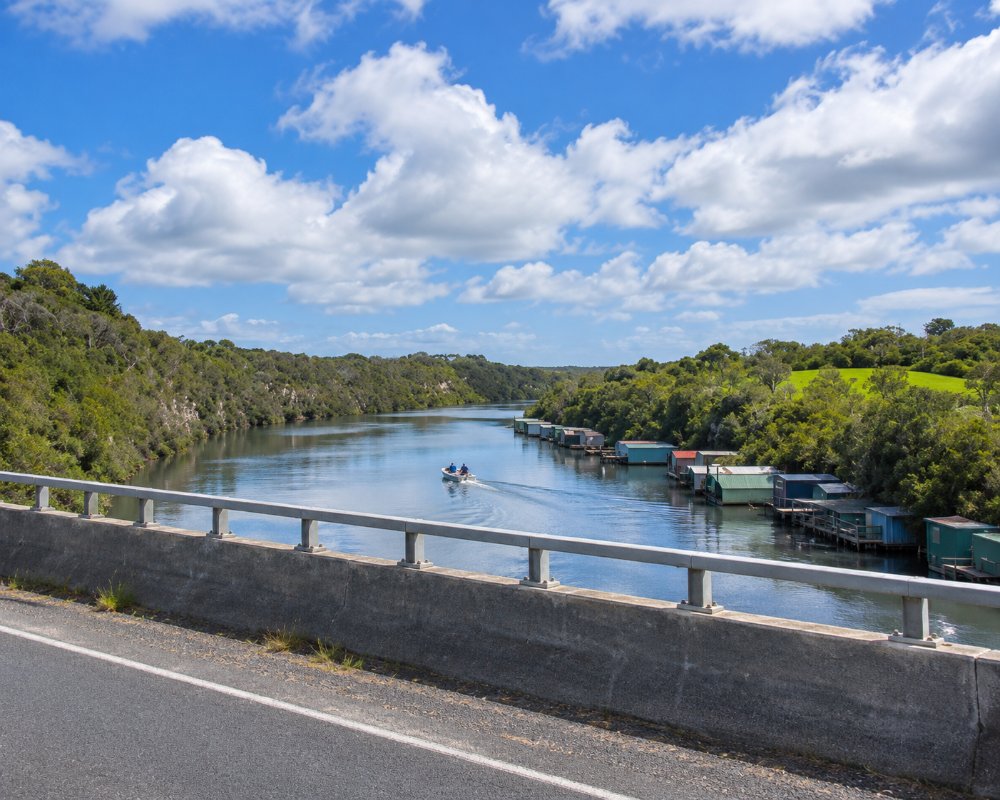
Lower Glenelg National Park protects about 27,000 hectares of forest, heath and river country along the lower Glenelg River in Victoria’s far south-west, between Dartmoor and Nelson near the South Australian border. The river has carved a limestone gorge up to 50 metres deep through the park, lined with river red gums and caves.
The best way to see it is from the water. The Glenelg River Canoe Trail is one of the great paddling journeys in Australia, and riverside campgrounds, river cruises from Nelson and the Great South West Walk give other ways to explore.
Known For
- The Glenelg River gorge
- The Glenelg River Canoe Trail
- Riverside campgrounds and the Great South West Walk
Things To Do in the Park
Glenelg River Canoe Trail
The canoe trail runs 75 km from Dartmoor down to the river mouth at Nelson, usually paddled over three or four days. Seven canoe-only campsites along the river take up to 20 campers each, for one night per camp, with toilets, fire pits, tables and rainwater that should be treated before drinking. All must be booked through Parks Victoria. Canoes can be hired at Dartmoor, Winnap or Nelson, with drop-offs available.
River Cruises
From Nelson, Glenelg River Cruises runs scenic cruises up the river into the gorge, an easy way to see the cliffs without paddling.
Great South West Walk
The 262 km Great South West Walk from Portland follows the river through the park to Nelson, with walk-in camps along the way. Day walks along the river near Nelson give a taste of it.
Fishing
The river is good fishing water for estuary perch, bream, mullet, salmon and mulloway, from the banks, the campgrounds and boats.
Princess Margaret Rose Cave
Princess Margaret Rose Cave, a richly decorated limestone cave in the park, has been closed since early 2021 while Parks Victoria upgrades the site; its campground is also closed.
Where To Stay
The park has several riverside campgrounds, all booked year-round through Parks Victoria. Pritchards has 20 sites, all but one suitable for caravans, reached by two-wheel drive from Winnap Road, with non-flush toilets and non-drinking water. Wilson Hall has 12 sites suitable for caravans, reached via River Fire Line. Hutchessons and Battersby have two sites each and McLennans Punt three, while Red Gum Landing, Wild Dog Bend and Forest North suit tents and camper trailers; sand may need four-wheel drive in summer. Dogs and generators are not allowed. Bring drinking water and firewood.
For full facilities, Nelson has two caravan parks, and Dartmoor has a free campground at Fort O’Hare beside the river. Parks Victoria runs pest-animal control in remote parts of the park from time to time; stay on tracks and follow signs.
Wilson Hall also has a boat ramp and takes campervans and motorhomes as well as caravans. It and Hutchessons are on the north bank, reached by two-wheel drive on the River Fire Line. The park’s main access roads are the Portland-Nelson Road south of the river and Wanwin Road to the north. The canoe trail’s seven camps are Skipworth Springs, Pines Landing, Moleside, Bowds, Georges Rest, Lasletts and Patterson. Moleside can also be reached by two-wheel drive off Winnap Road, which makes it a handy meeting point for a support vehicle. Great South West Walk hikers use separate walkers’ camps, such as Simsons, Patterson and Battersby, which registered walkers book.
Nelson Canoe Hire has more than 70 canoes and kayaks for half-day to multi-day hire, and can drop paddlers off and collect them at most points on the river with road access. In Nelson, Casuarina Cabins on North Nelson Road has 10 ensuite cabins with boat parking, and fuel and LPG are sold at the Nelson Roadhouse. The nearest public dump points are at Henty Park in Portland and on Hunter Street East in Heywood, with more in Mount Gambier.
Eat & Drink
There is nowhere to eat in the park. The Nelson Hotel opens Wednesday to Sunday, with pizzas and pre-made meals all day and bistro meals late in the week (book ahead), and the Nelson Kiosk by the river sells coffee, meals, groceries and bait. Mount Gambier, about 40 minutes away, has a wide choice of cafes and restaurants.
There are no kiosks in the park, so carry food and drinking water. Glenelg River Cruises in Nelson serves a three-course lunch or dinner aboard the MV Mini Munya on its gorge cruises; book ahead and choose your main when you do. The Nelson Roadhouse on the Portland-Nelson Road sells takeaway food, ice, bait and basic groceries, and Rainbow OMG’s farm store on Wade Street in Nelson sells organic vegetables, honey and eggs for campers cooking their own meals.
History
This is Gunditjmara Country, cared for under a joint plan with the Traditional Owners. Major Thomas Mitchell travelled down the Glenelg in 1836, and the river later carried timber and settlers. Lower Glenelg National Park was declared in 1969.
Getting to the Park
The park is about 420 km west of Melbourne by road, between Portland and Mount Gambier. Nelson, at the river mouth, is the main entry point, reached from Portland on the Portland Nelson Road or from Mount Gambier via the Princes Highway. Dartmoor, on the Princes Highway, is the upstream entry. There is no public transport.
Experiences
- Eco Tourism
- Nature based
- Remote
- Self-Drive
Popular Activities
- Bird Watching
- Bush Walking
- Caravan and Camping
- Fishing
- Kayaking
- National Park
- Wildlife
About Lower Glenelg National Park
- Locality: Rural locality
- Lower Glenelg National Park Postcode: 3292
- State: Victoria
- Region: Great Ocean Road
- Latitude: -38.0000
- Longitude: 141.2000
- Timezone: Australia/Melbourne
