
Dartmoor, VIC
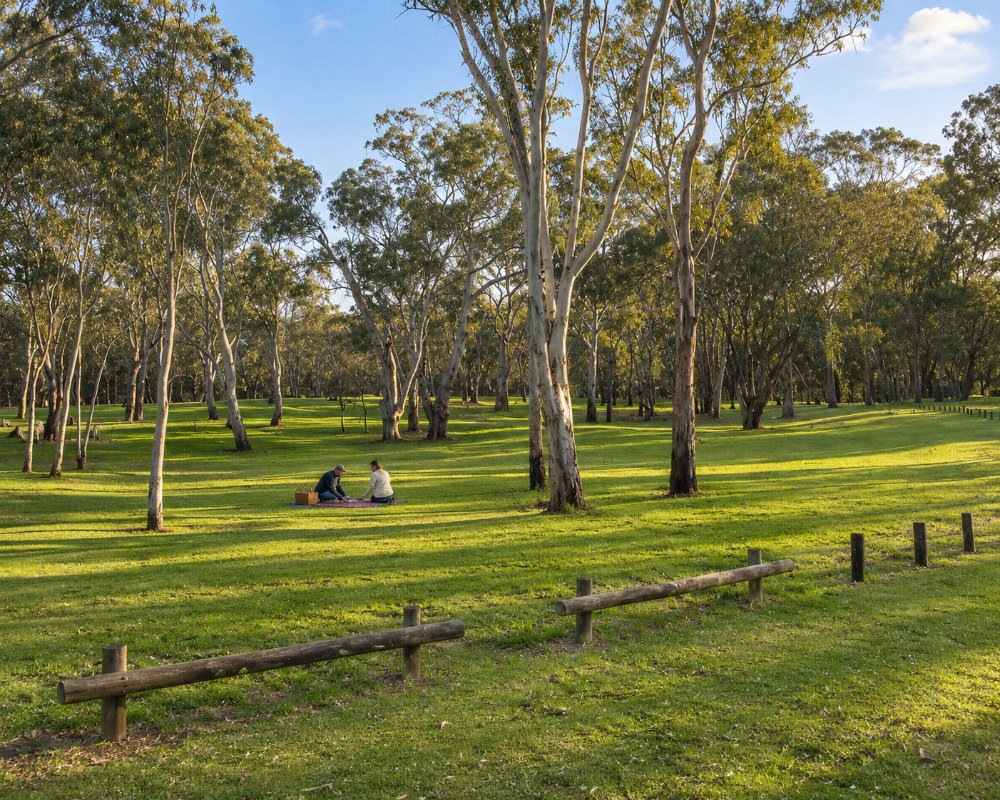
Dartmoor is a small town on the Princes Highway where it crosses the Glenelg River, about 400 km west of Melbourne and 50 km east of Mount Gambier. Surrounded by pine plantations, river red gums and grazing country, it is a peaceful place with a village green, a handful of businesses and one of the best free camps on the highway.
It is also where the Glenelg River Canoe Trail begins, 75 km of paddling down through Lower Glenelg National Park to the sea at Nelson.
Known For
- The carved cedar Avenue of Honour
- The start of the Glenelg River Canoe Trail
- Free riverside camping at Fort O’Hare
Things To Do in Dartmoor
The Avenue of Honour Sculptures
Dartmoor’s Avenue of Honour was planted with Atlantic cedars in 1918, after the First World War. When the old trees had to come down, chainsaw sculptor Kevin Gilders carved the stumps into figures of soldiers, nurses, horses and local characters, and the carvings now line the main street. They are the town’s best-known sight and well worth a stroll.
The Glenelg River and the Canoe Trail
The Glenelg River Canoe Trail starts at Dartmoor and runs 75 km downstream to the river mouth at Nelson, usually paddled over three or four days with seven canoe-only campsites along the way, all booked through Parks Victoria. Even if you are not doing the trail, the riverbank at Dartmoor is a lovely spot for a swim, a fish for redfin and bream, or a paddle.
Walks and Gardens
The Dartmoor Heritage Trail points out the town’s older buildings, and a short sealed rail trail follows the old railway line on the edge of town. Dartmoor Waterfall Gardens on Wanwin Road is a private garden that welcomes visitors. The village green has barbecues, shade and play equipment for families, and there is a nine-hole golf course on Wapling Avenue.
Fort O’Hare and the River Walk
Major Thomas Mitchell camped on the Glenelg just upstream of the town in 1836, named the spot Fort O’Hare after his commanding officer in the Peninsular War, and set out from here to trace the river to the sea. A memorial marks the site where the Crawford River meets the Glenelg, beside today’s campground and canoe launch, and a riverside walk follows the Glenelg from Fort O’Hare back towards town.
Paddle a Stretch of the Glenelg
You do not need to do the whole canoe trail to enjoy the river. Canoe hire is available in Dartmoor, at Winnap and in Nelson, and some hire businesses will drop canoes off and collect them along the river, so a half-day or one-day paddle between access points is easy to arrange. The river is flat water, with red gum banks and limestone cliffs further downstream.
Where To Stay
Fort O’Hare, beside the river on Greenham Street, is a free campground with a donation box, flat areas for caravans and camper trailers, toilets and non-drinking water, and pets are welcome. It is one of the most popular free stops between Portland and Mount Gambier, so arrive early in summer. Wild Dog Bend is a bush campground in Lower Glenelg National Park nearby, and Pines Landing is a canoe camp on the river trail.
Dartmoor sits on the main Princes Highway route, which is sealed and easy for towing. Dartmoor has no dump point; the nearest are at Heywood, by the free RV stop, and in Portland and Mount Gambier. For motels, cabins and more choice of beds, Heywood is 35 km east and Mount Gambier about 50 km west.
The Dartmoor Hotel Motel on Lindsay Road has six air-conditioned rooms with bar fridges and a continental breakfast, within walking distance of the carvings and the river, and a few cottages in the district are let through holiday rental sites.
Lower Glenelg National Park, which starts just downstream, has a string of car-based campgrounds along the river, among them Wild Dog Bend, Battersby, Red Gum Landing, Pritchards and Hutchessons. They are booked through Parks Victoria and facilities are basic, but the river is right beside you for fishing, swimming and paddling. The seven canoe camps on the Glenelg River Canoe Trail are for paddlers only and are booked one night at a time.
The park’s access roads are mostly gravel, so take them slowly with a caravan, carry water and supplies, and check the Parks Victoria website for any track or campground closures before you set out. There is no fuel or shop inside the park, so fill up and stock up in Heywood or Mount Gambier. For powered sites and cabins, the caravan parks at Nelson on the coast and in Mount Gambier, about 50 km west, are the closest.
Eat & Drink
Dartmoor has a hotel and a few small local businesses for a meal or supplies, but the choice is limited and opening hours vary. For cafes, bakeries and restaurants, Heywood is about 30 minutes east and Mount Gambier about 40 minutes west.
The Dartmoor Hotel Motel on Lindsay Road is the place for a meal in town. It is a family-run country pub with a bar, pool table and darts, and the kitchen is known for its pizzas, homemade chicken schnitzels, steaks and classic pub dishes, with dietary needs catered for if you ask ahead. Out the back, the old stables open onto a lawn that suits families and dogs on a fine evening.
For more choice, Heywood is about 35 km east, and the Tae Rak Aquaculture Centre and Café at Lake Condah, north of Heywood, opens Wednesday to Sunday for lunch on a Budj Bim day. Mount Gambier, about 50 km west, has supermarkets, bakeries, cafes and restaurants of every kind, and Nelson, at the mouth of the river, is the place for a meal at the end of the canoe trail. The Digby Hotel, north-east on the road to Casterton, is a country pub that doubles as the general store.
Paddlers starting the canoe trail should buy food before arriving, as Dartmoor has no supermarket; Heywood and Mount Gambier are the places to stock up and fill the tank.
History
This is Gunditjmara Country. Major Thomas Mitchell passed through on his 1836 expedition, the Woodford run was taken up in 1845 and the Woodford Inn opened at the river crossing in 1846, and a township grew around it. The railway from Heywood to Mount Gambier came through later, and closed in 1995. Timber from the surrounding pine plantations has long been the district’s mainstay.
Getting to Dartmoor
Dartmoor is about 400 km west of Melbourne on the Princes Highway, about 35 km west of Heywood and 70 km from Portland via Heywood. Mount Gambier is about 50 km west. V/Line coaches on the Mount Gambier route pass through the district.
Experiences
- Historic/Heritage
- Nature based
- Relaxation
- Rural/Country
- Self-Drive
Popular Activities
- Bush Walking
- Canoeing
- Caravan and Camping
- Fishing
- Kayaking
- National Park
- Swimming
About Dartmoor
- Locality: Urban locality
- Dartmoor Postcode: 3304
- State: Victoria
- Region: Great Ocean Road
- Latitude: -37.92254
- Longitude: 141.27543
- Elevation: 40m
- Timezone: Australia/Melbourne
