
Narawntapu National Park, TAS
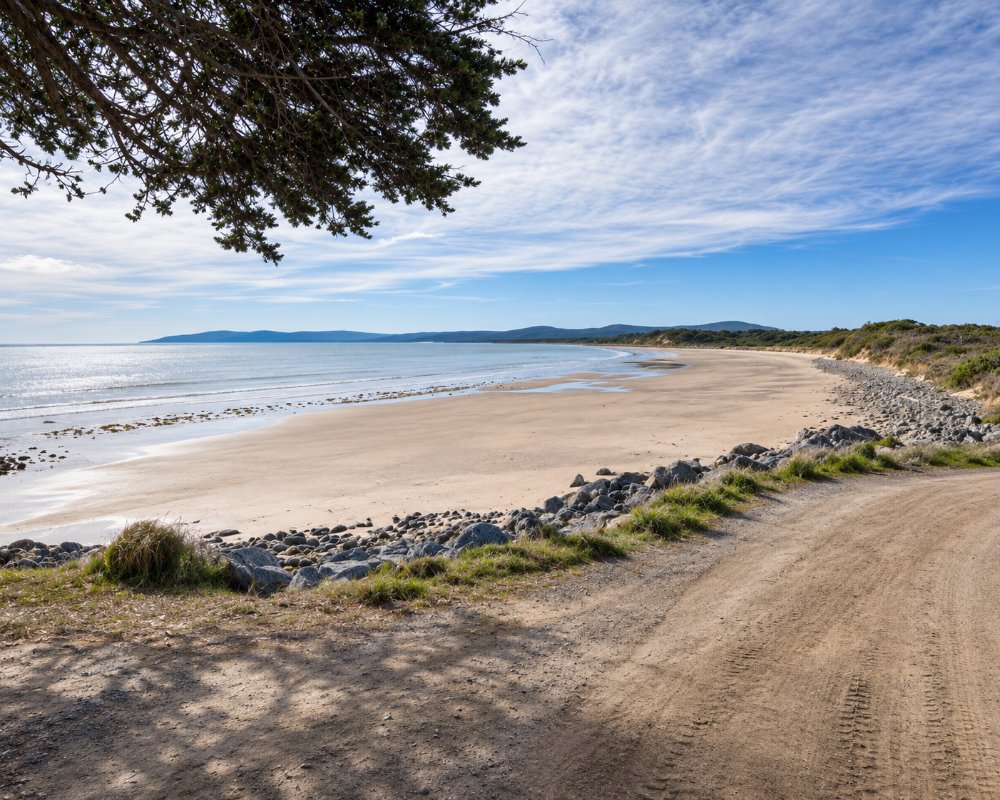
Narawntapu National Park stretches along the north coast between Port Sorell and the mouth of the Tamar. Its eastern end, around Bakers Beach and the old farm of Springlawn, is the part most people visit, about 30 minutes from Devonport.
Open grassland behind the dunes makes it one of the best places in Tasmania to watch wildlife, and it has been called the Serengeti of Tasmania. It is also one of the few national parks with powered campsites.
Known For
- Kangaroos and wallabies grazing at dusk
- The long sweep of Bakers Beach
- Powered campsites in a national park
Things To Do in the Park
Springlawn
Late in the day, Forester kangaroos, Bennett’s wallabies and pademelons come out in numbers to graze the lawns around the visitor centre. Wombats were once the stars here, but disease cut their numbers sharply after 2010 and they are now seldom seen.
Bird Hide Walk
An easy two-kilometre return walk through paperbark forest leads to a hide on the lagoon. Allow 30 minutes.
Springlawn Nature Walk
A circuit of 4.8 km around the lagoon and grasslands, about two hours.
Archers Knob
A climb to a low hill with a view along the whole of Bakers Beach. It is nine kilometres and three to three and a half hours as a circuit returning along the beach.
Bakers Beach
A long, wide ocean beach for walking and swimming, though it is not patrolled. Near the boat ramp at Bakers Point, an area is set aside for boats.
Horse Riding
The park has horse yards and a long riding trail; a permit is needed.
Where To Stay
The park has four campgrounds.
Springlawn has powered sites that suit caravans, campervans and camper trailers, with token-operated showers and a dump point. Bakers Point, four kilometres further on, is unpowered and takes caravans and tents, with fireplaces and toilets. Koybaa suits smaller rigs, and the Horse Yards is a basic camp. Under the fees that take effect late in 2026, a powered site costs $35 a night and an unpowered site $18, each for up to six people, and a booking system is being introduced. Stays are limited to 14 days. The water is untreated, generators and dogs are not allowed, and a parks pass is required.
There is no fuel or shop apart from snacks at the visitor centre. Port Sorell and Latrobe are the nearest places for supplies.
Eat & Drink
The visitor centre sells snacks, drinks, ice and firewood. There is nowhere else to eat in the park.
History
Narawntapu is the Aboriginal name for the headlands at the western end of the park. Springlawn was farmland before the park was created. It was declared in 1976 as Asbestos Range National Park, after the hills behind, and renamed in 2000.
Getting to the Park
From Devonport, follow the Frankford Highway (B71) east and turn north onto Bakers Beach Road, which is sealed to Springlawn and gravel beyond to Bakers Point. From Launceston, take the West Tamar Highway to Exeter and turn west on the B71. Wildlife is thick on the park road, so do not drive in after dark.
Experiences
- Eco Tourism
- Nature based
- Remote
Popular Activities
- Bush Walking
- Caravan and Camping
- National Park
- Wildlife
About Narawntapu National Park
- Locality: Rural locality
- Narawntapu National Park Postcode: 7307
- State: Tasmania
- Region: North West Coast
- Latitude: -41.1856
- Longitude: 146.6106
- Timezone: Australia/Hobart
