
Port Melbourne, VIC
Port Melbourne is where Melbourne meets the sea. Four kilometres south-west of the city centre, at the top of Port Phillip, it was for more than a century the front door of Victoria, the place where gold seekers, immigrants, soldiers and visiting royalty stepped ashore. The working waterfront has largely given way to apartments, cafes and a beachfront promenade, but two great piers, a proud local identity and a main street of old pubs keep its history close to the surface.
Known For
- Station Pier, the arrival point for generations of migrants
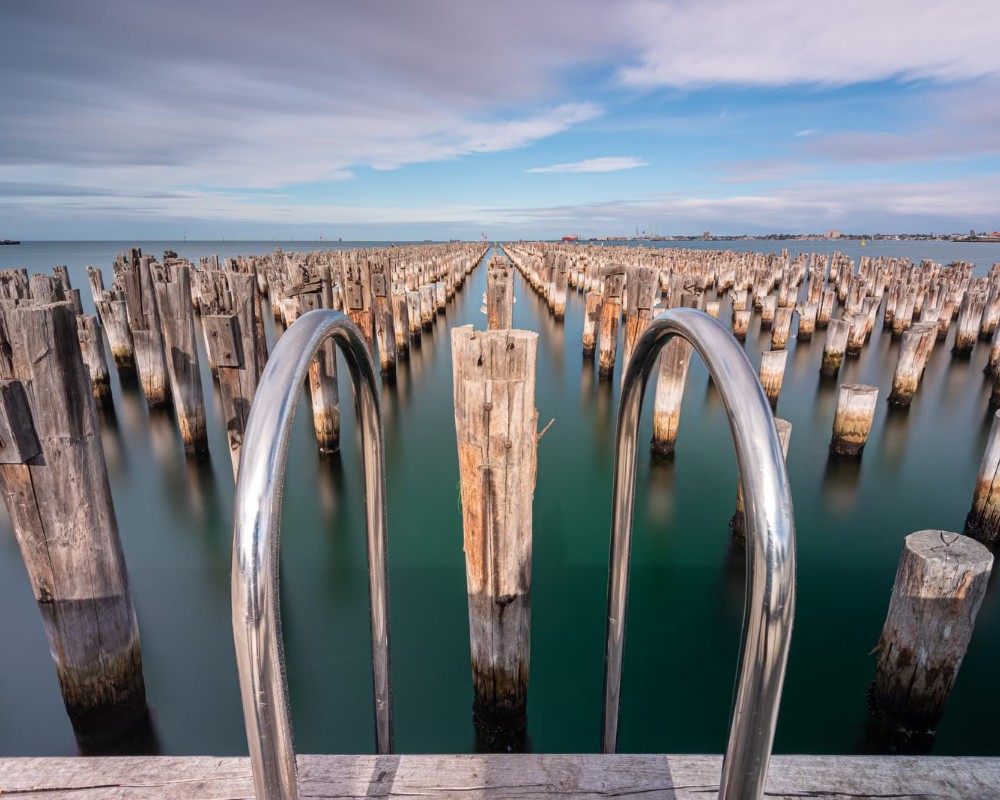
- Princes Pier and its forest of historic timber piles
- Bay Street pubs and cafes, and a long sandy beach
Locals have always called the suburb simply Port. It was a tough, close-knit community of wharf labourers, factory hands and their families, quite separate from the city up the road, and it kept that character until the 1980s. The change since then has been dramatic, with some of the most expensive apartments in Melbourne now lining the foreshore.
For visitors, Port Melbourne offers an easy walk along the bay, a good lunch, and a strong sense of how the city began. It is twenty minutes by tram from the centre of Melbourne.
History and Heritage
Port Melbourne lies on the Country of the Bunurong people of the Kulin Nation. The shore here was backed by sand ridges, tea-tree scrub and a large saltwater lagoon, and it was rich in shellfish and birdlife.
Liardet’s Beach
The first European to settle here was Wilbraham Liardet, an adventurous former army officer who arrived with his family in 1839. He built a hotel and a small jetty on the beach and ran a ferry and a mail service to the town, three kilometres away across the swamps. The settlement was known for a time as Liardet’s Beach, and then as Sandridge.
The First Railway
The gold rush turned the beach into the busiest landing place in the colony. To carry passengers and cargo to the city, a company built a railway from Sandridge to Flinders Street. It opened on 12 September 1854 and was the first steam railway in Australia. The line still exists, though it now carries trams, and the old station building stands beside Station Pier.
The Piers
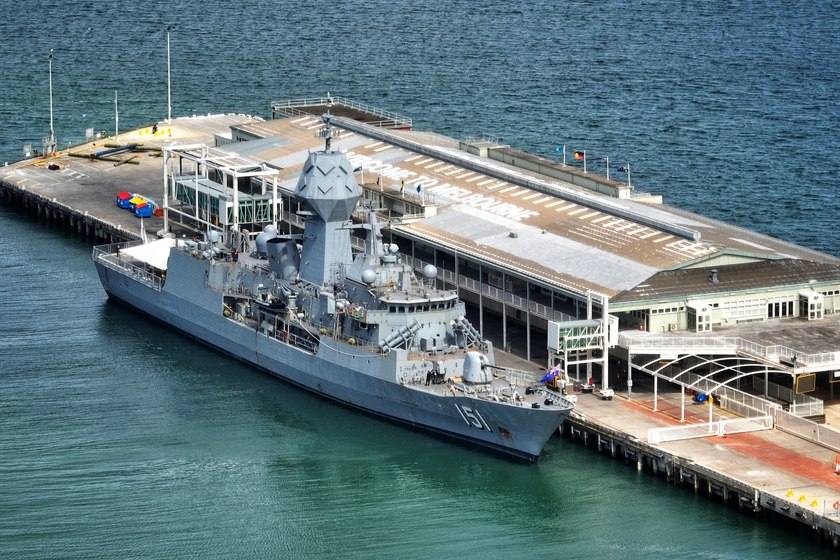
A government pier was built in the same year as the railway and was rebuilt on a far larger scale in the 1920s as Station Pier. A second, Princes Pier, opened alongside it in 1915. Between them they handled the great ocean liners. Troops sailed from here to both world wars, and from the late 1940s to the 1960s, hundreds of thousands of migrants from Britain and Europe walked down the gangways to begin new lives in Australia. For many families, Station Pier is where their Australian story starts.
A Working Suburb
Behind the waterfront, Port Melbourne filled with industry. A biscuit factory that grew to be one of the largest in the world, soap and candle works, sugar and rice mills and engineering shops employed thousands. On the reclaimed land to the west, known as Fishermans Bend, aircraft were built during the Second World War, and the first Holden car rolled off the line there in 1948. The waterfront was a centre of union strength, and a bitter strike in 1928 ended with police firing on a crowd of wharf labourers.
Renewal
Containers killed the old port. The last liners left in the 1970s, factories closed, and from the 1990s the railway yards and oil depots along the shore were redeveloped as a housing estate called Beacon Cove. The biscuit factory and many warehouses became apartments.
Attractions in Port Melbourne
The best way to see Port Melbourne is to walk along the foreshore and then up Bay Street.
Station Pier
The pier, with its long timber sheds and gatehouse, is one of the most historically important places in Victoria. It is now the cruise ship terminal for Melbourne, and during the summer season large liners tie up several times a week. When no ship is in, the outer pier is open for walking and fishing, and information panels tell the stories of those who arrived and departed here.
Princes Pier
A few hundred metres west, Princes Pier was closed in 1989 and fell into ruin. In a creative restoration, the first section was rebuilt as a public deck with the original gatehouse, while beyond it the decking was removed and hundreds of the old timber piles were left standing in the water. The result is a striking sight, especially at sunset, and a favourite with photographers.
The Beach and Bay Trail
Sandy beaches run east from the piers towards Albert Park and St Kilda, backed by a wide promenade that is always busy with walkers, cyclists and skaters. The water is calm and safe for swimming. To the west, Sandridge Beach is quieter and looks across to the docks and the West Gate Bridge.
Beacon Cove
Two tall timber towers, one on the shore and one in the water, are the leading lights that once guided ships up the channel. They have been preserved as the centrepiece of the foreshore development.
Bay Street
The main street runs inland from the beach, lined with Victorian shops, the town hall and a notable collection of corner pubs, a reminder of the days when thirsty wharfies supported a hotel on almost every block.
Westgate Park
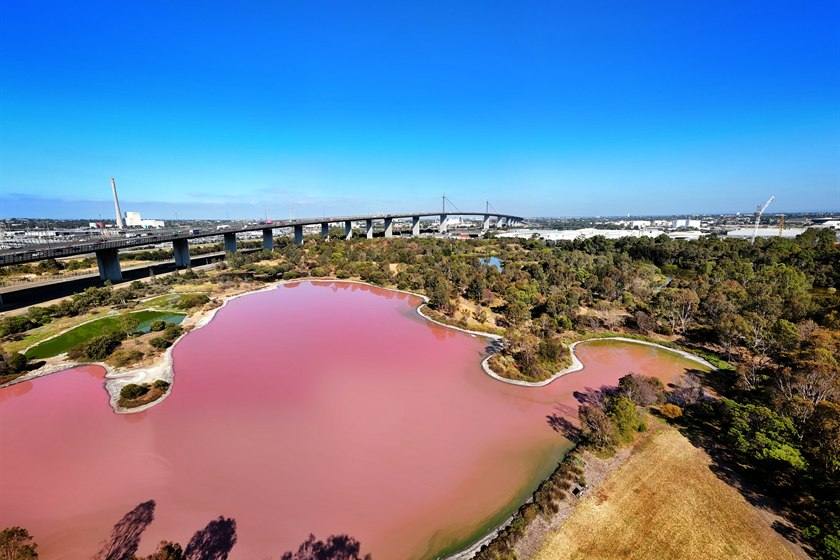
Beneath the West Gate Bridge, at the mouth of the Yarra, this park of wetlands and native bush was created on former industrial land. In hot, dry summers its salt lake sometimes turns a vivid pink.
Where To Stay
Port Melbourne has a moderate supply of accommodation, mostly apartment hotels close to the beach and Bay Street.
These suit families and longer stays, with kitchens, balconies and parking, and many have bay views. They are also convenient for cruise passengers joining or leaving a ship at Station Pier.
The city centre and Southbank are a short tram ride away for those who want a wider choice.
Most of the short-stay beds in Port Melbourne are privately owned holiday apartments in the towers along Beach Street and around Beacon Cove, let through the usual booking sites. Many have bay views, secure parking and two or three bedrooms, which suits families and groups, and they are a short walk from both Bay Street and the Station Pier cruise terminal. Cruise passengers can also stay at the Pullman Melbourne Albert Park, about 3 km east on Queens Road, or in the large hotels of Southbank and South Wharf, all within 10 to 15 minutes by taxi.
The Middle Park Hotel, about 3 km south-east, has 25 pub rooms for couples who want a beachside base. Travellers with caravans or motorhomes heading for Tasmania should know that the Spirit of Tasmania ferries no longer sail from Station Pier; since 2022 they have left from Geelong, about 75 km south-west. There is no caravan park in Port Melbourne, and street parking for vans near the beach is scarce; the closest park is BIG4 Melbourne Holiday Park in Coburg, about 15 km north by road.
Eat & Drink
Bay Street is the centre of things, with cafes, bakeries, restaurants and pubs along its length. Several of the old hotels have been turned into smart dining pubs while keeping their front bars.
Seafood is a local speciality, as you would expect, and there are restaurants on and near the piers with views over the water. Italian food is well represented, including a restaurant set in the old courthouse.
Along the beachfront, kiosks and cafes serve coffee, ice cream and fish and chips. Venues change, so check before making a special trip.
Bay Street has a good spread of cafes. Grey and Bliss, at 197 Bay Street, is a heritage cafe with stained glass, known for its cauliflower croquettes and buttermilk hotcakes, and George’s Table (169 Bay Street) serves coffee and sourdough sandwiches by day, then wine and small plates. Baba’s Deli (295 Bay Street) is the place for focaccia and pizza by the slice, and Luke’s Banh Mi (227 Bay Street) bakes its own rolls. Vertue Coffee Roasters roasts its own blends at 425 Graham Street. The restaurant in the old courthouse is Ciao Cielo, at 115 Bay Street, which serves handmade pasta and woodfired pizza among sandstone walls and timber rafters.
Of the old pubs, the Graham Hotel (97 Graham Street) dates from 1870, the Clare Castle Hotel (354 Graham Street) is an 1875 pub with a seafood-leaning menu, and the Railway Club Hotel (107 Raglan Street) is a long-standing steak and wine pub. There are supermarkets on and near Bay Street, and fuel stations on the main roads leading out of the suburb.
Getting to Port Melbourne
Tram route 109 runs from Collins Street along the route of the original 1854 railway and terminates at Beacon Cove, beside Station Pier. The trip takes about twenty minutes. Port Melbourne is outside the Free Tram Zone.
By car it is ten minutes from the city, and there is paid parking along the foreshore.
Cyclists can follow the Bay Trail from St Kilda, or the path beside the tram line from Southbank.
Experiences
- City
- Food and Wine
- Historic/Heritage
- Relaxation
Popular Activities
- Beach
- City Sightseeing
- Cycling
- Fishing
- Food and Wine
- Swimming
About Port Melbourne
Tours In Port Melbourne
Discover some of the tours options around Port Melbourne
