
Kew, VIC
Kew sits on a wooded ridge above a great loop of the Yarra River, five kilometres east of the centre of Melbourne. It is one of the most prosperous and settled suburbs in the city, known for its private schools, its churches and its large houses in shady gardens. For visitors, though, the real draw is down at the river, where a Victorian-era boathouse, a suspension footbridge and several hundred hectares of bushland provide the closest thing to a country outing that can be had within sight of the city skyline.
Known For
- Studley Park Boathouse and rowing on the Yarra
- Yarra Bend Park and its colony of flying foxes
- Historic mansions, asylums and a remarkable cemetery
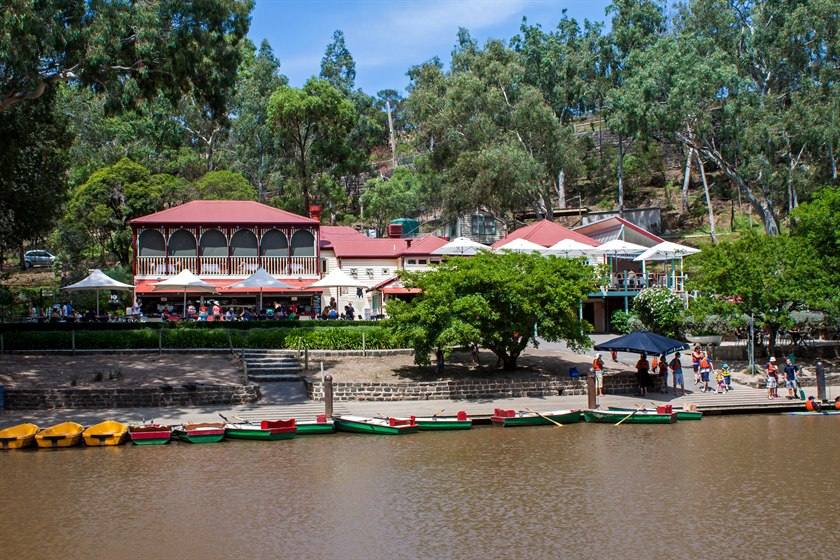
The river precinct, known as Studley Park, feels entirely separate from the suburb above it. Steep, tree-covered banks shut out the sound of traffic, the water is slow and brown, and bellbirds chime in the gums. Generations of Melbourne families have come here to hire a rowing boat, feed the ducks and have afternoon tea.
Up on the hill, Kew is a place of quiet residential streets and a busy shopping centre at Kew Junction. It is an easy trip from the centre of Melbourne by tram.
History and Heritage
Kew lies on the Country of the Wurundjeri Woi-wurrung people of the Kulin Nation. The stretch of river below the suburb, and its meeting with the Merri Creek just upstream, was a major gathering place for the clans of the region.
A Suburb Named for London
The land was sold in 1851. One of the buyers subdivided his portion and named it Kew, reasoning that since it lay next to Richmond, as Kew does in London, the name was fitting. A village grew along the road to the Yarra crossing, and from the 1850s the high ground attracted merchants and professionals seeking clean air and views.
The Asylum on the Hill
In 1871 the government opened a vast lunatic asylum on a prominent rise above the river. Built in an imposing Italianate style, with long symmetrical wings and tall towers, it was among the largest institutions of its kind in the world and housed more than a thousand patients. It operated for well over a century. The building has since been converted into apartments, and its towers still dominate the skyline for miles around.
Schools and Churches
Kew became known as a suburb of schools. Several of the best known private colleges in Victoria were established here in the late nineteenth century, and their chapels, halls and playing fields occupy much of the hilltop. The Catholic church also built extensively, and Raheen, a towered mansion that served for decades as the residence of the Archbishop of Melbourne, is one of the grandest houses in the city, though it is now a private home.
Studley Park
The steep land beside the river was reserved as parkland in the 1870s, saving it from development. The slopes above were subdivided later, and in the 1950s and 1960s they became a showcase for modern architecture, with houses by Robin Boyd and other leading designers tucked among the trees.
Attractions in Kew
Start at the river, and allow time to explore on foot.
Studley Park Boathouse
Opened in 1863, this is the oldest public boathouse on the Yarra still in operation. The timber building, with its verandahs overlooking the water, has recently been restored and houses a cafe, a restaurant and a kiosk. Rowing boats, canoes and kayaks can be hired by the hour for a paddle upstream beneath overhanging trees, one of the classic Melbourne outings.
Kanes Bridge and the River Walks
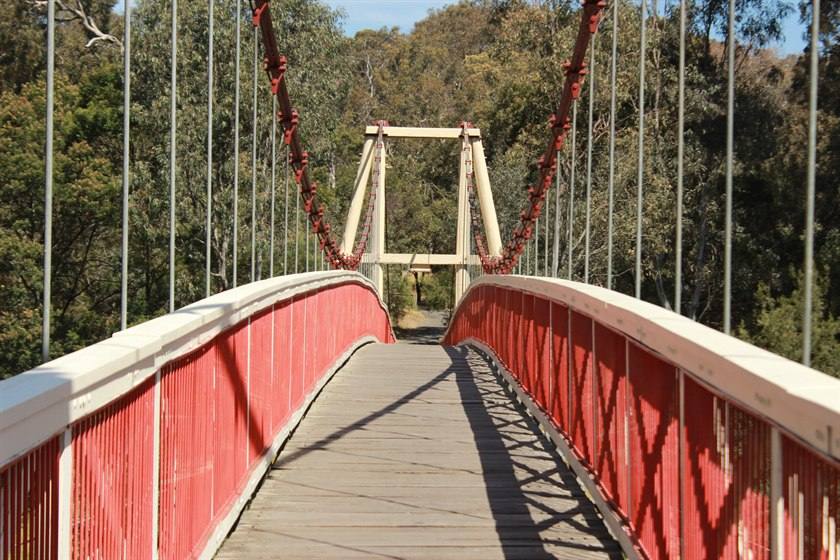
A short walk from the boathouse, a narrow suspension footbridge crosses the river to Yarra Bend Park. From there, tracks lead through the bush to Dights Falls and on to the Abbotsford Convent and the Collingwood Children’s Farm. A circuit linking the boathouse, the falls and the convent takes about two hours and is one of the best walks in the inner city.
Yarra Bend Park and the Flying Foxes
Yarra Bend is the largest area of natural bushland left near the centre of Melbourne, with river red gums, wattles and steep escarpments. Along the river is a permanent colony of grey-headed flying foxes, which moved here in the early 2000s. In summer tens of thousands of these large fruit bats hang in the trees by day and fly out over the suburbs at dusk in a spectacular stream. A viewing platform at Bellbird Picnic Area explains their behaviour.
Yarra Boulevard
This winding scenic road, built as a relief project during the Depression, follows the top of the river valley and gives fine views of the city. It is one of the most popular training routes for cyclists in Melbourne.
Boroondara General Cemetery
Established in 1859, the cemetery is notable for its ornate Victorian monuments. The most extraordinary is the Springthorpe Memorial, a Greek temple of dark granite with a red glass dome that bathes a marble figure in rosy light, built by a doctor in memory of his wife.
Villa Alba
This 1880s mansion near the river has some of the finest painted interiors of its period in Australia, with walls and ceilings covered in murals and stencilled decoration. It is run by volunteers and open on selected days.
Where To Stay
Kew is a residential suburb with almost no visitor accommodation.
There are a few serviced apartments and bed and breakfasts, mostly around Kew Junction and along the main roads.
Most visitors stay in the city centre, Richmond or Hawthorn and come to Kew for the day.
The nearest hotel is the Amora Herencia Riverwalk, at 649 Bridge Road in Richmond, about 3 km south of Kew Junction by the Hawthorn Bridge. It was redesigned and relaunched in 2026, has rooms overlooking the Yarra, and sits on the Main Yarra Trail, so it is a good base for walking or cycling to Studley Park and Yarra Bend.
Further afield, South Yarra, about 7 km south, has the widest choice close to Kew, including Punthill South Yarra, with self-contained apartments near the station, and the Lyall Hotel, a quiet boutique hotel. Trams 48 and 109 make it easy to stay in the city centre and come out for the day.
Studley Park Boathouse has function rooms but no accommodation. The nearest caravan park is BIG4 Melbourne Holiday Park in Coburg, about 11 km north-west, with powered sites and cabins.
Eat & Drink
The Studley Park Boathouse is the obvious place to eat, whether for coffee and scones on the deck, a casual lunch from the kiosk or a longer meal in the restaurant. On fine weekends it is very busy, and it is wise to book or arrive early.
Picnic areas with barbecues are scattered through the park on both sides of the river.
Kew Junction and the streets leading off it have a good range of cafes, bakeries, Italian restaurants and a couple of well-regarded pubs and bars, including one in the former post office. Cotham Road and High Street have further neighbourhood options.
Venues change, so check before making a special trip.
Since its 2023 restoration, the Studley Park Boathouse has added an outdoor dining deck beside the river, and its wine list is entirely Victorian. Boat hire is run from the same building, and there is a kids corner for families.
Up the hill, Cotham Road has Kew’s best-known restaurants. Mister Bianco, at 28 Cotham Road, is a Sicilian-inspired restaurant known for its bread-oven focaccia, Sicilian pizzas and porchetta. Centonove, at 109 Cotham Road, is a family-run Italian restaurant that has served Kew for many years, with pasta, slow-roasted lamb and a long wine list. The same team runs Bar Alba, a small Italian wine bar with share plates at 132 Cotham Road.
Near Kew Junction, Axil has an espresso bar at 145-147 High Street, good for coffee before a walk down to the river.
Kew Junction has supermarkets.
Getting to Kew
Tram routes 48 and 109 run from Collins Street in the city through Richmond to Kew Junction, taking about twenty-five minutes. There is no train station in Kew.
The boathouse is about two kilometres from Kew Junction, down a steep hill, and is not directly served by public transport. Many people walk in from Abbotsford, crossing the river near the Collingwood Children’s Farm, or arrive by car or bicycle.
There is a car park at the boathouse, which fills quickly on weekends, and further parking along Yarra Boulevard. The Main Yarra Trail passes through the park and links Kew with the city.
Experiences
- City
- Historic/Heritage
- Nature based
- Relaxation
Popular Activities
- Bird Watching
- Bush Walking
- Canoeing
- City Sightseeing
- Cycling
- Wildlife
