
Hawthorn, VIC
Hawthorn begins where the Yarra River loops east of Richmond, six kilometres from the centre of Melbourne, and it marks the start of the city’s comfortable, tree-lined eastern suburbs. It is an area of substantial Victorian and Edwardian houses, private schools, a university campus and one of the busiest suburban shopping streets in the city. With the river on two sides, it also has some of the most attractive parkland and cycling trails in the inner east.
Known For
- Glenferrie Road, a busy shopping, dining and cinema strip
- Victorian mansions and the historic Hawthorn Bridge
- Riverside parks, rowing sheds and the Main Yarra Trail
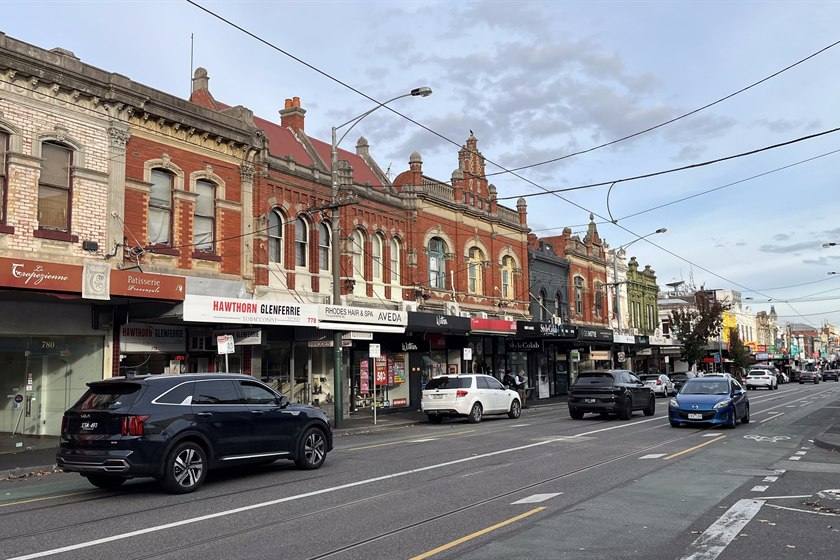
The suburb has two main centres. Glenferrie Road, around the railway station of the same name, is the lively commercial heart, kept busy by students from Swinburne University. The western end, near the river and Hawthorn Station, is older and quieter, with pubs, antique shops and bluestone churches along Burwood Road.
Hawthorn is not on most tourist itineraries, but it offers an easy and enjoyable look at suburban Melbourne at its most established, and it is only ten minutes from the city by train.
History and Heritage
Hawthorn lies on the Country of the Wurundjeri Woi-wurrung people of the Kulin Nation. The river flats and the creek that joins the Yarra here were rich in food, and the higher ground gave good camping places.
Gardiner and the First Settlers
In 1836 John Gardiner and two companions drove a mob of cattle overland from New South Wales, one of the first such journeys, and settled beside the creek that now bears his name. A village was surveyed in the early 1850s. The name is usually said to come from the native shrubs that reminded an early official of English hawthorn.
The Bridge and the Railway
For years the only way across the river was by punt. The iron Hawthorn Bridge, opened in 1861, changed that. It is the oldest surviving bridge over the Yarra and one of the oldest metal bridges in Australia, and it still carries traffic and trams. The railway arrived the same year, making Hawthorn one of the first commuter suburbs in the country.
Bricks and Mansions
Hawthorn clay produced a distinctive dark brown brick, often used in patterned combination with cream and red, that became fashionable across Melbourne in the 1880s and can be seen on houses throughout the inner suburbs. Brickworks operated here for decades. Meanwhile the hills attracted the well-to-do, who built large houses in generous gardens. Estates such as St James Park and Grace Park were subdivided with covenants to keep them exclusive, and they remain largely intact.
Schools, Football and the University
Several of the leading private schools in Melbourne established themselves in and around Hawthorn. The local football club, founded in 1902, played at Glenferrie Oval for most of the twentieth century before outgrowing it. A technical college opened beside the railway in 1908 and has grown into Swinburne University, whose students give Glenferrie Road much of its energy.
Attractions in Hawthorn
Hawthorn is best explored on foot or by bicycle.
Glenferrie Road
The main strip runs for about a kilometre either side of the railway bridge. It has a wide mix of shops, a large number of cafes and inexpensive Asian restaurants catering to students, and several bars. The Lido cinema, in a 1910s building, has eight screens and an open-air rooftop cinema in summer, with a jazz bar downstairs.
Hawthorn Arts Centre
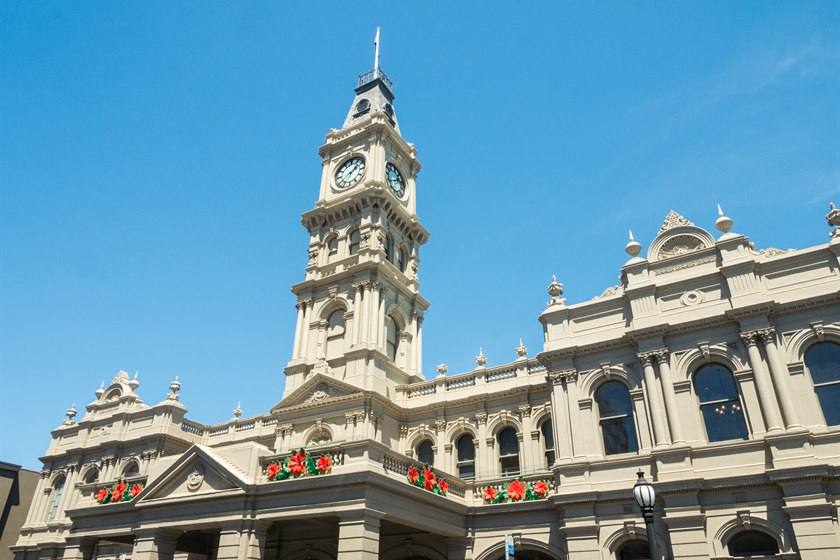
The former town hall, completed in 1890 in a grand French-inspired style with a mansard-roofed clock tower, has been restored as an arts centre. It houses a gallery showing the local council’s art collection and touring exhibitions, and hosts concerts and performances.
Glenferrie Oval
The old home of the Hawthorn Football Club is squeezed between the railway line and the back streets. Its red-brick Art Deco grandstand, built in 1938, is heritage listed and one of the most distinctive in Australian sport. The ground is open to the public.
The River and its Parks
The Yarra forms the western and northern boundaries of the suburb. The Main Yarra Trail runs along the bank past rowing sheds, playing fields and stretches of bushland, and connects north to Kew and Yarra Bend and west to the city. Fairview Park, below the Hawthorn Bridge, is a pleasant spot for a picnic, and canoes and kayaks can be launched nearby.
Heritage Streets
For Victorian architecture, walk through St James Park, between Burwood Road and the river, where curving streets are lined with towered mansions and villas. Grace Park, north of Glenferrie Station, is an Edwardian estate of red-brick houses around a central reserve. Auburn Village, at the eastern end of the suburb, has an unusually complete row of 1880s shops beside its railway station.
Where To Stay
Hawthorn has a limited amount of accommodation, used mainly by people visiting the university, the hospitals or family.
There are several apartment hotels close to Glenferrie Road and along Burwood Road, with kitchens and parking, and a few motels on the main routes.
The city centre and Richmond, both a short train ride away, have far more choice.
The Amora Herencia Riverwalk, at 649 Bridge Road just across the Hawthorn Bridge in Richmond, is the closest hotel to the western end of the suburb. It was redesigned and relaunched in 2026, has rooms looking over the Yarra, and sits on the Main Yarra Trail, about 1 km from Hawthorn Station.
To the south, The Sebel Melbourne Malvern, an apartment hotel on Dandenong Road about 5 km away, has self-contained rooms with kitchens. In South Yarra, about 5 km south-west, Punthill South Yarra has apartments near the station, and the Como and the Lyall Hotel are close by. Trams on Glenferrie Road run south to Malvern, and trains from Hawthorn, Glenferrie and Auburn reach Richmond in a few minutes, so staying a little further out is easy.
Local apartments fill quickly during Swinburne University events, so book early at those times. The nearest caravan park is BIG4 Melbourne Holiday Park in Coburg, about 14 km north-west, with powered sites and cabins.
Eat & Drink
Hawthorn eats well and without much fuss.
Glenferrie Road is the place for a quick, cheap meal, with dozens of Chinese, Malaysian, Korean, Japanese, Thai and Vietnamese restaurants. Cafes are everywhere, and Axil Coffee Roasters, on Burwood Road, is one of the best known specialty coffee names in Melbourne.
The western end of the suburb has several good pubs with dining rooms and beer gardens, and Auburn Road has a small cluster of neighbourhood restaurants and wine bars. The rooftop at the Lido is a good spot for a drink on a warm evening.
Venues change often, so check before making a special trip.
Axil has two outlets: the Burwood Road cafe at 322, where it roasts, and an espresso bar at 677 Glenferrie Road, next to the Lido. Via Porta’s bakehouse, at 646 Glenferrie Road, sells bread and pastries to take away.
Vaporetto, entered from Grace Street behind 681 Glenferrie Road, is an Italian bar and eatery with a piazza-style terrace and an express lunch. Rococo, at 797 Glenferrie Road, has served simple Italian food since 2005, from breakfast through to dinner. St-Germain Wine Bar, at 838 Glenferrie Road, is a Parisian-style wine bar on a sunny corner, with a terrace overlooking the street.
The Glenferrie Hotel, at 324 Burwood Road near the university, began as a house in 1875 and became a three-storey hotel in 1888. It has a dining room and a beer garden with a retractable roof and heating. At the Lido, the Jazz Room has live jazz.
There are supermarkets on Glenferrie Road and Burwood Road.
Getting to Hawthorn
Trains on the Lilydale, Belgrave and Alamein lines stop at Hawthorn, Glenferrie and Auburn stations. Glenferrie is about twelve minutes from Flinders Street.
Trams run along Glenferrie Road, along Riversdale Road from the city via Swan Street in Richmond, and along Burwood Road and Camberwell Road from the city via Bridge Road. Hawthorn is outside the Free Tram Zone.
Cyclists can follow the Main Yarra Trail from the city. Parking near Glenferrie Road is time-limited and busy during university terms.
Experiences
- City
- Food and Wine
- Historic/Heritage
- Relaxation
Popular Activities
- Bush Walking
- Canoeing
- City Sightseeing
- Cycling
- Food and Wine
- Shopping
About Hawthorn
Accommodation In Hawthorn
Discover some of the accommodation in and around Hawthorn
