
Louth, NSW
Louth is a tiny village on the Darling River, about 100 km south-west of Bourke on the unsealed river road. It has a pub, a few houses and a population of a few dozen, yet once a year thousands of people descend on it for one of the most famous bush race meetings in Australia. It is also known for a monument that catches the setting sun in a remarkable way.
Known For
- The Louth Races
- The shining headstone
- The Darling River Run
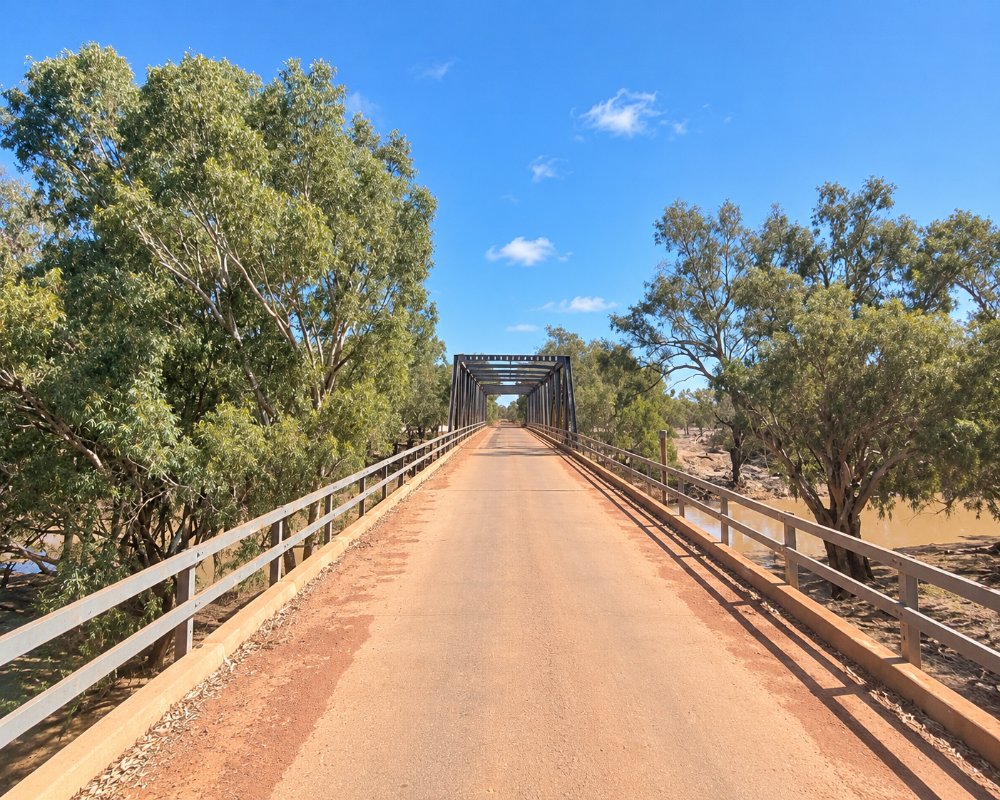
Louth is a stop on the Darling River Run, the route that follows the river through station country from Bourke to Wilcannia and beyond. River red gums and coolibahs line the banks, and the plains on either side stretch flat to the horizon.
Things To Do
The Shining Headstone
In the village cemetery stands a polished granite cross almost eight metres high, erected by the town’s founder, Thomas Mathews, in memory of his wife Mary. It was positioned so that the setting sun strikes it and reflects a beam of light across the village. On the anniversary of her death, in August, the reflection is said to fall on the site of the doorway of the house where they lived.
Louth Races
On a Saturday in August, the racecourse hosts a meeting that has been running for more than sixty years. Up to five thousand people come, by road and by light aircraft, and camp around the track.
Shindy’s Inn
The pub, on the river bank, is the meeting place for the district and has a camping area. It is the place to check road conditions.
Station Country
Nearby stations with a place in history include Dunlop, where mechanical shears were first used to shear a full flock in 1888, and Toorale, now a national park at the junction of the Darling and Warrego rivers.
Fishing and Camping
There are camping spots along the river, with fishing for yellowbelly and Murray cod when the river is running.
History
Louth is in the country of the Barkindji and Ngemba peoples.
Thomas Mathews, an Irishman, built a pub here in 1859, when the first paddle steamers were pushing up the Darling, and named the place after his home county. It became a small river port and coach stop. The river trade faded in the early 1900s.
Where To Stay
The pub has cabins and campsites, and several stations in the district offer accommodation.
In Bourke, about 100 km north-east, Kidman’s Camp, 8 km north of town on the Darling, has more than 90 powered sites and 20 cabins, and there is also the Mitchell Caravan Park and several motels. Cobar, 130 km south, has a caravan park and six motels. Louth has no dump point and no reliable drinking water, so arrive with full tanks and empty cassettes. On race weekend in August, the racecourse becomes a big campground with toilets, a few showers and firewood.
Caravans and Camping
Shindy’s Inn reopened under new management in July 2025. Trilby Station, about 25 km from Louth on the west bank, has powered sites, private river camps, cottages and a bunkhouse, and Dunlop Station offers camping and tours of its historic woolshed. Toorale National Park, about 30 km away on the unsealed Toorale Road, has a campground on the Darling, though National Parks advises a 4WD for its access roads. Every road to Louth is unsealed: fine for caravans taken slowly when dry, closed when wet. Phone ahead about fuel.
Eat & Drink
Shindy’s Inn, which reopened under new owners in July 2025, is the only place to eat or drink in Louth. Its dining room seats about 30, with more tables on the verandah and under the trees on busy nights, and it serves pub meals and takeaway; on race weekend, the Friday-night Calcutta is held at the pub. Fuel is sold in Louth, but hours are limited, so ring ahead and carry enough to reach Bourke or Cobar. Stock up before you leave: Bourke has two supermarkets, Morrall’s Bakery for pies and bread and pubs including the Port of Bourke Hotel, and Cobar has two IGA supermarkets, a bakery, cafes and several fuel outlets. Bring drinking water, as the river water needs treating.
The walls and ceilings are covered in memorabilia, the furniture is old timber and the chips have a following, and on busy nights up to 100 people eat out on the lawns. The new owner reopened the inn on 7 July 2025. The Louth Races are held in August.
Getting There
Louth is reached by unsealed roads along the river from Bourke, or from Cobar, 130 km to the south. They are fine for ordinary cars when dry and impassable when wet. Check conditions before setting out.
Experiences
- Farm/Station
- Historic/Heritage
- Remote
- Self-Drive
Popular Activities
- Caravan and Camping
- Driving
- Fishing
- Off Road Driving
- Outback
About Louth
- Locality: Rural locality
- Louth Postcode: 2840
- State: New South Wales
- Region: Outback NSW
- Latitude: -30.53384
- Longitude: 145.11534
- Elevation: 95m
- Timezone: Australia/Sydney
