
Carpenter Rocks, SA
Carpenter Rocks is a fishing settlement of about 90 people on the Southern Ocean, 35 kilometres south-west of Mount Gambier. A little harbour called Bucks Bay shelters its rock lobster boats behind a line of jagged reef.
The French explorer Nicolas Baudin named the reef in 1802 for its saw-toothed outline. It is a wild, windswept coast, and the scene of the worst shipwreck in South Australian history.
Known For
- A working rock lobster harbour
- Cape Banks lighthouse and the Admella wreck site
- The southern gateway to Canunda National Park
Things To Do in Carpenter Rocks
Bucks Bay
The harbour is busiest from October, when the lobster season opens. There is beach fishing and diving along the reef in calm weather.
Cape Banks Lighthouse
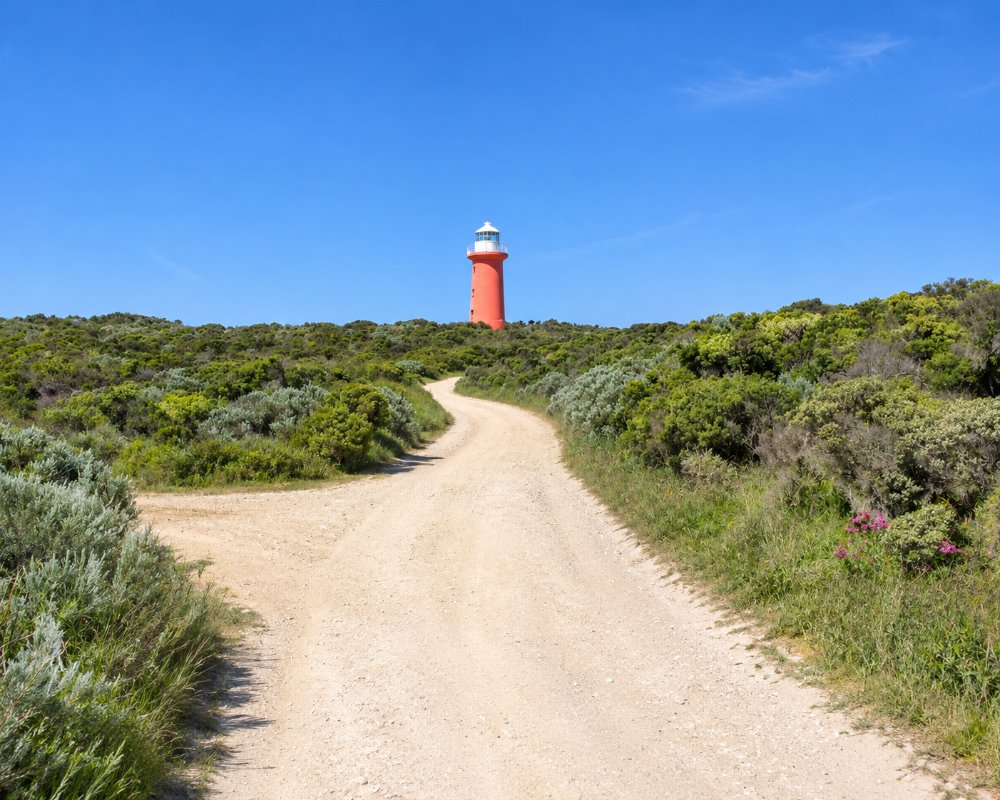
Four kilometres north, a short orange lighthouse stands on a low cape, with a memorial to the steamship Admella. She struck the reef offshore in August 1859, and 89 of the 113 people aboard died over a week in which rescuers could not reach the survivors clinging to the wreck.
Canunda National Park
The park begins at Cape Banks and runs 40 kilometres north to Southend. From this end a four-wheel drive track follows the dunes and Geltwood Beach, and ordinary cars can reach the Cape Banks campground and Lake Bonney.
Neighbouring Settlements
Pelican Point and Blackfellows Caves are shack settlements on the bays to the south.
Rock Lobster Season
The southern zone rock lobster season, which covers this coast, runs from 1 October to 31 May, and the harbour at Bucks Bay is at its busiest in the first weeks. Recreational lobster pots must be registered and bag and size limits apply, so check the state fisheries rules before you set one.
Where To Stay
There are a few motel-style units and a cabin in the settlement.
Admella Reserve, behind the hall, has operated as a donation camp with toilets, water, a barbecue and a dump point; pay at the store and check the current arrangement. The Cape Banks campground in the national park, five kilometres away, has six sites reached by ordinary car and must be booked online.
The Rocks Tavern on Carpenter Rocks Road, which also let rooms, closed indefinitely in September 2026. The council lists another self-contained free site on this stretch of coast at Blackfellows Caves, with two marked bays in the car park; vehicles must carry a toilet and tanks for fresh, grey and black water.
Canunda National Park has six campgrounds: Cape Banks, Geltwood Beach, Kotgee, Nalawort, Number Two Rocks and Oil Rig Square. All must be booked online before arrival, up to 12 months ahead. From the Carpenter Rocks end only Cape Banks can be reached by two-wheel drive. Some of the northern and central campgrounds are reached by two-wheel drive from Millicent and Southend, while the beach and dune tracks between them are four-wheel drive only; lower your tyre pressures on the sand and carry a shovel. Dogs are not allowed in the park, and firewood may not be collected, so bring your own where fires are permitted.
Mount Gambier, 35 km north-east, has five caravan parks, and the Port MacDonnell Foreshore Tourist Park, about 45 km away by the coast road, has cabins, powered sites and a dump point.
Eat & Drink
The general store is now the only place to eat or buy supplies, as the Rocks Tavern closed indefinitely in September 2026. Check that they are open, especially in winter.
The Rocks Tavern on Carpenter Rocks Road, long the social centre of the village with its front bar, beer garden and seafood dining room, closed indefinitely in September 2026, so check whether it has reopened before you go. The Rocks Shop, the general store and post office, is known well beyond the village for its pies, among them a crayfish and prawn pie, and for its fish and chips. The pies sell out, so go early, and check opening hours in winter.
There is no supermarket, so stock up in Mount Gambier, 35 km north-east, or Millicent, about 40 minutes north, and fill the tank there too. Port MacDonnell, about 45 km away by the coast road, has the Shipwreck Bistro at the Victoria Hotel, open for lunch and dinner every day with crayfish in season, and Salt Cafe and Bar on the foreshore for breakfast, coffee and seafood chowder.
History
Carpenter Rocks is on Boandik country. Lieutenant James Grant named Cape Banks in December 1800 as he sailed past in the Lady Nelson.
Getting to Carpenter Rocks
From Mount Gambier, follow the Carpenter Rocks road west for 35 kilometres. Millicent is about 40 minutes north by the inland road.
Experiences
- Caravan and Camping
- Nature based
- Relaxation
- Self-Drive
Popular Activities
- Beach
- Bush Walking
- Caravan and Camping
- Diving
- Fishing
- Horse Riding
- Kayaking
- National Park
About Carpenter Rocks
- Locality: Rural locality
- Carpenter Rocks Postcode: 5291
- State: South Australia
- Region: Limestone Coast
- Latitude: -37.91105
- Longitude: 140.39769
- Elevation: 6m
- Population: 82
- Median Income: $43316
- Area (Sq/km): 42.667
- Timezone: Australia/Adelaide
