
Yalgorup National Park, WA
Yalgorup National Park stretches along the coast south of Mandurah, protecting a chain of ten lakes, tuart and peppermint woodland and coastal heath. Established in 1966 and covering about 13,000 hectares, it’s the largest national park on the Swan Coastal Plain and one of the most important waterbird habitats in the region.
Its most famous feature is the thrombolites of Lake Clifton, living rock-like structures built by microbes that resemble some of Earth’s earliest life. The park’s name comes from Noongar words meaning place of lakes. It’s on Bindjareb Noongar country, where the thrombolites are known as Noorook, the eggs of the Wagyl.
Known For
- The Lake Clifton thrombolites
- Ramsar-listed lakes and waterbirds
- Tuart and peppermint woodland
- Camping at Martins Tank
Things To Do in the Park
Lake Clifton Thrombolites
The thrombolites are best seen when the water is low, in summer and autumn. The original boardwalk has been closed since July 2026 while a new one, the Wagyl’s Noorook Thrombolites Boardwalk, is built, with completion expected in early 2027. The 5 km Lakeside Loop Walk on the eastern shore and the car park stay open during the works.
Walks
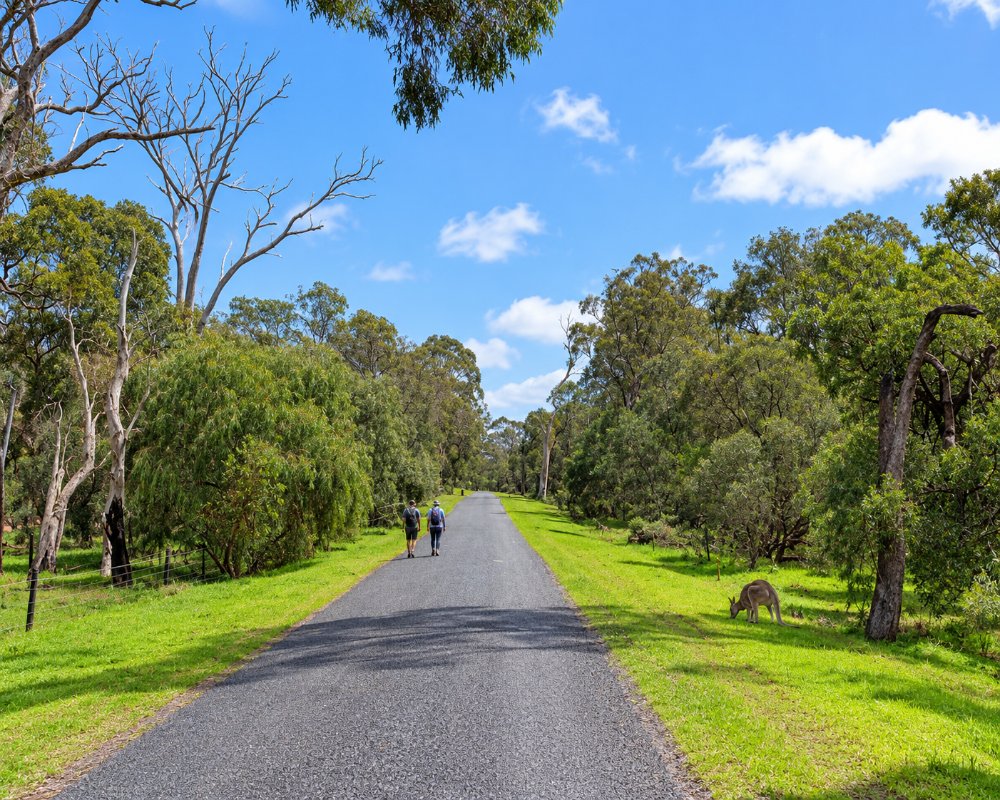
The accessible 1.4 km Lime Kiln Lake Trail passes a short-lived 1920s lime kiln, the Heathlands Walk Trail climbs a limestone ridge to a lookout over Lake Preston, and the Lake Pollard Walk Trail loops for about 6 km past a bird hide near Martins Tank.
Birdwatching
The lakes attract migratory waterbirds, black swans, grebes and dotterels, and the woodland is home to kangaroos, emus, echidnas and bandicoots.
Mandurah Giant
One of the Giants of Mandurah sculptures, by Danish artist Thomas Dambo, is hidden in the bush about 1.4 km north of the thrombolites car park.
Rules
There’s no park entry fee. Swimming, boating and fishing aren’t allowed on the lakes, dogs aren’t permitted and fox baits are laid.
Where To Stay
Martins Tank Campground has 33 unpowered sites among peppermint and tuart trees beside Martins Tank Lake, with pit toilets, a dump point and a camp kitchen but no drinking water. Some sites take caravans, others are for tents and swags only, and bookings are essential through Park Stay WA. Preston Beach and Mandurah have other accommodation.
Eat & Drink
There’s nowhere to eat in the park. Mandurah’s cafés are 20 to 30 minutes north, and the Preston Beach general store sells takeaway.
History
Bindjareb people have cared for these lakes for thousands of years. A lime-burning venture operated at Lime Kiln Lake in the 1920s. The national park was established in 1966, the Peel-Yalgorup wetlands were listed under the Ramsar Convention in 1990, and the original thrombolites boardwalk was built in 1996. Quokkas once lived here but were wiped out by foxes.
Getting to the Park
Yalgorup National Park begins just south of Mandurah, about an hour and 10 minutes’ drive from Perth via the Kwinana Freeway and Forrest Highway, then the Old Coast Road for Lake Clifton or Preston Beach Road for Martins Tank. There’s no practical public transport.
Spring is best for wildflowers and birds, summer and autumn for seeing the thrombolites at low water.
Experiences
- Eco Tourism
- Nature based
Popular Activities
- Bush Walking
- National Park
- Wildlife
About Yalgorup National Park
- Locality: National park
- Yalgorup National Park Postcode: 6215
- State: Western Australia
- Region: Perth & surrounds
- Latitude: -32.8572
- Longitude: 115.6719
- Timezone: Australia/Perth
