
West Wallsend, NSW
West Wallsend is a former mining town at the north-western corner of the Lake Macquarie district, about 20 kilometres west of Newcastle. Locals call it Westy.
Known For
- A main street of old miners’ pubs and shops
- Mount Sugarloaf lookout
- Coalfields history
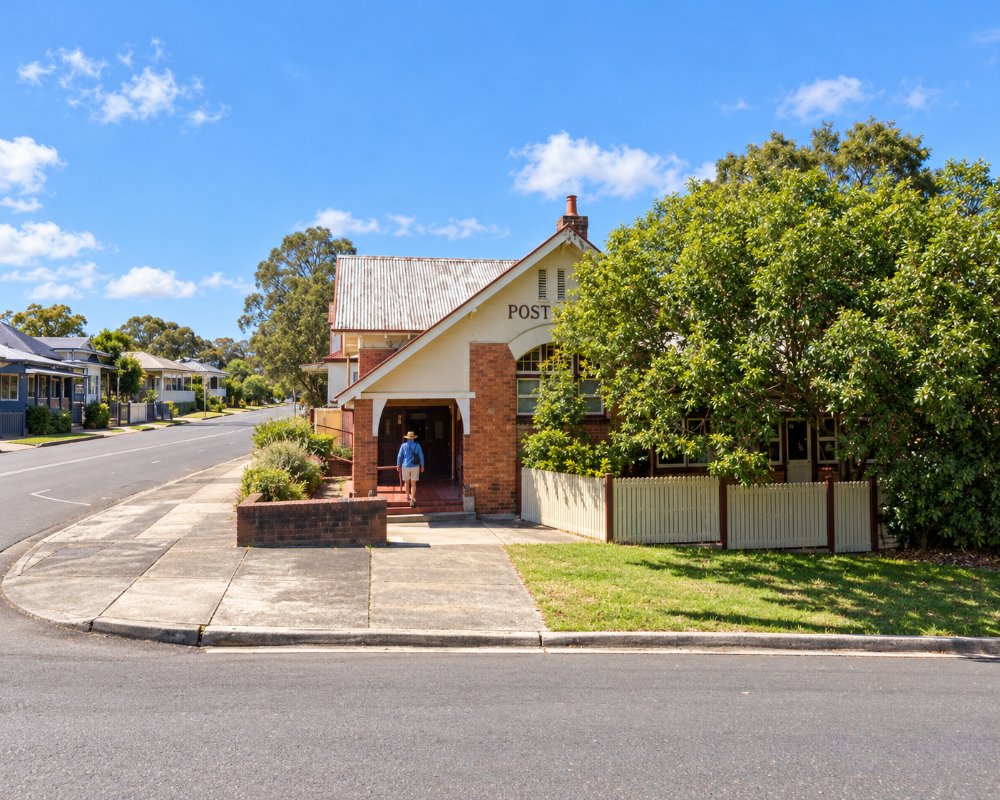
The town was laid out in the 1880s beside its collieries, and the wide main street still has the hotels, verandahs and corner shops of that time. It has kept more of its past than most of the old pit towns.
Things To Do in West Wallsend
Walk the main street
Carrington Street and the blocks around it are covered by the council’s free self-guided walking tour map, which takes in 23 heritage sites in about an hour.
The tour includes the 1922 soldiers’ memorial with its unusual statue, the first co-operative store of 1891, the 1906 post office, the School of Arts, a 1908 horse trough and the Mount Sugarloaf Colliery skip at the miners’ memorial. The Museum Hotel, named after a publican’s daughter’s taxidermy collection, still stands on the corner of Laidley and Wilson streets.
Sugar Valley Library Museum
At Cameron Park, about 3 km east, Lake Macquarie’s library museum opened in April 2023 with the exhibition Westy: we built this history, which tells the story of the West Wallsend mining district, from the pubs to the 1888 strike.
Mount Sugarloaf
A sealed road climbs from the edge of town to the summit of Mount Sugarloaf, a little over 400 metres high, in Sugarloaf State Conservation Area. A short, steep path from the car park leads to a lookout with views from the coast to the Hunter Valley. There are picnic tables and barbecues at the top.
Parts of Sugarloaf State Conservation Area are closed for repairs to subsidence over old mine workings, and NPWS lists the Blue Gum Trail as closed (alert reviewed August 2026). The summit road was not on the closed list, but check NPWS alerts before you go.
Where To Stay
There is very little in town. Stay in Newcastle or around the lake.
The nearest beds are upstairs at the Holmesville Hotel, about 2 km south. Toronto, about 17 km south, has the Toronto Hotel’s rooms and a few motels. For caravans, Teralba Lakeside Caravan Park on Anzac Parade, about 11 km south-east, has powered sites and cabins, and the council’s holiday parks are further round the lake. The wide streets and the M1 next door make it an easy stop with a van on the way to the Hunter Valley.
Eat & Drink
The town’s last pub, the Museum Hotel of 1889, has been closed since the COVID years and is for sale, so there is no counter meal in town now; there is a service station, a bottle shop and a few takeaways.
For a meal, the Holmesville Hotel, 2 km south, has a bistro open seven days, a beer garden and a playground. The Edgeworth Tavern on Main Road, about 4 km east, also has a bistro and bottle shop, and Glendale City Centre, about 7 km east, has Coles, Woolworths, Kmart and fuel, plus a farmers market on Saturday mornings.
The Holmesville Hotel also has live music on Saturdays, and Harrigan’s at Cameron Park, about 5 km away, is another family pub with a playground.
History
This is Awabakal country. The West Wallsend colliery opened in 1888 and several other pits followed. The last mines in the district closed in recent decades.
At its peak around 1900 the town had about 6,000 people and six pubs trading at once. In the 1888 strike, strike-breakers were guarded by artillerymen with a Gatling gun and about 80 police. A passenger railway ran to Cockle Creek from 1888 to 1930, and a steam tram ran to Wallsend from 1910. The West Wallsend Colliery closed in September 1923, and the Mount Sugarloaf Colliery worked from 1949 to 1978. The name comes from Wallsend on the River Tyne, whose coal was a byword for quality.
Getting to West Wallsend
West Wallsend is beside the junction of the M1 and the Hunter Expressway, 25 minutes from Newcastle.
From Sydney it is about 140 km on the M1; the West Wallsend interchange at George Booth Drive is a northbound exit and southbound entry only. The Hunter Expressway starts just north at Seahampton, a direct run to Kurri Kurri and Cessnock. Newcastle buses serve the town; the nearest stations are Cockle Creek and Teralba.
Experiences
- Historic/Heritage
- Rural/Country
- Self-Drive
Popular Activities
- Bush Walking
- Driving
- Sightseeing
About West Wallsend
- Locality: Suburb
- West Wallsend Postcode: 2286
- State: New South Wales
- Region: Hunter
- Latitude: -32.90248
- Longitude: 151.58285
- Elevation: 53m
- Population: 2240
- Median Income: $31824
- Area (Sq/km): 17.493
- Timezone: Australia/Sydney
