
Sidmouth, TAS
Sidmouth, a tranquil locality in northern Tasmania, is a destination that invites visitors to slow down and connect with the natural beauty of the Tamar Valley. Located just 35 kilometers from Launceston, the region offers an easy 30-minute drive through picturesque countryside. Sidmouth’s serene landscapes and historic charm make it a compelling escape for those looking to explore the lesser-trodden corners of Tasmania.
Known For
- Historic Auld Kirk
- Boutique wineries and vineyards
- Batman Bridge
Sidmouth’s history is deeply intertwined with both Tasmania’s early colonial days and its Indigenous heritage. Long before European settlement, the area was home to the Tyerrernotepanner people, part of the larger Northern Midlands tribe. The Tamar Valley, with its abundant resources and strategic access to waterways, was an important region for these First Nations people. Evidence of their presence can still be found in the landscape, including middens along the Tamar River and stories passed down through oral traditions.
The arrival of Europeans in the late 18th century marked a significant shift in the area’s history. The first recorded exploration of the Tamar River was in 1798 by Bass and Flinders during their circumnavigation of Tasmania. By the early 1800s, settlers began moving into the region, drawn by the fertile soils ideal for farming. Sidmouth’s location near the river made it a prime spot for agriculture, and by 1805, the land was being cultivated for crops and livestock.
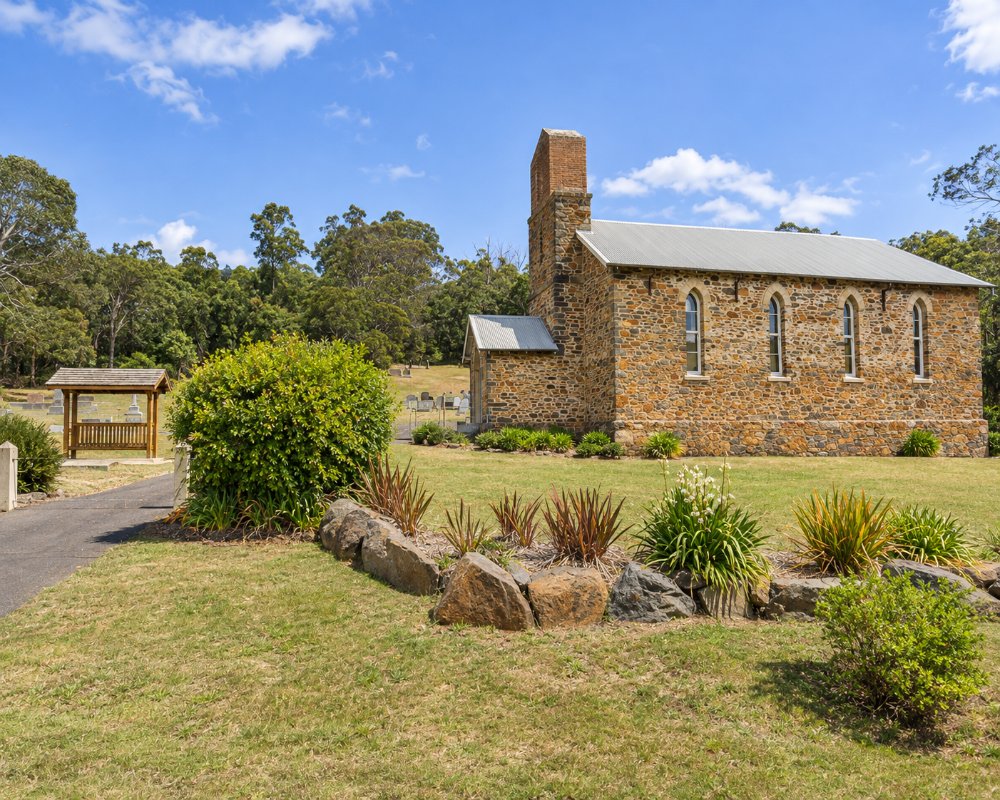
A notable chapter in Sidmouth’s history came in 1846 with the establishment of the Auld Kirk. This Presbyterian church was built by Scottish settlers who brought their traditions, faith, and architectural knowledge to the Tamar Valley. The Auld Kirk stands as one of the oldest remaining structures in the area, constructed with the help of convict labor—a reminder of Tasmania’s complex penal history. Its Regency Gothic Revival style, with pointed arch windows and stone masonry, reflects the settlers’ desire to recreate a sense of home in this distant land.
Like many parts of Tasmania, Sidmouth played a role in the convict era. Assigned convicts were often employed by settlers to work on farms and infrastructure projects, contributing significantly to the development of the region. Their labor was critical in clearing land, constructing buildings, and supporting the fledgling agricultural economy.
As the settlement grew, farming practices expanded to include crops like wheat and barley, as well as sheep and cattle grazing. The Tamar River was essential for transporting goods, and Sidmouth became a small yet vital part of the network of rural communities supplying produce to larger towns like Launceston.
The 20th century brought modernization to Sidmouth, although the area retained its rural character. Improved transportation, including the construction of the Batman Bridge in 1968, made the region more accessible. The bridge, named after John Batman (a controversial figure in Australia’s colonial history), connected the East and West Tamar regions, fostering trade and tourism.
Despite these developments, Sidmouth has remained a quiet locality, with a focus on preserving its historical and natural heritage. Efforts to maintain sites like the Auld Kirk and support sustainable farming and tourism have allowed the area to grow without losing its unique identity. Today, visitors to Sidmouth can still sense the layers of history that have shaped this picturesque part of Tasmania, from its Indigenous roots to its colonial past and modern-day appeal.
Things To Do
Sidmouth’s unique climate and rich soils make it a thriving location for vineyards, with a growing reputation for exceptional cool-climate wines. Moores Hill Estate, for instance, is celebrated not only for its award-winning wines but also for being Tasmania’s first fully off-grid winery. Visitors here can enjoy tastings with panoramic views of the surrounding vines.
Another favorite is Swinging Gate Vineyard, where the emphasis on sustainable practices and handcrafted wines makes for a memorable experience. Many of these establishments also offer locally sourced food pairings, creating a true taste of the Tamar Valley.
The Batman Bridge, a short drive from Sidmouth, stands as an architectural marvel over the Tamar River. One of the first cable-stayed truss bridges in the world, it connects the East and West Tamar regions and provides sweeping views of the river below. Walking or cycling across the bridge offers an opportunity to take in the area’s natural beauty from a unique vantage point.
Nearby, visitors can explore peaceful walking trails that weave through bushland and offer glimpses of native wildlife. For those interested in photography, the combination of the river, bridge, and rolling hills creates a stunning backdrop.
The Auld Kirk
The Auld Kirk, the West Tamar Presbyterian Church, is one of the oldest churches in the Tamar Valley. It was built of stone rubble by convict and free labour in the mid-1840s, and the first service in the finished church was held in 1846. The building is heritage listed and makes a short stop on a drive along the West Tamar.
Lavender House Perfumery
At Rowella, a few minutes north on Waterton Hall Road, Lavender House describes itself as Tasmania’s only working perfumery. More than 70 kinds of lavender flower in its gardens between September and May, and visitors can see the distillery and try the perfumes and skincare products in the shop. Check opening hours before you go.
Where To Stay
Accommodations in Sidmouth cater to a range of preferences, from boutique vineyard retreats to cozy country cottages.
Domescapes in the Vines offers eco-friendly domes with modern amenities right amidst the vines, blending luxury with sustainability. Alternatively, charming farm stays provide a more intimate connection with the region’s agricultural roots.
Domescapes sits within Swinging Gate Vineyard on Glendale Road, so guests can walk from their dome to the cellar door for a tasting. On the river at Deviot, about 5 km east, Deviot Boat House is a two-bedroom timber cabin with an ensuite to each bedroom and water views. A little further north at Rowella, Mount Edgcumbe House on the Pointe Rapide Estate is a homestead from about 1835, restored with log fires, large gardens, its own vineyard and about 2 km of river frontage. In Beaconsfield, about 10 km north-west, the Exchange has heritage hotel rooms with private or ensuite bathrooms.
Sidmouth has no caravan park. The closest is Beauty Point Tourist Park, about 18 km north, which has powered sites for big rigs, cottages and glamping tents, and BIG4 Kelso Sands Holiday & Native Wildlife Park at Kelso, further north again, has cabins and cottages. Campervans and small vans can use the free camping area at Paper Beach, near Swan Point, for a night or two. The nearest dump point is at the Beaconsfield Showgrounds in Grubb Street.
Eat & Drink
Food enthusiasts will find Sidmouth a rewarding destination. Many of the vineyards double as dining venues, serving fresh, locally sourced produce alongside their wines. Loira Vines, for instance, offers an array of light meals and snacks paired with their bottle-fermented ciders.
In nearby communities, small cafes and restaurants provide hearty meals and welcoming service, rounding out the culinary experience for travelers.
The nearest food is at the cellar doors. Moores Hill on the West Tamar Highway serves grazing platters of local produce every day, and Marion’s Vineyard at Deviot, about 5 km east, has a Taverna Delicatessen where you build your own platter. For a cafe meal, Paperbark at Gravelly Beach, about 12 km south, does breakfast and lunch by the river. Beaconsfield, about 10 km north-west, has Moon Lily Kitchen & Cakes for breakfast, lunch and dinner, and Miners Gold Brewery for its own beer and hearty meals.
History
Sidmouth lies on the western shore of kanamaluka / Tamar River; kanamaluka, the palawa name for the estuary, was adopted as a dual name in 2014. The locality’s name is thought to come from Sidmouth in Devon, England. Scottish settlers began the Auld Kirk in the 1840s with the support of the area’s first Presbyterian minister, and the Rev. James Garrett, who arrived in July 1846, took the first service in the completed church.
The Batman Bridge opened on 18 May 1968. Its 206-metre main span hangs from a 91-metre steel A-frame tower that stands on a dolerite base on the Sidmouth bank, which carries most of the weight. The eastern bank is soft clay, so the highway crosses it on a causeway carried on piles driven up to 18 metres deep.
Getting There
While Sidmouth is a quiet locality, it offers essential amenities for visitors, including a community hall and a handful of shops for basic supplies. Most services can be found in Launceston or nearby towns along the Tamar Valley.
Reaching Sidmouth is straightforward, with its location off the West Tamar Highway. The drive from Launceston, whether via the scenic route or the faster Batman Highway, is as much a part of the journey as the destination itself. Travelers can also access the area by public transportation, with limited services available along the Tamar Valley route.
Experiences
- Self-Drive
Popular Activities
- Caravan and Camping
- Cycling
- Food and Wine
About Sidmouth
- Locality: Rural locality
- Sidmouth Postcode: 7270
- State: Tasmania
- Region: Launceston & North
- Latitude: -41.21867
- Longitude: 146.88958
- Timezone: Australia/Hobart
