
Pithara, WA
Pithara is a small, welcoming town in Western Australia’s Wheatbelt region, located just a 240-kilometer drive north of Perth. Set against the backdrop of vast agricultural landscapes, Pithara offers visitors a glimpse into rural life, steeped in history and natural beauty.
Known For
- Wildflower season
- Pithara Speedway
- Historical architecture
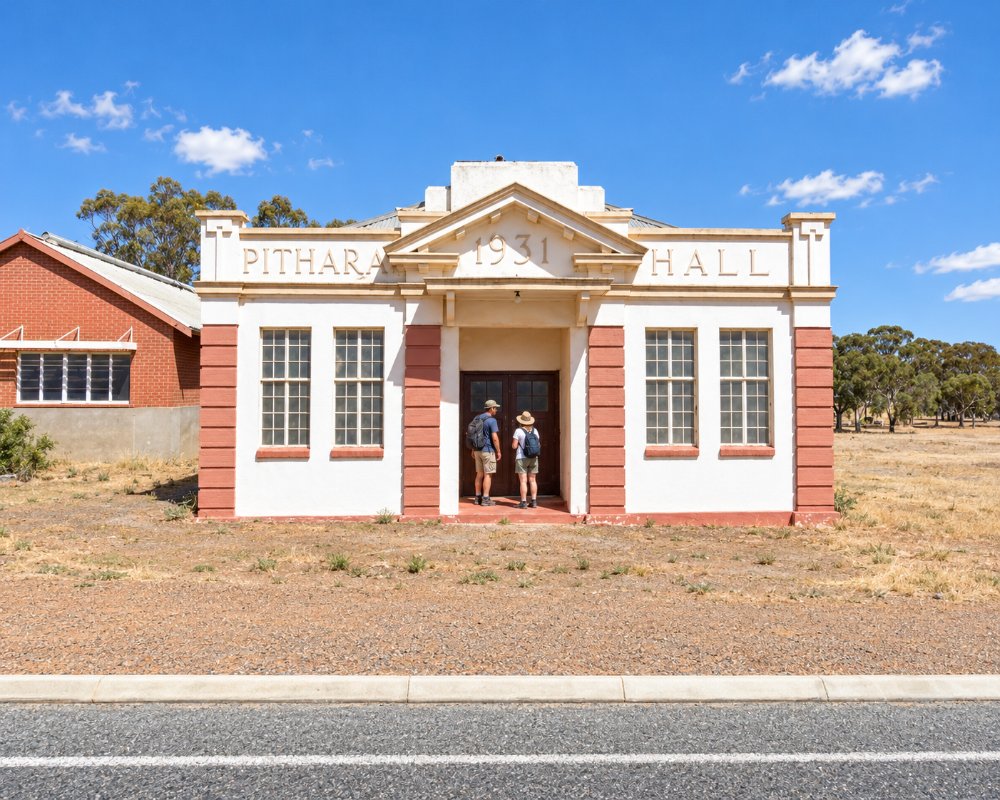
Pithara sits where the Great Northern Highway meets the Northam–Pithara Road, about 15 km south of Dalwallinu, with Wubin further north. It is a small wheat town with a hall and a speedway but no caravan park or pub, so Dalwallinu is the base for most travellers.
Things To Do in and around Pithara
Wildflower Season
Nature enthusiasts are drawn to Pithara’s vibrant wildflower displays, which bloom spectacularly during spring. The town is a key stop along the Wheatbelt wildflower trail, offering an array of colors that transform the landscape into a living painting. Travelers seeking tranquility and natural beauty find Pithara an ideal destination for photography, leisurely drives, and quiet reflection.
Pithara Speedway and McIntosh Park
Another highlight is the Pithara Speedway at McIntosh Park. The speedway hosts several meetings each season, attracting participants and spectators from across Western Australia. With facilities like showers, a canteen, and ample parking, it serves as both a community hub and a thrilling spot for motorsport fans.
The ground is named after the aviator John McIntosh, who was killed with a passenger on 28 March 1921 while giving joy flights at Pithara, Western Australia’s first fatal air accident. A plaque stands at the speedway entrance on the Pithara–Kalannie Road, about 500 m from town.
East Pithara School Site
Renowned Australian Olympian Shirley Strickland de la Hunty called Pithara home during her formative years, tying the town’s legacy to international sporting excellence. Today, visitors can sense this connection to history in every corner of the town, from its preserved structures to its enduring community spirit.
The little East Pithara School that she attended is signposted 18 km east of Pithara on the Pithara–Kalannie Road. Shirley Strickland went on to win seven Olympic medals, including the 80 m hurdles gold in 1952 and 1956.
Dalwallinu and the Wildflower Way
Dalwallinu is the first town on the Wildflower Way, the touring route to Mullewa. The main season runs from July to October, the district’s wattles peak around Wattle Week in September, and the visitor centre in the Dalwallinu Discovery Centre on Johnston Street has wildflower reports.
Where To Stay
For overnight stays, visitors typically explore accommodation options in Dalwallinu, just a short drive away.
Choices range from cozy motels to welcoming farm stays that immerse guests in the rural lifestyle. Pithara’s Supper Room, next to the Town Hall, serves as a venue for events and gatherings, showcasing the town’s communal vibe.
The Great Northern Highway is sealed all the way from Perth. The nearest caravan park is Dalwallinu Caravan Park, about 15 km north, which has a free dump point open to all travellers.
Pithara has no caravan park or motel, and the speedway ground is a club venue, not a campground. Dalwallinu Caravan Park on Dowie Street has 44 powered sites and laundry machines, and bookings are essential from July to September. The Dalwallinu Hotel Motel has hotel rooms with shared bathrooms and ensuite units, and The Old Convent on the Dalwallinu–Kalannie Road has 28 rooms, a pool and a barbecue area.
Heading south, Ballidu Caravan Park, about 25 km away, has powered and unpowered sites, and Wongan Hills has a caravan park and three 48-hour stopovers for self-contained rigs.
Eat & Drink
While options in Pithara itself may be limited, the nearby town of Dalwallinu provides a bakehouse, a hotel dining room and a supermarket to satisfy hunger after a day of exploring. Local eateries emphasize fresh, locally sourced ingredients, offering everything from hearty meals to indulgent desserts. For those packing a picnic, Pithara’s open spaces provide the perfect setting to enjoy a meal outdoors.
Jenny’s Bakehouse on Johnston Street in Dalwallinu bakes every day, with rolls, pies, cakes, toasted sandwiches, milkshakes and coffee, and the Dalwallinu Hotel Motel has a licensed restaurant serving breakfast, lunch and dinner. Dally FoodWorks covers groceries and the roadhouse on Johnston Street sells fuel and snacks. Heading north, the Wubin roadhouse is the next fuel stop, and to the south, Ballidu has a tavern for counter meals.
History
Pithara’s origins trace back to the early 20th century, when it served as a critical hub along the Wongan Hills to Mullewa railway line. Gazetted in 1914, at first under the name Hettie until locals had it changed back, the town’s name derives from an Aboriginal term referencing a nearby well. The local community thrived on agriculture, with innovations such as grain elevators introduced in the 1930s. These advancements marked a shift from manual grain handling to bulk storage, reflecting Pithara’s role in the Wheatbelt’s agricultural evolution.
Pithara lies on Noongar country. Monks from New Norcia ran sheep through the district in the late 1800s, and wheat farmers arrived from 1909. The name first appears on maps in 1907, and the siding on the Wongan Hills to Mullewa line was approved as Pithara in April 1913. In 1932 the Wheat Pool installed two engine-driven elevators at the siding, among Western Australia’s first steps from bagged to bulk grain handling.
Getting to Pithara
The easiest way to reach Pithara is by car via the Great Northern Highway, a scenic two-and-a-half-hour journey from Perth. While public transport options are limited, driving offers the freedom to explore nearby attractions, including the broader Wheatbelt region.
You can also come via the Northam–Pithara Road through Goomalling and Wongan Hills. Both routes are sealed and suit caravans, though the highway carries road trains, and Transwa’s Perth to Geraldton coach stops at Pithara twice a week each way.
With its rich tapestry of history, natural beauty, and community-focused attractions, Pithara serves as a compelling destination for anyone eager to experience Western Australia’s authentic countryside.
Experiences
- Historic/Heritage
- Rural/Country
- Self-Drive
Popular Activities
- Caravan and Camping
- Driving
- Sightseeing
About Pithara
- Locality: Rural locality
- Pithara Postcode: 6608
- State: Western Australia
- Region: Esperance & the Golden Outback
- Latitude: -30.38996
- Longitude: 116.66785
- Elevation: 333m
- Population: 110
- Median Income: $35464
- Area (Sq/km): 566.939
- Timezone: Australia/Perth
