
Oatlands, TAS
Located in the heart of Tasmania’s Southern Midlands, Oatlands offers a rare blend of history, charm, and natural beauty. This historic town, situated just over an hour’s drive from Hobart and less than two hours from Launceston, is home to Australia’s largest collection of sandstone buildings from the early 19th century.
Known For
- Georgian sandstone architecture
- Callington Mill and Distillery
- Convict history
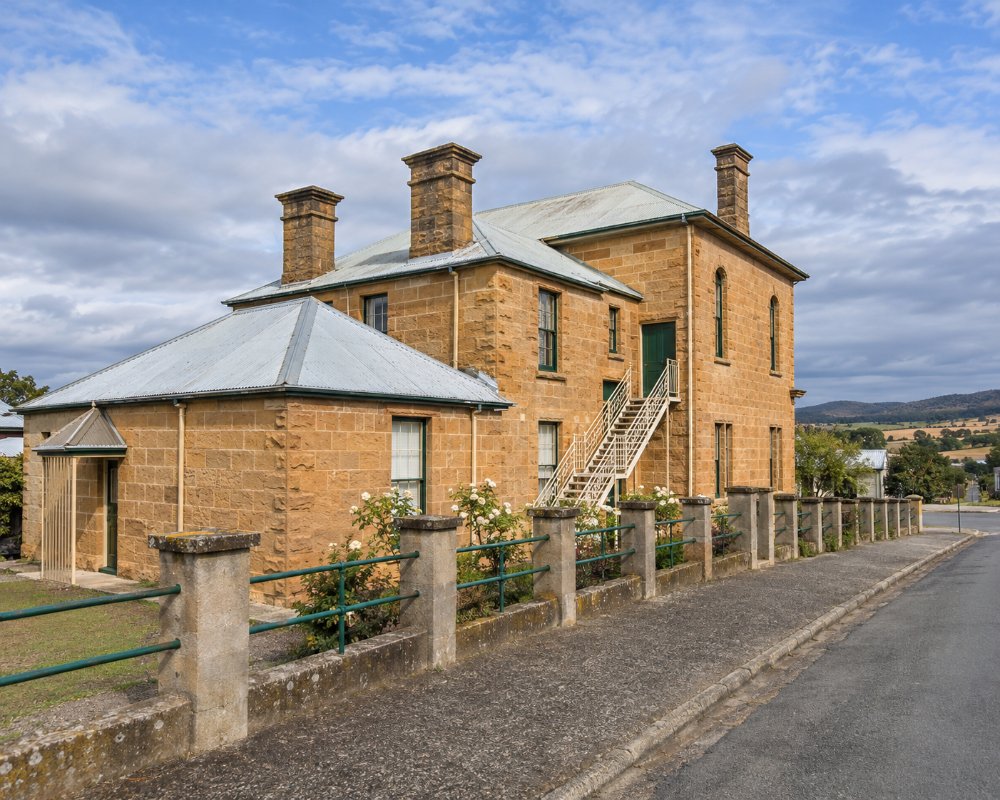
Oatlands traces its roots back to 1821 when Governor Lachlan Macquarie chose it as a military post to oversee convict labor and settlement. The town’s architecture, largely constructed by convict hands, stands as a testament to this period, with over 87 original sandstone structures lining the streets. The Oatlands Gaol, once a site of grim justice, still stands today, echoing stories of Tasmania’s colonial past.
At the heart of the town is the Callington Mill, built in 1837. This fully restored windmill, the only one of its kind operating in the Southern Hemisphere, is a focal point for visitors, offering insights into traditional grain milling and local history. The adjacent distillery, known for its award-winning whiskies, adds a modern twist to the town’s heritage.
Wandering through Oatlands feels like stepping into history. High Street, the town’s main thoroughfare, showcases beautifully preserved Georgian facades, with heritage-listed buildings housing antique shops, artisan stores, and cozy cafés. Self-guided heritage walks provide a deep dive into the stories behind these structures, each bearing the marks of Tasmania’s convict era.
Lake Dulverton, a short stroll from the town center, offers a tranquil escape for fishing, birdwatching, or simply enjoying the natural surroundings. Walking tracks and picnic spots make it an ideal location for a leisurely afternoon.
For those looking to immerse themselves further, the local art galleries and workshops offer a glimpse into the creative talents inspired by the town’s history and landscape.
Things To Do in Oatlands
Callington Mill and Distillery
The 1837 windmill on Mill Lane, just off High Street, was restored to working order in 2010 and grinds local grain again. Beside it, Callington Mill Distillery makes single malt whisky; its El Sol was named best Australian single malt at the 2026 San Francisco World Spirits Competition. You can walk the distillery on a self-guided tour during opening hours or book a guided tour and tasting, and the restaurant serves lunch every day.
The Gaol and the Court House
Oatlands’ 1829 Court House and the 1835 gaol are two of the town’s oldest public buildings. The gaol’s high sandstone walls still stand behind the town centre. Ask at the visitor centre about access before you go.
Fishing Lake Dulverton
The shallow lake on the north-east edge of town has been refilled and is stocked with brown and rainbow trout; the Inland Fisheries Service added 100 adult rainbows in October 2026. Boating is restricted because the lake is so shallow, so most anglers fish from the shore. You need a Tasmanian inland fishing licence, and the season runs from August to early May.
Shadows of the Past Silhouette Trail
Sixteen steel silhouettes of bushrangers, convicts, coaches and animals line the old road between Kempton and Tunbridge, with Oatlands in the middle. Drive the old road through the villages instead of the highway to see them.
Where To Stay
Accommodation options in Oatlands reflect its historic charm.
Guests can stay in restored heritage inns or quaint self-contained cottages, such as The Stables, which combines 19th-century aesthetics with modern comforts. For a more personal experience, boutique bed-and-breakfasts dot the town, offering warm hospitality and hearty Tasmanian breakfasts.
The Kentish Hotel on High Street, a heritage-listed pub from 1832, has seven self-contained rooms upstairs, with the bar, wine bar and restaurant downstairs. Note that the pub closes on Mondays and Tuesdays. 101 Oatlands, on High Street facing Callington Mill, is a restored period home with two bedrooms and two bathrooms that sleeps four.
For caravans and motorhomes, self-contained travellers use the stopover on the Lake Dulverton foreshore, off the Esplanade at the north end of town, with an overflow area near the mill; check the signs for the current stay limit. The free dump point on William Street has water, is open around the clock and takes long rigs.
The nearest caravan park is the Ross Caravan Park, about 35 km north, which has heritage cabins and self-contained rooms as well as sites. To the south, Kempton, about 35 km away, has a roadside stopover with some powered sites and a 48-hour limit, and a converted church, St Peter’s, let as a whole house.
Eat & Drink
When it comes to dining, Oatlands doesn’t disappoint. Bunch, at 106 High Street, fires up its wood oven for pizzas on Fridays and Saturdays and is a favourite stop for locals and visitors alike. The Pancake and Crepe Shop, housed in a Georgian-era building, adds a sweet and savory touch to the dining experience. For something more robust, local pubs offer classic Tasmanian dishes paired with regional wines and spirits.
The Kentish Hotel is the town’s pub, built in 1832, with a bar, a beer garden, a wine bar called The Vintish and a restaurant serving Tasmanian produce, from steaks and lamb to the Kentish burger. It opens Wednesday to Sunday for lunch and dinner, with a badge draw and a meat tray raffle on some nights.
Callington Mill Distillery’s restaurant, beside the windmill on Mill Lane, is open for lunch every day and pairs its food with the distillery’s own single malts.
On High Street, Bunch is an all-day cafe and providore for breakfast and lunch, with Shake Roasters coffee, Van Diemen’s Land Creamery ice cream, Kali hot chocolate and wood-fired pizza made with locally milled flour on Fridays and Saturdays. Vintage on High, at number 81, is a small cafe for coffee, cakes and light meals, with a garden to sit in.
Further afield, Kempton, about 35 km south, has Old Kempton Distillery’s cafe and the Huntington Tavern. The Ampol on the Midland Highway at Kempton is open 24 hours.
History
Aboriginal people lived across these plains for many thousands of years, and much of the Black War of the 1820s was fought in the surrounding districts. Governor Macquarie named the site in 1821, and its central position made it a military base for managing convicts, who built the roads, bridges and public buildings and worked on nearby farms. The stone came from the lake shore. The Irish nationalist Kevin Izod O’Doherty was exiled here after 1848.
A branch railway ran from Parattah from 1885 to 1949, and in 1985 the Midland Highway was moved off High Street to bypass the town. Drought and the bypass slowed the town for a time, but the restored mill, the distillery and the sandstone streets now draw a steady stream of visitors. The 2021 census counted 728 residents.
Getting There
Oatlands is easily accessible via the Midland Highway, making it an ideal stop on a road trip between Tasmania’s major cities. The town offers ample amenities, including a visitor information center, public parks, and convenient parking, ensuring a seamless experience for travelers.
For those looking to delve into its unique heritage, guided tours of the Callington Mill and historic precinct are highly recommended. Whether you’re captivated by its history, charmed by its architecture, or simply seeking a peaceful retreat, Oatlands promises an enriching journey through Tasmania’s past and present.
Experiences
- Caravan and Camping
- Historic/Heritage
- Rural/Country
- Self-Drive
Popular Activities
- Caravan and Camping
- Fishing
- Food and Wine
About Oatlands
- Locality: Urban locality
- Oatlands Postcode: 7120
- State: Tasmania
- Region: Hobart and South
- Latitude: -42.3003
- Longitude: 147.37078
- Timezone: Australia/Tasmania
