
Noosa Everglades and Lake Cootharaba, QLD
The Noosa Everglades are the upper reaches of the Noosa River, where the water runs slow and dark between walls of paperbark, banksia and reed, reflecting the sky so perfectly that the river is nicknamed the River of Mirrors. They begin at the northern end of Lake Cootharaba, about 40 minutes north of Noosa Heads, and wind for many kilometres through the Cooloola section of Great Sandy National Park. There are no roads along the river and no houses; the only way in is by boat.
Known For
- Mirror-like reflections on the upper Noosa River
- Canoe and kayak trips with riverside bush camps
- Abundant birdlife in a protected wetland
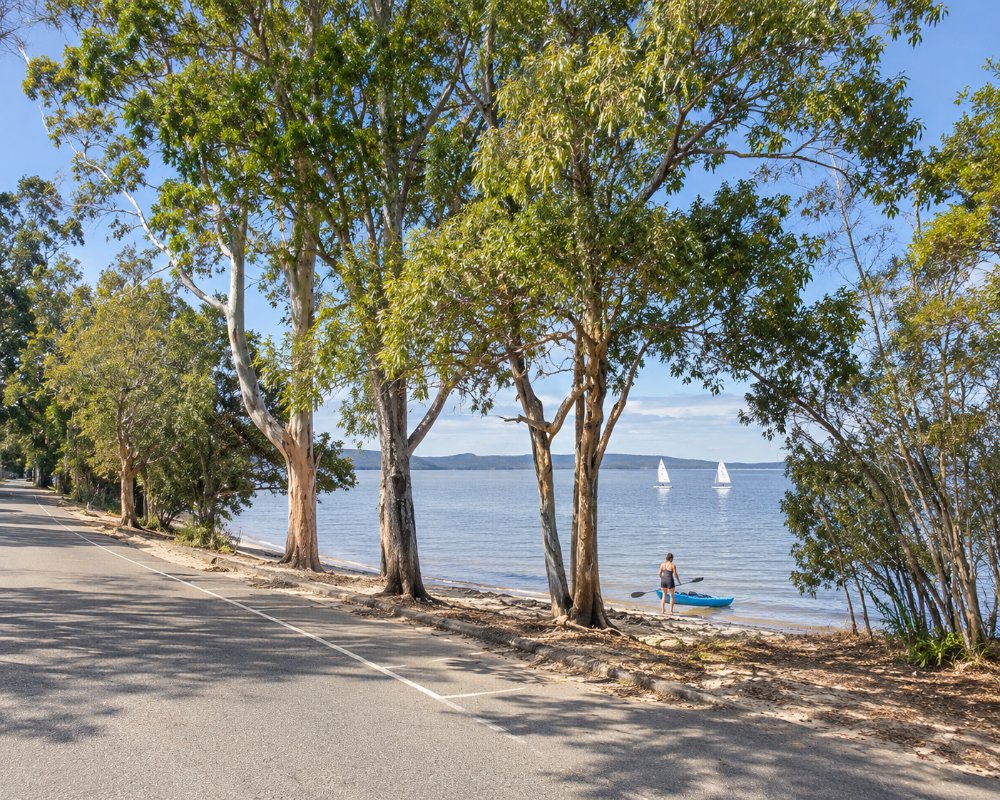
Lake Cootharaba is the largest of the Noosa lakes, broad and very shallow, with the village of Boreen Point on its western shore. At its northern end the river enters through a maze of channels at Kinaba, then narrows into a single winding stream stained the colour of tea by tannin from the surrounding vegetation. The system is often described as one of only two everglades in the world, the other being in Florida.
A very large share of Australia’s bird species has been recorded here, and the wetlands are also home to water dragons, kangaroos and, in the quieter reaches, the occasional shy platypus.
Things To Do in the Noosa Everglades
Take a cruise
Guided boat tours cross Lake Cootharaba and follow the river through The Narrows, the most beautiful stretch, to Harry’s Hut, an old timber-cutters’ camp where morning tea or a barbecue lunch is usually served. Tours leave from Elanda Point and Boreen Point, and some include a coach transfer from Noosaville. Half-day and full-day options are available.
Paddle it yourself
Canoes and kayaks can be hired at Elanda Point and Boreen Point for self-guided trips, with maps and waterproof barrels provided. A day paddle to Fig Tree Point and into the lower Narrows is achievable for most people; reaching Harry’s Hut and back is a long day. Start early, when the water is glassy, as the lake becomes choppy once the afternoon wind arrives.
Camp on the river
Fifteen national park camp sites are spaced along the river, most reached only by canoe or kayak, and a two or three-day paddle upstream is one of the classic wilderness trips of south-east Queensland. Sites have basic toilets but no drinking water, and permits must be booked in advance.
Kinaba and Fig Tree Point
At Kinaba, a floating information centre and boardwalk stand among the mangroves and melaleucas at the river mouth, reached by boat or by a flat walking track from Elanda Point. Fig Tree Point, a little further on, has a picnic area and a short rainforest walk.
Walks from Elanda Point
Tracks from Elanda Point lead to the ruins of the 1870s sawmilling settlement at Mill Point and to Kinaba, and connect with the Cooloola Great Walk, a five-day route through forest and dunes to Rainbow Beach.
Seasonal closures
Check the Queensland Parks alerts before you go. The footbridge over Kin Kin Creek between Elanda Point and Fig Tree Point has washed away, closing that section of the Cooloola Wilderness Trail until at least January 2027, and the Cooloola Great Walk closes each summer, from 1 December 2026 to 28 February 2027. The upper river and Harry’s Hut close during floods, as they did for ten days in late 2026.
Where To Stay
At Elanda Point, an eco camp on the lake shore has powered and unpowered sites, glamping tents and cabins, with a bar, a bistro and its own small brewery; kangaroos graze among the tents.
Boreen Point has a lakefront council camping ground and holiday houses. On the river, the national park camp sites are for self-sufficient paddlers. Day visitors can easily stay in Noosaville or Noosa Heads and join a tour.
Habitat Noosa at Elanda Point covers 65 acres of bush with more than 500 metres of lake frontage. Campers can choose powered sites, unpowered bush sites or the sought-after waterfront tent sites, all with hot showers, toilets and a camp kitchen, and there are glamping tents for those without gear. Everglades cruises leave from its jetty, and canoes, kayaks, paddleboards and tinnies can be hired on site.
In the park itself, Queensland Parks runs Harry’s vehicle-access camping area, reached by four-wheel drive along Harrys Hut Road off the Cooloola Way, and the river camp sites numbered 1 to 15, which are paddle-in only; all must be booked online in advance. Caravans should stay at Elanda Point or Boreen Point, as Harrys Hut Road is not suitable for vans.
Eat & Drink
The bistro at Elanda Point and the Apollonian Hotel at Boreen Point are the only places to eat near the lake. Cruises generally include morning tea or lunch. Paddlers need to carry all food and drinking water, and take every scrap of rubbish out.
The CootharaBAR and Bistro at Habitat Noosa has a seasonal menu, lake views and a microbrewery with up to eight beers brewed on site, and the Apollonian Hotel at Boreen Point, about 5 km south, is open daily for lunch and dinner. Do not count on buying food or finding drinking water at Kinaba, Fig Tree Point, Harry’s Hut or the river camps. For more choice, Tewantin is about 25 km south.
History
The lakes and river are the country of the Kabi Kabi people, who moved through them by canoe and left shell middens along the shores. From 1869 kauri pine, cedar and beech cut in the Cooloola forests were milled at Mill Point and shipped out across the lake. Harry’s Hut was built in the 1950s for timber workers and later owned by a Cooroy chemist, Harry Spring, who gave it his name. The upper river became national park in 1975.
Getting to the Noosa Everglades
Drive from Tewantin to Boreen Point, about 20 kilometres, and continue a few kilometres to Elanda Point. Harry’s Hut can also be reached by a rough forest road suitable for four-wheel drives in dry weather. Tour operators pick up from accommodation in Noosa.
Experiences
- Caravan and Camping
- Eco Tourism
- Nature based
- Soft Adventure
Popular Activities
- Bird Watching
- Bush Walking
- Canoeing
- Caravan and Camping
- Cruising
- Kayaking
- National Park
- Wilderness
About Noosa Everglades and Lake Cootharaba
- Locality: National park
- Noosa Everglades and Lake Cootharaba Postcode: 4565
- State: Queensland
- Region: Sunshine Coast
- Latitude: -26.2550
- Longitude: 152.9930
- Timezone: Australia/Brisbane
