
Newnes and the Wolgan Valley, NSW
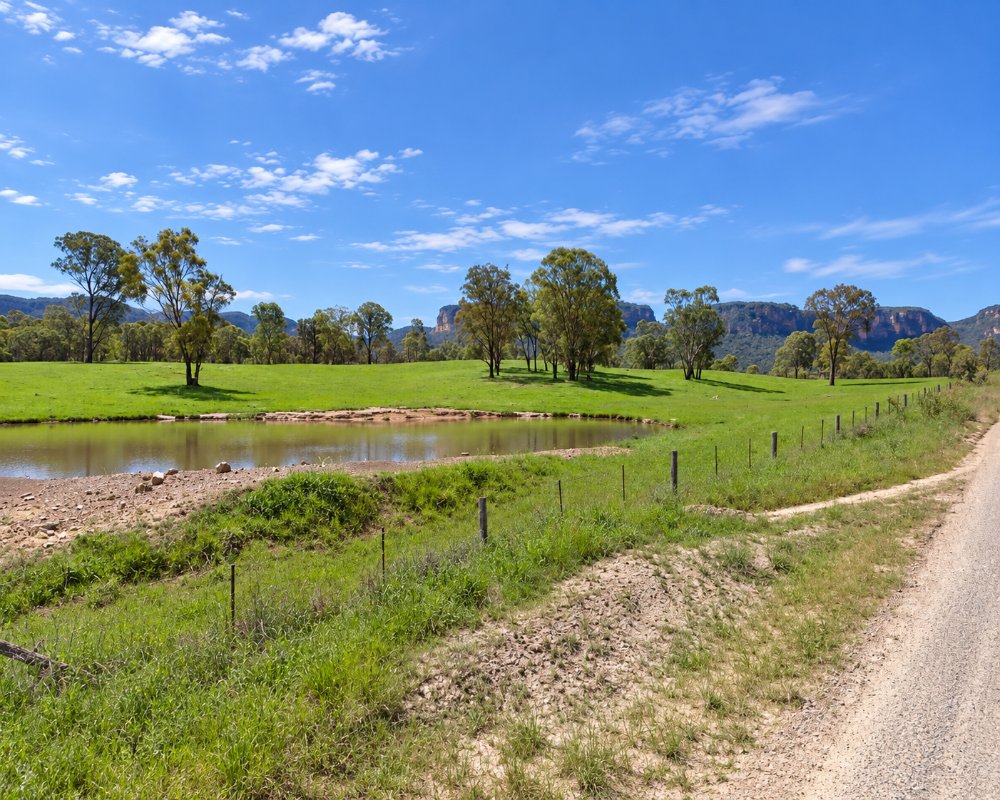
Newnes lies at the end of the Wolgan Valley, a long, narrow valley walled by sandstone cliffs about 45 kilometres north of Lithgow. Between 1906 and 1932 it was an industrial town of about 2,000 people, built to mine oil shale and refine it into kerosene, paraffin and petrol. Today a former hotel, a few houses and a broad grassy campground remain, with the brick and stone ruins of the works scattered through the bush across the river.
Known For
- The ruins of the Newnes shale oil works
- Camping under the Wolgan Valley cliffs
- The old railway and the Glow Worm Tunnel
Road access is the first thing to know. Wolgan Road, the only public road into the valley, was closed at Wolgan Gap in November 2022 after landslides, and a permanent repair had not been completed in 2026. A steep temporary track serves residents. In early 2026 the national parks service advised that the Newnes ruins and campgrounds could be reached only on foot, by the Pipeline Track from Glen Davis or the Old Coach Road from the Newnes Plateau. Check with Lithgow City Council and the national parks website before planning anything.
Things To Do at Newnes
The Industrial Ruins
A signposted loop of about five kilometres on the south bank of the Wolgan River passes long rows of beehive coke ovens, the paraffin sheds, retort benches, oil washers and the footings of the refinery. It is one of the largest industrial heritage sites in the state, and the bush has grown through all of it.
Glow Worm Tunnel
The railway built to serve the works climbed out of the valley through two tunnels. The longer one, now famous for its glow worms, is these days visited from the Glow Worm Tunnel car park on the Newnes Plateau, reached by an unsealed road from Lithgow. The old walking route up from the Wolgan Valley was closed by landslips in 2026.
Pipeline Track
This track follows the line of a pipeline over the range to Glen Davis, in the Capertee Valley, about ten kilometres one way with a climb of several hundred metres and a lookout over both valleys at the top.
The Valley
The Wolgan Valley itself is striking: farmland on the flats, with Donkey Mountain standing alone in the middle and cliffs on every side. A luxury resort that opened here in 2009 closed in June 2023 after the road failed; Emirates and Marriott announced in early 2026 that it would reopen as a Ritz-Carlton lodge, but its opening had not been confirmed by October 2026.
Glen Davis
The walk-in route to Newnes starts at Glen Davis, a small village at the end of the Capertee Valley about 35 km off the Castlereagh Highway at Capertee. The oil works moved here in the late 1930s, and their ruins stand at the edge of the village under the same sandstone cliffs.
The Donkey Steps
Since the road closed, the only vehicle route into the valley has been the Donkey Steps, a temporary track built by the council with grades of 32 to 35 per cent. It is for residents and authorised vehicles, not visitors, and in August 2026 the council decided to repair the original road rather than build a new route, with no reopening date yet.
Where To Stay
Newnes campground, in Wollemi National Park, is a large, flat, grassy site by the river with toilets and barbecues but no drinking water; it is walk-in only while the road is closed, and must be booked online. The former Newnes Hotel, which lost its licence in 1988, has operated as a kiosk and information point with cabins nearby; check whether it is open under present conditions.
Lithgow has motels and supplies, about 45 km from Newnes by the old road. Lithgow has the Lithgow Tourist & Van Park on Cooerwull Road, with drive-through powered sites that have water and sullage connections, tent sites and self-contained ensuite cabins (no pets), plus motels and hotels, and Lake Wallace at Wallerawang lets self-contained rigs stay up to 48 hours, with toilets, showers and a dump point, though tents and camper trailers are not allowed. On the Capertee side, the national parks campground at Coorongooba near Glen Davis is a basic riverside site.
Eat & Drink
There is nowhere to buy a meal in the Wolgan Valley at present: the kiosk in the old Newnes Hotel sells only basic supplies on weekends, and the resort is closed. Walkers should carry everything, including all drinking water. Glen Davis has no shop or fuel, so stock up in Lithgow, where supermarkets and bakeries, cafes along Main Street, pubs, and the Lithgow Workies Club, whose carvery bistro and Cino’s Cafe suit families. Fuel up in Lithgow or Wallerawang before heading to Glen Davis.
The kiosk in the 1907 hotel’s old bar sells soft drinks, ice creams, maps and souvenirs on weekends, but the valley is reached only by the gated Donkey Steps road, so campers must book with the owners. The former Emirates resort is due to reopen as a Ritz-Carlton Lodge for its own guests, and Wolgan Road remains closed to the public.
In Lithgow, Cino’s Cafe at the Workies serves breakfast seven days, and the Tin Shed near the station is a cosy stop for coffee.
History
The Commonwealth Oil Corporation began work here in 1906 and named the town after its chairman, the London publisher Sir George Newnes. A 50-kilometre railway was pushed through to the main line in little more than a year. The works never ran smoothly and closed and reopened several times before shutting for good in 1932. Much of the plant was moved over the range to Glen Davis in the late 1930s.
The valley is Wiradjuri country. The village was called Wolgan until early 1907, and the Newnes Hotel was undermined by floods in 1986, moved by volunteers in 1987 and lost its licence in 1988.
Getting to Newnes
In normal times Newnes is reached from the Castlereagh Highway at Lidsdale, north of Lithgow, by Wolgan Road. While that road is closed, treat Newnes as a walk-in destination and get current advice first.
For now, drive to Glen Davis, about 230 km from Sydney by Lithgow, the Castlereagh Highway and Glen Davis Road, sealed and suitable for caravans, then walk about 10 km on the Pipeline Track with a steep climb over the range.
Experiences
- Active
- Caravan and Camping
- Historic/Heritage
- Nature based
- Remote
Popular Activities
- Bird Watching
- Bush Walking
- Caravan and Camping
- National Park
- Sightseeing
- Wilderness
- World Heritage
About Newnes and the Wolgan Valley
- Locality: Rural locality
- Newnes and the Wolgan Valley Postcode: 2790
- State: New South Wales
- Region: Blue Mountains
- Latitude: -33.17679
- Longitude: 150.23602
- Elevation: 521m
- Timezone: Australia/Sydney
