
Murramarang National Park, NSW
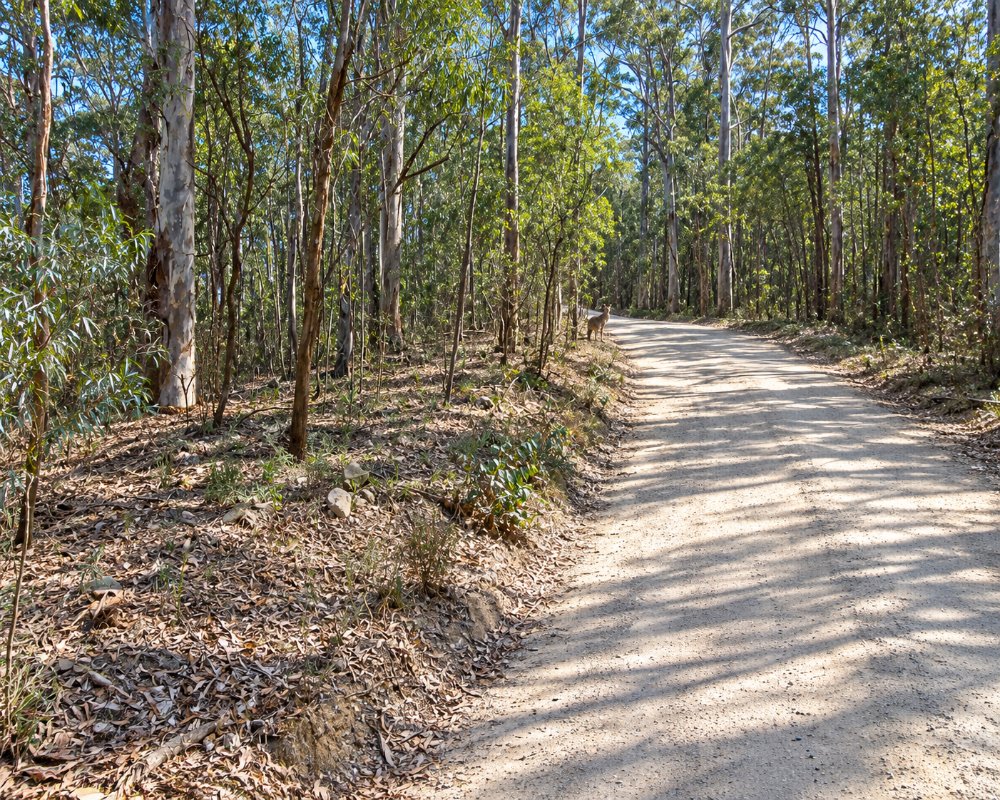
Murramarang National Park protects a long strip of coast between Kioloa and Batemans Bay, about 44 kilometres of beaches, rocky headlands and small coves. What makes it unusual is the forest: tall spotted gums with an understorey of burrawang palms grow right down to the high tide line, and eastern grey kangaroos wander out of it onto the sand.
Known For
- Kangaroos on the beach
- Spotted gum forest meeting the sea
- The Murramarang South Coast Walk
Things To Do in Murramarang National Park
Beaches
Pebbly Beach is the famous one for kangaroos, and Pretty Beach and Depot Beach have them too. Further south, Emily Miller Beach, Myrtle Beach and Richmond Beach are small, sheltered coves reached by short tracks from the road to South Durras, and North Head and Maloneys Beach face Batemans Bay. None of the park beaches is patrolled.
Murramarang South Coast Walk
This 34-kilometre walk runs from Pretty Beach to Maloneys Beach over three days, following the shoreline through forest, across rock platforms and along beaches. It is open from March to November and must be booked with the national parks service, staying either in campgrounds or in cabins. Parts of it depend on the tide.
Shorter Walks
The Durras Mountain track climbs through rainforest to a grassy summit with views over the coast and the Budawang Range. A discovery trail loops around Durras Lake, a rainforest walk starts at Depot Beach, and the rock platform there holds fossils and ice-carried stones 270 million years old.
Aboriginal Heritage
Near Bawley Point, at the northern end, the Murramarang Aboriginal Area protects one of the largest shell middens on the coast, with a signposted walk.
Lookouts and snorkelling
Point Upright, North Head and Snapper Point give the best views of the coast and the offshore islands. The park’s waters are part of Batemans Marine Park, so rock platforms such as Wasp Head and the coves near South Durras are good for rock-pooling and snorkelling in calm seas, and the short Wasp Head walk passes Aboriginal sites on its way to a view of Wasp Island.
Birds and wildlife
Besides the kangaroos, the spotted gum and rainforest gullies hold lyrebirds, best heard in winter when they display, satin bowerbirds, goannas and many parrots. Whales pass offshore from late autumn to spring.
Where To Stay
National parks campgrounds at Pretty Beach, Pebbly Beach and Depot Beach take cars, and Pretty Beach and Depot Beach have cabins, while Pebbly Beach has a few shacks. North Head has a small bush campground. Private holiday parks operate at Kioloa, Merry Beach, Durras North and South Durras.
All five NPWS campgrounds need a booking. Depot Beach has about 40 marked sites, powered and unpowered, with room for caravans, hot showers, cabins and an office selling firewood, gas and ice. Pretty Beach, reached from Termeil, has powered sites, showers and cabins. Pebbly Beach has unpowered sites with cold showers, and only a few suit small caravans under 4.57 m. North Head has unpowered sites and one toilet but no water, on an unsealed road that can turn boggy after rain, and Oaky Beach mainly serves walkers on the South Coast Walk. Camping fees are on top of the $8 daily vehicle entry fee, generators and pets are not allowed, and NPWS toilets cannot take chemical-toilet waste.
Just outside the park, NRMA Murramarang Beachfront Holiday Resort at South Durras has powered, ensuite and unpowered sites, villas and a dump point, and Lakesea Park and BIG4 South Durras Holiday Park are also there. Durras Lake North Holiday Park and Joalah Holiday Park are at Durras North, and Ingenia Holidays Merry Beach, near Kioloa, has a dump point. Batemans Bay, about 11 km south, has the motels and the big holiday parks.
Eat & Drink
There are no shops inside the park, and the NPWS tank water at Depot Beach and Pebbly Beach is not drinkable, so bring your own water and supplies. The nearest meals are at the Beach Bistro at NRMA Murramarang Beachfront Holiday Resort in South Durras, which is licensed and open daily from 8am to 8pm, with hot meals at breakfast, lunch and dinner. Durras Lake North Holiday Park has a small shop. For a full shop, fuel and a choice of cafes, pubs and clubs, go to Batemans Bay or to Ulladulla, about 33 km north of the Pretty Beach turn-off. Mobile reception is patchy across the park and absent at Pebbly Beach.
Good To Know
A daily vehicle fee applies in the main visitor areas. Several access roads are unsealed and steep, and Mount Agony Road to Pebbly Beach is unsuitable for caravans. Do not feed the kangaroos. Much of the park was burnt in the Currowan fire of 2019 and 2020, and the forest is recovering well.
History
The park is Country of the Yuin people, and the Walbunja, who speak Dhurga, are the people around Durras and Batemans Bay. The headlands gave easy access to food from both sea and forest, and the middens at Murramarang Point record thousands of years of fishing. Europeans named the area Durras by 1840, the year of the first land grant, and for about ninety years the forests were logged, with mills at Wasp Head and Pebbly Beach until the late 1920s. The national park was declared in 1973. The Currowan fire of 2019-20 burnt most of the park, and the Penance Grove boardwalk was so badly damaged that it has been closed for good.
Getting to Murramarang National Park
The park is reached by side roads from the Princes Highway between Termeil and Batemans Bay. It is about four hours from Sydney and two and a half from Canberra.
The entry roads are, from north to south: Termeil for Pretty Beach; Mount Agony Road at East Lynne, sealed, for Pebbly Beach, Depot Beach and Durras North; and Durras Road for South Durras and North Head. From Canberra, take the Kings Highway to Batemans Bay, about 150 km, then drive north. Leave large caravans at a holiday park or at Depot Beach rather than towing to Pebbly Beach.
Experiences
- Active
- Caravan and Camping
- Eco Tourism
- Nature based
Popular Activities
- Beach
- Bird Watching
- Bush Walking
- Caravan and Camping
- National Park
- Snorkelling
- Swimming
- Wildlife
About Murramarang National Park
- Locality: National Park
- Murramarang National Park Postcode: 2536
- State: New South Wales
- Region: South Coast
- Latitude: -35.6000
- Longitude: 150.3200
- Timezone: Australia/Sydney
