
Launceston City Centre, TAS
Launceston is the second city of Tasmania and the capital of the north, a river city of about 90,000 people at the head of the Tamar, where the North Esk and South Esk meet. It is 200 km and about two and a half hours north of Hobart by the Midland Highway.
Founded in 1806, it is one of the oldest cities in Australia, and its compact centre is full of Victorian and Edwardian buildings, small parks and good places to eat. In 2021 it was named a UNESCO City of Gastronomy. Cataract Gorge, a wild river canyon, lies fifteen minutes’ walk from the main street.
Known For
- Victorian streets and leafy parks
- A UNESCO City of Gastronomy
- Cataract Gorge on the edge of the centre
Things To Do in Launceston
City Park
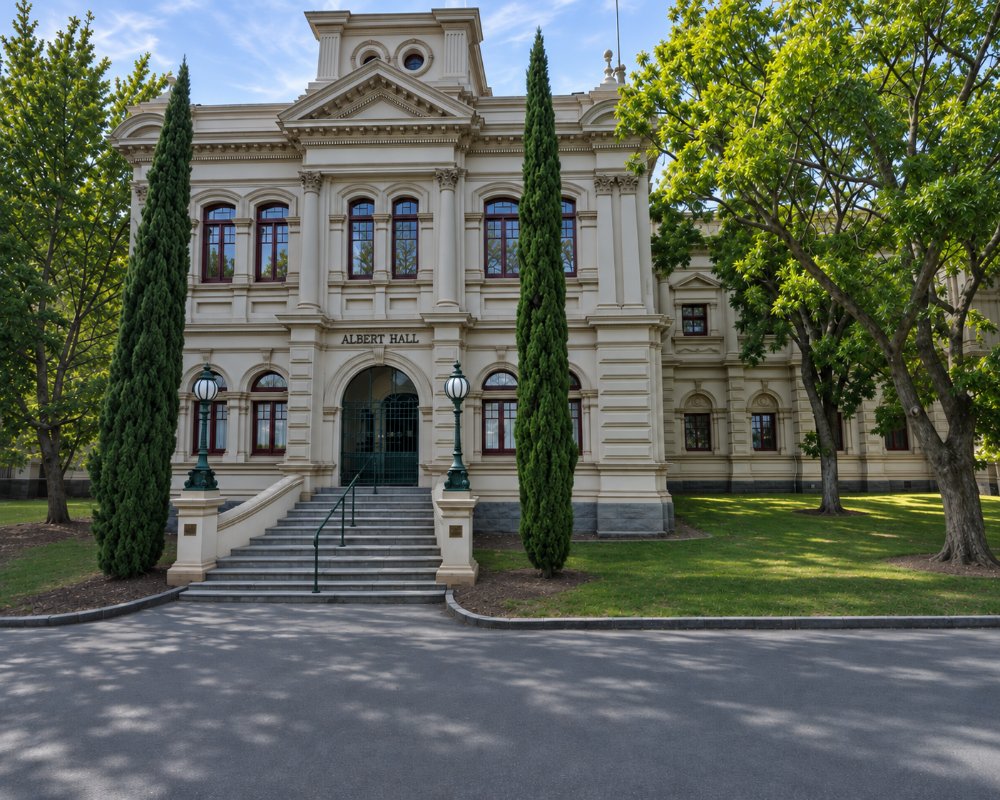
The city’s favourite park dates from the 1820s, with old elms and oaks, a conservatory of 1932 and an enclosure of Japanese macaques, a gift from the sister city of Ikeda. Albert Hall, built for an exhibition in 1891, stands on one corner, and Design Tasmania, with its collection of fine timber furniture, on another. Entry to the park is free.
Museums and Galleries
The Queen Victoria Museum and Art Gallery is spread over two sites. The art gallery at Royal Park holds colonial and modern Tasmanian art and a complete Chinese temple from the tin fields of the north-east. The museum, with its planetarium, is across the river at Inveresk. Both are free.
The Old Centre
Brisbane Street Mall and the curving Quadrant Mall are the heart of the shopping streets. Nearby are Princes Square, with its fountain, and the Old Umbrella Shop in George Street, a National Trust shop that still has its 1860s blackwood fittings.
The Seaport and River
Restaurants and a boardwalk line the old wharves on the North Esk, and a footbridge crosses to Riverbend Park. Cruise boats leave from Home Point for trips into the Gorge and down the Tamar.
Harvest Market
Every Saturday morning, farmers and food makers from across the north set up in a car park in Cimitiere Street. It is one of the best produce markets in the state.
Boag’s Brewery
James Boag has brewed beer in William Street since the 1880s. Tours with a tasting can be booked ahead.
Penny Royal
At the mouth of the Gorge, this adventure park has zip lines, cliff walks, rock climbing and a boat ride. Entry to the grounds is free.
Events
Festivale fills City Park with food, wine and music over a weekend at the end of January. The agriCULTURED festival of food and farming runs in early November, the Junction Arts Festival in September and the Launceston Cup race meeting in late February.
Where To Stay
The city centre has places to stay in every price range, most within walking distance of the parks and restaurants.
At the top of the range are Stillwater Seven, with seven rooms above the restaurant in the old mill at the Gorge mouth, Hotel Verge near City Park, the Peppers Silo Hotel in converted grain silos across the river and Peppers Seaport on the waterfront. The Hotel Grand Chancellor, The Sebel and the Mantra Charles are large, central hotels. The Leisure Inn Penny Royal has hotel rooms and apartments beside the Gorge, and the Art Hotel on York and Launceston Central Apartment Hotel are good mid-range choices. For a tighter budget, the Village Family Motor Inn is a short walk from the centre and the Pod Inn has capsule-style rooms.
For caravans and motorhomes, the BIG4 Launceston Holiday Park in Glen Dhu Street is the closest park to the centre, about 20 minutes’ walk, with powered sites and cabins; it does not take pets. Discovery Parks at Hadspen, ten kilometres west, has a dump point and allows dogs. The city has no free overnight stop. Self-contained travellers can use the council’s free 48-hour stops at Evandale, near the airport, with a free permit. The centre is a grid of one-way streets with short parking bays, so it is easier to leave a van at the park and walk or take a bus in.
Eat & Drink
Launceston eats well. Stillwater, in the 1830s flour mill beside the Gorge, has been the city’s best-known restaurant for a quarter of a century. Black Cow Bistro in George Street specialises in Tasmanian beef, and Stelo at Pierre’s serves Italian food in a room that has been a restaurant since 1956. Pachinko, in the Quadrant, is a tiny Japanese-style spot, and Tres does Latin American food in Charles Street.
On the water at the Seaport, Mudbar is open all day and Rupert and Hound is known for seafood. Cataract on Paterson cooks steaks on hot stones. For a drink, Saint John Craft Beer has a long list of taps, Du Cane Brewing runs a brewpub and pizza hall in Elizabeth Street, and Havilah pours small-batch Tasmanian wine. Bread and Butter is the place for pastries and breakfast.
Day Trips from Launceston
The Tamar Valley wine route runs north on both sides of the river, through Rosevears to Beaconsfield and Beauty Point on the west and to George Town on the east. To the south, Evandale and Longford are among the best-preserved Georgian villages in Australia, with the World Heritage estates of Woolmers and Brickendon. West along the Bass Highway are Deloraine and the caves of Mole Creek, and to the north-east the road through Lilydale leads to the lavender fields and the coast.
History
The Tamar Valley is the country of the Leterremairrener people, and the river is known as kanamaluka. Bass and Flinders sailed into the estuary in 1798. The British settled first at George Town and York Town in 1804, and in 1806 William Paterson moved his headquarters to the present site and named it after the town in Cornwall where Governor King was born.
In 1835 John Batman and John Pascoe Fawkner each sailed from Launceston to found the settlement that became Melbourne. In 1847 a Launceston doctor, William Pugh, carried out the first operation under anaesthetic in Australia. The city was lit by hydro-electricity from Duck Reach, in the Gorge, from 1895, among the first in the world. Floods in 1929 devastated the low-lying suburbs, and levees now protect them.
Getting to Launceston
Launceston is on the Midland Highway from Hobart and the Bass Highway from Devonport, where the Spirit of Tasmania ferry docks about 100 km and an hour and ten minutes away. Launceston Airport is 15 km south of the centre, with taxis and a shuttle minibus but no regular public bus. Metro buses serve the suburbs. The centre is flat and easy to walk.
Experiences
- Historic/Heritage
- Rural/Country
Popular Activities
- Shopping
- Sightseeing
About Launceston City Centre
- Locality: Suburb
- Launceston City Centre Postcode: 7250
- State: Tasmania
- Region: Launceston & North
- Latitude: -41.4403
- Longitude: 147.1394
- Elevation: 15m
- Timezone: Australia/Hobart
