
Koolanooka, WA
Koolanooka, a small town located in the Mid West region of Western Australia, holds a fascinating piece of the state’s mining and cultural history. Just 361 kilometers north of Perth, this quiet spot is an easy four-hour drive from the capital city, making it a convenient destination for those looking to step off the beaten path.
Known For
- Western Australia’s first iron ore export mine.
- Spectacular wildflower displays in season.
- Koolanooka Springs’ serene natural landscapes.
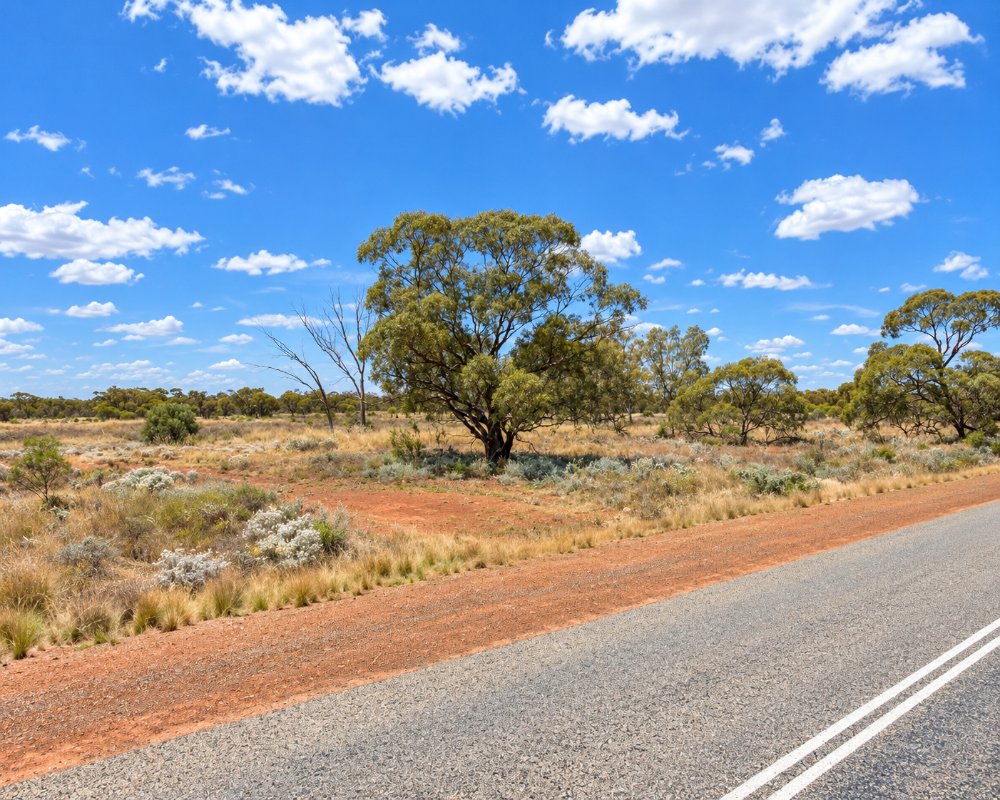
The old Koolanooka siding is about 10 km south-east of Morawa on the Wubin–Mullewa Road, towards Perenjori, while the Koolanooka Hills, the old iron ore minesite and Koolanooka Springs are further east, about 28 km from Morawa by gravel roads. With a free bush camp at the springs, it is one of the best places on the Wildflower Way to spend a night under dark skies.
Things To Do in and around Koolanooka
Koolanooka Springs
For nature enthusiasts, Koolanooka offers a diverse landscape brimming with unique flora and fauna. Koolanooka Springs is a highlight, providing a tranquil setting for picnics and hikes. Visitors are greeted by a scenic blend of rolling hills, red earth, and rock formations that provide a quintessentially Australian backdrop.
The shire runs a free campsite for self-sufficient travellers at the foot of the hills, and it is one of Morawa’s astrophotography spots, where the Milky Way is clear to the naked eye on a dark night.
Koolanooka Hill and the Old Minesite
A trip to Koolanooka wouldn’t be complete without exploring its historical mining lookout. From here, visitors can peer into the once-active mining site and take in sweeping views of the surrounding landscape. For those keen on hiking, trails around the Springs provide a closer look at the area’s unique geological formations.
A walk to the top of the hill and over the ironstone outcrops gives wide views over the cropping country, and in a good spring yellow, white and pink everlastings carpet the slopes. After rain, look for tadpoles in the springs.
Wildflowers
During the wildflower season, the area transforms into a vibrant tapestry of colors. This includes the iconic Grevillea tenuiloba, a striking plant that holds a special place in local lore as the floral emblem of nearby Morawa. It’s a photographer’s dream and a must-see for botany enthusiasts.
Morawa
In nearby Morawa, only 10 kilometers away, additional attractions await. The Morawa Museum offers insights into the region’s past, while the town itself serves as a convenient base for visitors to explore Koolanooka.
The museum centres on the old gaol and courthouse and holds a well-known windmill collection, opening most days subject to volunteers. Nearby are Monsignor Hawes’ stone Holy Cross Church, built in 1933, and his tiny Hermitage.
Where To Stay
While Koolanooka itself has no services, accommodations are available in Morawa. The Morawa Caravan Park caters to travelers with camping or caravan facilities, while the Morawa Hotel Motel provides comfortable lodging with an on-site restaurant. For a more homely stay, Everlastings Guest House offers a cozy guesthouse experience.
Morawa Caravan Park has powered and unpowered sites, while self-sufficient travellers can camp at the Koolanooka Springs campsite, which has toilets but no drinking water, about 28 km from Morawa on gravel roads that suit 2WD in dry weather.
The springs camp has an ablution block and wood barbecues, so bring your own firewood and all your water, and dogs on leads are allowed. Reach it from Morawa by heading east along Jones Lake Road, Fallon Road and Koolanooka Springs Road; the gravel suits 2WD in dry weather, but the shire recommends 4WD when it is wet, so check its road closures and fire restrictions first.
Morawa Caravan Park’s 25 powered sites cannot be booked and are allocated first come, first served, while the chalets and units can be booked. It has a camp kitchen, coin laundry and accessible amenities, and the town’s dump point and water refill are at the southern entrance. The Morawa Hotel has motel rooms and newer units, and Everlastings Guest House on Evans Street has ensuite rooms with cooked breakfasts and buffet dinners. In the busy wildflower season, the shire also suggests the Canna townsite camp, about 43 km north of Morawa.
Eat & Drink
Dining options in the vicinity are centered in Morawa, with several local cafes and restaurants providing hearty meals. Travellers can enjoy a casual meal at Wildflour Bakery and Cafe (the former Morawa Roadhouse) or opt for a sit-down dinner at the Morawa Hotel Motel’s restaurant. Essentials like groceries, fuel, and medical services are also readily available in town, ensuring a comfortable stay.
There is no food or fuel at Koolanooka or the springs. In Morawa, Wildflour Bakery and Cafe on Winfield Street bakes bread daily and sells coffee, light meals and fuel, opening on weekdays and Saturday mornings with longer hours in season. The Morawa Hotel on Solomon Terrace has beer on tap and a kitchen in the evening from Tuesday to Sunday. Morawa IGA has fresh food and bulk bottled water, handy for the waterless camp, and the self-serve fuel station is open around the clock.
History
Koolanooka’s roots lie in its connection to Western Australia’s early mining days. The townsite was officially gazetted in 1916, but its significance skyrocketed in the 1960s when the Koolanooka Mine became the first site in the state to export iron ore. This marked the beginning of Western Australia’s rise as a mining powerhouse. The mine, operating intermittently, has left a legacy that includes a historic mining lookout and remnants of its operational days.
The area is also named after Koolanooka Spring, an Aboriginal term that translates to “place of plenty wild turkeys.” This name reflects the area’s deep connection to its natural surroundings and Indigenous heritage.
The Shire of Morawa acknowledges the Yamatji people as the Traditional Owners. The siding on the Mullewa to Wongan Hills line was planned in 1913 under the name Bowgada and renamed Koolanooka shortly before the line opened. Geologists found iron ore in the hills in 1961, and in 1965 and 1966 Western Mining built the open-cut mine, a rail spur, a powerhouse, housing in Morawa and a ship-loading berth at Geraldton. The first cargo left Geraldton for Japan on 16 March 1966, and mining in the hills resumed in the 2000s.
Getting to Koolanooka
Reaching Koolanooka is straightforward, whether you’re traveling from Perth or other parts of Western Australia. By car, take the Great Northern Highway before branching off onto the Mullewa-Wubin Road towards Morawa. Public transport options are limited, so driving remains the most practical way to visit.
From Perth it is about 380 km either way, by the Great Northern Highway to Wubin and the Wubin–Mullewa Road through Perenjori, or by the Midlands Road via Moora and Three Springs, both sealed and fine for caravans; allow about four hours. The last 18 km or so to the springs is gravel. Transwa’s coach stops in Morawa twice a week each way.
Experiences
- Caravan and Camping
- Historic/Heritage
- Nature based
Popular Activities
- Bush Walking
- Caravan and Camping
- Outback
- Sightseeing
About Koolanooka
- Locality: Rural locality
- Koolanooka Postcode: 6623
- State: Western Australia
- Region: Esperance & the Golden Outback
- Latitude: -29.27076
- Longitude: 116.08075
- Elevation: 281m
- Population: 16
- Median Income: $22100
- Area (Sq/km): 667.374
- Timezone: Australia/Perth
