
Irvinebank, QLD
Irvinebank is a tiny former tin-mining town in dry, rugged hill country 27 km west of Herberton, on the far side of the Atherton Tablelands from Cairns. A century ago it was the headquarters of a mining empire. Today only a little over a hundred people live here, and because so little has changed, it is one of the most complete and atmospheric old mining towns in Queensland.
Known For
- John Moffat’s tin-mining empire
- Loudoun House Museum
- An almost untouched early 1900s townscape
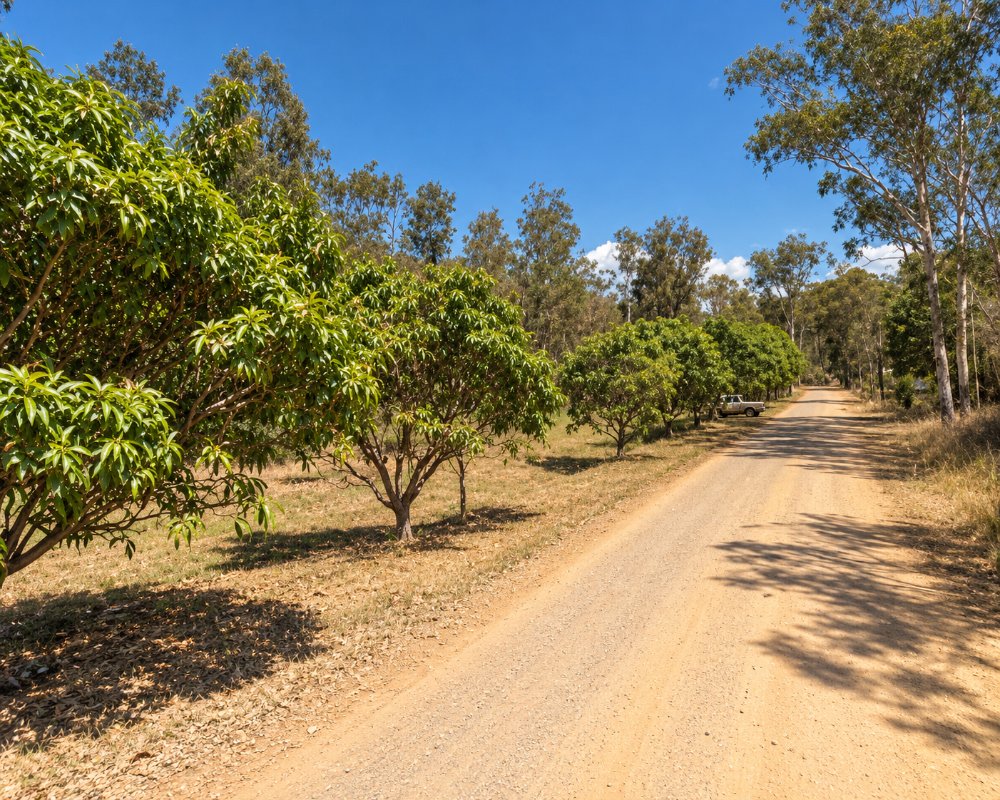
The town sits in a bowl of rocky hills around a dam on Gibbs Creek. On the slopes above the water stand the mill, the owner’s house, the bank and the hall, arranged much as they were before the First World War. There are no souvenir shops and few visitors, just a pub, a museum and a great deal of rusting machinery.
Things To Do
Loudoun House Museum
John Moffat built this two-storey timber house in 1884, overlooking the mill so he could keep an eye on his business. It is among the oldest high-set timber houses in north Queensland and is now a museum run by local volunteers, with photographs, mining relics and some of Moffat’s own cedar furniture. Opening hours are limited, particularly in the wet season, so check ahead.
Loudoun Mill
The tin battery and smelter below the house was the heart of the town from the 1880s, and later ran as a State Treatment Works for small miners. Much of the structure and machinery survives and can be seen from the road. It is not safe to enter.
Town Heritage Trail
A walk around the town passes the School of Arts hall of 1900, still used for community events, the handsome brick Queensland National Bank building of about 1905, the old police station and post office, and miners’ cottages. Signs explain what stood where.
Vulcan Mine
On the hillside above the dam, a steel headframe marks the Vulcan, once regarded as the deepest tin mine in Australia. It worked from 1889 into the 1930s.
Old Tramways and Back Roads
Moffat linked Irvinebank to the Chillagoe railway with a narrow-gauge tramway through Stannary Hills, completed in 1907. Its formation can still be traced, and four-wheel-drive tracks lead to other abandoned mining settlements in the hills. Carry water, tell someone your plans and stay well clear of old shafts.
Festivals and the School of Arts Hall
The 1900 School of Arts Hall is still the centre of town life. On some Saturdays it opens as the Tin Scratchers Bar, and it hosts touring concerts, including Festival of Small Halls shows. The Back to Irvinebank – John Moffat Festival brings former residents and visitors back to town, most recently in 2026. Money raised goes to repairing the heritage buildings, so check the town website or noticeboard for dates.
History
Irvinebank lies in the country of the Mbabaram people.
Tin was found in the area in the early 1880s. In 1883 the Scottish-born mine owner John Moffat bought the claims, moved his operations here from Herberton and named the place after the River Irvine in his native Ayrshire. From Irvinebank he built a network of mines, mills, smelters and tramways that stretched across the Cairns hinterland to Chillagoe and Mount Garnet, and for a time he was the most powerful businessman in north Queensland. He was also known as an unusually fair employer.
At its peak, around 1911, the town had more than 1,200 people. It also has a place in Labor history, as two future Queensland premiers, Ted Theodore and William McCormack, organised miners in the district. Moffat retired in 1912, tin prices fell, and the State Government took over the mill in 1919. The works finally closed in the 1980s.
Where To Stay
Accommodation in Irvinebank is very limited: a few basic rooms at the tavern and a free community campground at Bill Newburn Park.
Most visitors come for the day from Herberton or Atherton, where there is a much wider choice.
The Progress Association’s free campground at Bill Newburn Park, in town, has toilets and a hot shower for a gold coin donation, and it is the easiest overnight stop for campervans and small caravans. Jumna Dam, between Irvinebank and Watsonville, is also popular with campers. The tavern has had a few rooms or cabins, so ring ahead, and the Progress Association can help arrange accommodation and catering for groups. Herberton, about 26 km east, has more places to stay, and Atherton, beyond it, has motels and caravan parks with powered sites.
The Herberton road descends the Watsonville range and is partly sealed and partly good gravel, so take it slowly with a van and avoid it after heavy rain. The gravel roads on to Petford and Stannary Hills are rougher and best left to four-wheel drives and off-road vans. There are no supermarkets or confirmed fuel in town, so carry food, water and fuel from Herberton or Atherton, and ring the museum before you set out in extreme weather to check road conditions.
Eat & Drink
The Irvinebank Tavern is the town’s pub, serving cold drinks and simple pub meals, and a small volunteer-run shop sells snacks, ice creams and drinks. Hours can vary, so it is sensible to bring water and food with you.
The Irvinebank Tavern is the town’s pub, serving cold drinks and simple meals; opening hours vary, so the town website suggests phoning ahead. The Progress Association’s little shop, run by volunteers, sells groceries, snacks, ice creams and cold drinks, takes EFTPOS and doubles as an op shop; it is generally open every day around the middle of the day, subject to volunteers. On some Saturdays the School of Arts Hall opens as the Tin Scratchers Bar.
The museum at Loudoun House has a small shop with postcards and North Queensland history books, but no cafe. For a wider choice, and for supermarkets and fuel, Herberton is about 40 minutes east and Atherton about an hour away. Bring a picnic: the shady fig trees in the middle of town and the dam are good places to stop.
Getting There
Irvinebank is reached from Herberton by a road that is partly sealed and partly good gravel, taking about 40 minutes. In dry weather it is normally fine for ordinary cars. From Cairns the trip is roughly 140 km and takes two and a half hours.
The road continues west to Petford on the Burke Developmental Road, giving a loop back through Dimbulah and Mareeba, or on to Chillagoe. Unsealed sections can be rough or closed after heavy rain. There is no fuel in Irvinebank.
Experiences
- Historic/Heritage
- Remote
- Rural/Country
- Self-Drive
Popular Activities
- Bird Watching
- Caravan and Camping
- Driving
- Fossicking
- Off Road Driving
- Sightseeing
About Irvinebank
- Locality: Rural locality
- Irvinebank Postcode: 4887
- State: Queensland
- Region: Cairns & Great Barrier Reef
- Latitude: -17.42846
- Longitude: 145.19910
- Elevation: 759m
- Timezone: Australia/Brisbane
