
Footscray, VIC
Footscray is the capital of Melbourne’s west, five kilometres from the city centre on the far bank of the Maribyrnong River. For most of its history it was the industrial engine room of the city, a place of meatworks, tanneries and factories, and Melburnians from the other side of town rarely went there. They do now. Successive waves of migrants have made it one of the most diverse and exciting places to eat in Australia, and its low rents and gritty energy have drawn artists, brewers and bar owners in their wake.
Known For
- Vietnamese, Ethiopian and Indian food at local prices
- Footscray Market and the bustling streets around it
- Riverside arts, a golden temple and the Western Bulldogs
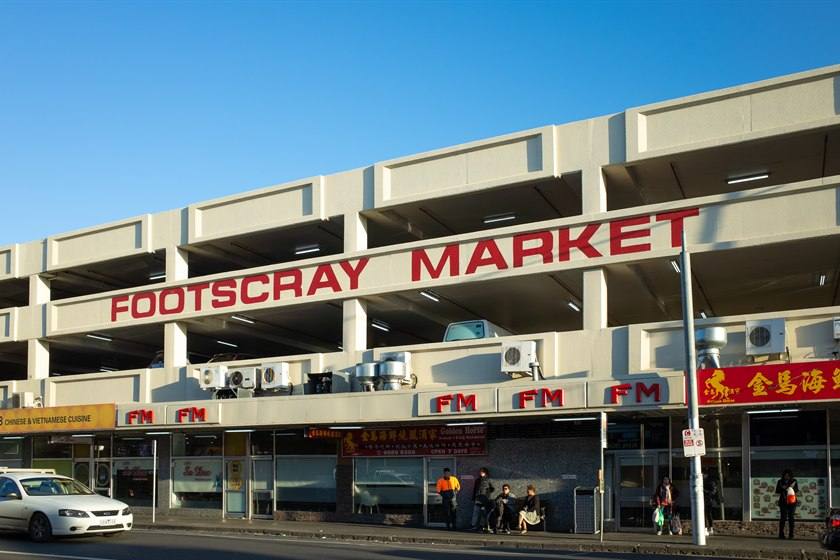
The centre of Footscray is a few blocks of busy shopping streets beside the railway station. On a Saturday morning the footpaths are packed with people buying fish, herbs, tropical fruit and bolts of fabric, and conversations go on in a dozen languages. It is not polished, and that is the point.
From the centre of Melbourne it is ten minutes by train, and it makes an excellent half-day trip built around lunch.
History and Heritage
Footscray lies where the Countries of the Wurundjeri Woi-wurrung and Bunurong peoples of the Kulin Nation meet, along the river they knew long before it was named the Saltwater and later the Maribyrnong.
The Punt and the Village
In 1839 a punt began carrying travellers across the river on the road to Geelong and Williamstown, and an inn opened beside it. A township was surveyed in 1848 and named after Foots Cray in Kent. Its bluestone was quarried for the buildings and ballast of early Melbourne.
Stink and Industry
Because it was downwind and downstream of the city, Footscray was chosen as the place for the trades nobody else wanted. From the 1860s the riverbank filled with slaughterhouses, boiling-down works, tanneries, bone mills and glue and fertiliser factories. The smell was notorious. Later came rope works, engineering shops, a huge ammunition factory and textile mills. By the early twentieth century it was one of the most important manufacturing centres in Australia, with a proud working-class identity and a football team to match.
Migration
After the Second World War the factories needed labour, and migrants from Italy, Greece, Malta, Yugoslavia and Poland settled in the surrounding streets. From the late 1970s they were joined by refugees from Vietnam, who took over many of the shops in the centre. Since the 1990s, arrivals from Ethiopia, Eritrea, Somalia, Sudan and India have added further layers.
A New Chapter
Most of the heavy industry closed in the 1980s and 1990s. The university expanded, the riverbank was cleaned up and turned into parkland, and the old warehouses found new uses. Apartment towers are now rising around the station, and the suburb is changing fast.
Attractions in Footscray
Come hungry, and explore on foot.
Footscray Market
The market hall, directly opposite the station, is the heart of the suburb. It specialises in Asian produce, with stalls piled with greens, herbs and fruit that are hard to find elsewhere, alongside butchers, live seafood tanks and poultry sellers. It is loud, wet underfoot and thoroughly authentic. The streets around it, particularly Hopkins Street and Leeds Street, are lined with grocers, bakeries and restaurants.
Little Africa
Nicholson Street and the blocks nearby hold the largest concentration of Ethiopian and other East African restaurants and cafes in Melbourne. Coffee is roasted and brewed in the traditional way, and meals are served on large shared platters of injera, a spongy sourdough flatbread.
Footscray Community Arts
On the riverbank below the town centre, this long-established arts centre occupies a group of old buildings with galleries, performance spaces and a lawn overlooking the water. It has a strong program of exhibitions, music and festivals reflecting the cultures of the west.
Heavenly Queen Temple
A short walk downstream, a large Chinese temple complex dedicated to the sea goddess Mazu has been built beside the river. Its sixteen-metre gilded statue, facing the water, is a startling and beautiful sight.
Footscray Park and the River Trail
North of the centre, Footscray Park is one of the largest and best preserved Edwardian public gardens in Australia, with terraces, ponds and palms sloping down to the river opposite Flemington Racecourse. The Maribyrnong River Trail runs along the bank for many kilometres and is popular with walkers and cyclists.
Whitten Oval
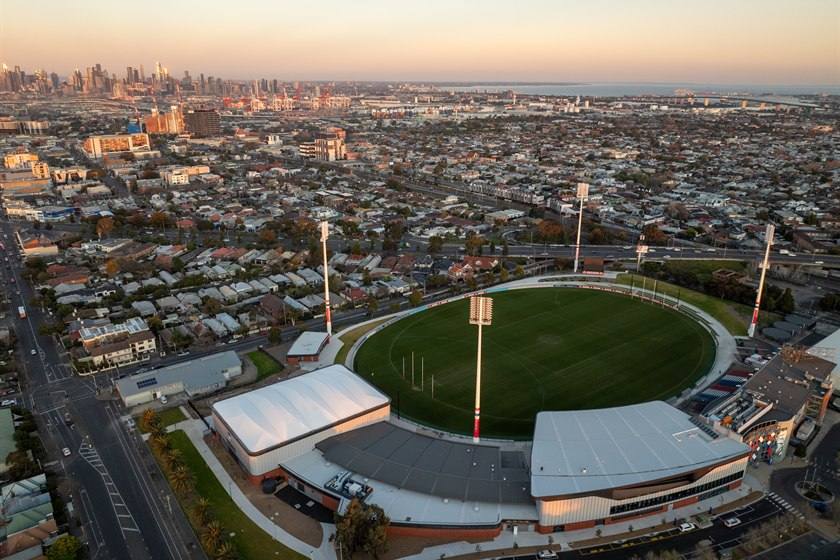
The home of the Western Bulldogs football club is in West Footscray. The club, founded in 1877, has a devoted following, and its premiership in 2016, the first in sixty-two years, was one of the most emotional in the history of the game. A statue of its greatest player stands outside.
Where To Stay
Footscray has a small but growing amount of accommodation.
There are a few apartment hotels near the station and the university, which offer good value and a quick trip into the city.
Most visitors stay in the city centre or Docklands, both only minutes away by train.
The Footscray Motor Inn and Serviced Apartments, at 90 Droop Street about a kilometre north-west of the station, has rooms ranging from standard and twin rooms to spa suites, studios and one-bedroom apartments, with free on-site parking while spaces last, a bar and a guest lounge with a billiard table. Public transport stops close by.
The Plough Hotel, at 333 Barkly Street towards West Footscray, is a renovated corner pub with rooms upstairs. The accommodation stays open on Mondays, when the pub itself is closed, and the restaurant downstairs makes dinner easy.
About 4 km north-west, beside Highpoint, Quest Maribyrnong has serviced studios and apartments with kitchens, which suit families and longer stays. Tram 82 runs from there back into central Footscray.
Street parking in the centre is tight and there is nowhere to leave a caravan. The nearest caravan park is Discovery Parks Melbourne, at 129 Ashley Street, Braybrook, about 6 km west, with powered and ensuite sites, cabins and villas, a jumping pillow and a tennis court. It was long known as Ashley Gardens, and some maps still use that name.
Eat & Drink
Footscray is one of the best eating suburbs in Australia, and one of the cheapest.
Vietnamese food is the mainstay. Pho shops open early and serve steaming bowls of noodle soup all day, and bakeries sell fresh banh mi rolls. For something sweet, T. Cavallaro and Sons, an Italian pastry shop on Hopkins Street, has been filling cannoli to order since the 1950s.
Ethiopian restaurants offer a quite different experience, and West Footscray, a little further along Barkly Street, has become known for its Indian restaurants and sweet shops.
In the evening, the Station Hotel is a gastropub famous for its steaks, Bar Thyme on Barkly Street pairs seasonal plates with natural wine, and a number of small bars and a craft brewery have opened in the back streets. Venues change often, so check before making a special trip.
Barkly Street has the pick of the newer places. Bar Thyme is a small bar and bistro with a weekly-changing seasonal menu, a short list of natural wines and a shelf of jazz records; its thrice-cooked chips have a following. Ras Dashen serves Ethiopian wots and vegetarian combination platters on injera, with locally roasted coffee, and Matsu is a tiny Japanese restaurant serving a set kaiseki-style menu to about a dozen guests a night, so book well ahead.
The Station Hotel, in Napier Street, is the place for steak, with grass-fed and wagyu cuts and French-leaning bistro dishes in an old pub with a courtyard. The Plough Hotel, at 333 Barkly Street, has a dining room with table service and a more casual bistro.
For a drink, Hop Nation brews small-batch beers in an 1880s warehouse in Whitehall Street near the river and serves pizza in its taproom. Moon Dog Wild West, at 54 Hopkins Street in the old Franco Cozzo furniture showroom, is a three-level Wild West-themed beer hall with dozens of taps and a mechanical bull. Mr West, in the Nicholson Street Mall, is a two-storey bar and bottle shop with natural wines and ciders, and you can bring in food from the shops around it.
Footscray Market, open Tuesday to Saturday, is the place to stock up on fresh food, and supermarkets and fuel are close to the centre.
Getting to Footscray
Footscray Station is one of the busiest in Melbourne. Trains on the Werribee, Williamstown and Sunbury lines stop here, along with regional services to Geelong, Ballarat and Bendigo. The trip from the city takes about ten minutes.
Tram route 82 links Footscray with Moonee Ponds, and many bus routes meet at the station.
Cyclists can follow the Maribyrnong River Trail or the path beside the railway from Docklands. Parking in the centre is limited.
Experiences
- 18-35's
- City
- Cultural
- Food and Wine
Popular Activities
- Bush Walking
- City Sightseeing
- Cycling
- Food and Wine
- Nightlife
- Shopping
