
Dhilba Guuranda-Innes National Park, SA
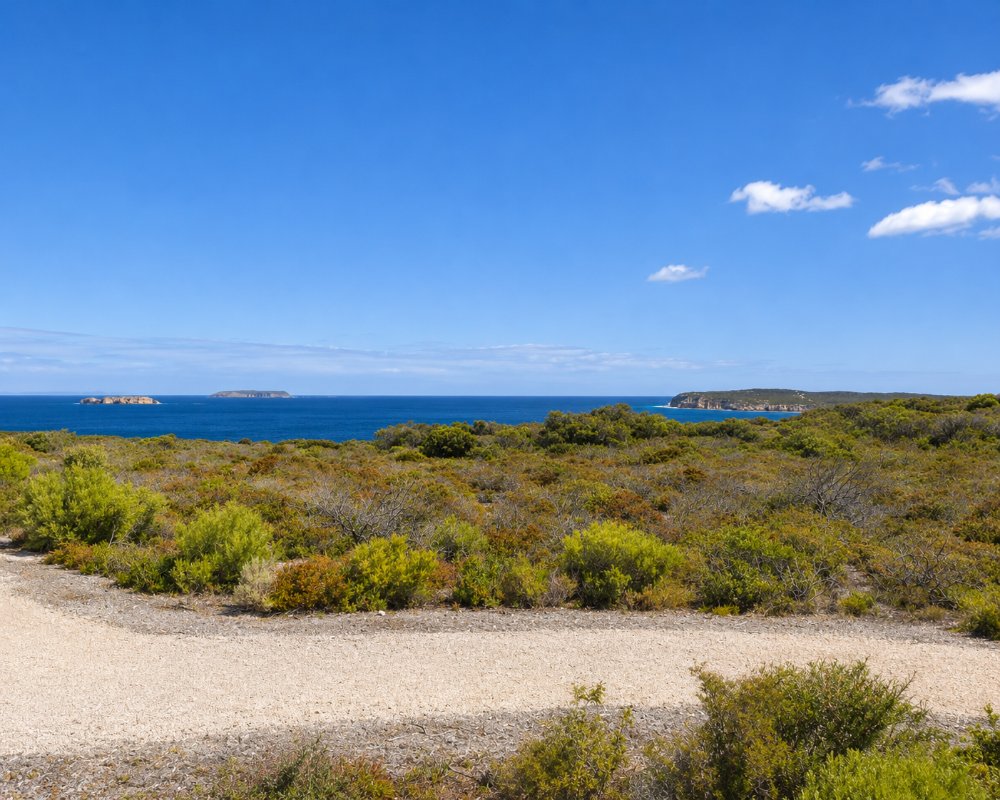
Dhilba Guuranda-Innes National Park takes in the toe of Yorke Peninsula, about 284 kilometres by road from Adelaide. It is 94 square kilometres of mallee, salt lakes and limestone cliffs, edged by some of the best beaches and surf breaks in South Australia.
The park was declared in 1970 to protect the western whipbird, a shy bird of the coastal scrub. Since November 2020 it has carried the name of its Narungga traditional owners, who manage it jointly with the state. Many South Australians still call it simply Innes.
The highway from Adelaide is sealed all the way to the entrance at Stenhouse Bay, five kilometres past Marion Bay, and a sealed road continues through the park as far as Pondalowie Bay. Emus wander the roads, so drive slowly.
Known For
- Surf beaches, cliffs and lighthouses at the toe of Yorke Peninsula
- The ghost town of Inneston and the wreck of the Ethel
- Seven campgrounds, emus and bush walks
Things To Do in the Park
Stenhouse Bay
The first stop inside the park is the old gypsum port, with a long jetty and a two kilometre lookout walk around the cliffs, with signs about the loading works that once stood here.
Cape Spencer and West Cape
Side roads lead to the lighthouses at Cape Spencer and West Cape, both with short walks to the headland and long views of cliffs, islands and the open Southern Ocean. The West Cape loop is one kilometre.
Ethel Beach
In 1904 the barque Ethel was driven ashore below these cliffs. A steep staircase leads to the beach, where her iron ribs lie in the sand beside the boiler of a steamer wrecked nearby in 1920. Shifting sand sometimes buries the wreck completely. Do not swim here.
Inneston
From 1913 to 1930 a company town of about 200 people mined gypsum from the lake at Inneston. A two kilometre loop walk passes the ruins of the plaster factory, bakery, school and cottages, some of which have been restored as lodges. The Thomson-Pfitzner Plaster Trail follows the old tramway 7.6 kilometres return to Stenhouse Bay.
Pondalowie Bay and the Surf Beaches
Pondalowie Bay has a fishing village, a boardwalk to a wide beach and a well known surf break. Chinamans, near Stenhouse Bay, is for experienced surfers only. Beyond Pondalowie the road turns to gravel and runs to Shell Beach, with its rock pool, Dolphin Beach and Browns Beach, a noted salmon fishing spot.
Royston Head and Gym Beach
The Royston Head Hike is four kilometres return to a cliff lookout. The Gym Beach Hike is 9.8 kilometres return across the dunes to the park’s northern beach.
Wildlife
Emus and western grey kangaroos are common, tammar wallabies have been brought back after dying out on the mainland, and more than 120 kinds of birds have been recorded, including ospreys, malleefowl and hooded plovers. The park is part of Marna Banggara, a project to return lost native animals such as the brush-tailed bettong to southern Yorke Peninsula.
Walk the Yorke Through the Park
The 500 km Walk the Yorke trail now crosses the whole park, entering at Marion Bay and leaving at Gym Beach, and many of the park’s own walks link into it. From the Pondalowie surf break car park the trail shares the gravel road for about 8 km to Browns Beach and the start of the Gym Beach Hike; traffic is limited to 40 km/h, but the roadside scrub is thick in places, so stay alert in busy periods. Cyclists may find Browns Beach to Gym Beach sandy, and can return to Marion Bay and follow the sealed road instead.
Narungga Sculptures and the Tours App
Five sculptures by Narungga artists share stories of Country at sites across the park, including the Marni Wardli welcome centre, the Cape Spencer lookout and West Cape; the piece at Pondalowie Bay is at a women’s site. Download the free SA National Parks Tours app before you arrive, as reception is patchy, to hear Narungga voices and stories as you drive.
Where To Stay
The park has seven campgrounds, all with toilets only, and every site must be booked online before arrival. Caravans can use Stenhouse Bay, which has 25 sites, the caravan and trailer area at Pondalowie, Cable Bay and Gym Beach; the last is reached from the Corny Point road, outside the main park. Casuarina and Shell Beach take tents and camper trailers, and the Pondalowie bush campground is for tents.
There is no power, no dump point and little water, so arrive self-sufficient. A vehicle entry fee of about $14 applies on top of camping fees. Dogs are not allowed and wood fires are banned over summer.
For a roof, the restored lodges at Inneston sleep from two to ten people, and there is a simple hut at Shell Beach. Marion Bay, just outside the park, has a caravan park with powered sites and holiday houses.
Campgrounds vary a lot in size. Stenhouse Bay is within walking distance of the jetty and visitor centre. The Pondalowie caravan and trailer campground has nine large caravan sites and 16 smaller camper trailer sites, while the Pondalowie Bay bush campground has 26 tent sites. Cable Bay has nine sites looking out to the offshore islands, Casuarina has 10 sites a short walk from the Pondalowie surf, Gym Beach has six secluded sites and Shell Beach has eight sites with shade and shelter from the wind.
The Inneston lodges can be booked up to 12 months ahead. The Engineers and Managers lodges each have three bedrooms, gas fireplaces and views across Inneston Lake, Norfolk and Mallee lodges sleep four, the Gatehouse Lodge sleeps six, and the one-bedroom Post Office suits a couple. Only the Post Office supplies linen, so bring sheets, pillows, blankets and towels; there is gas heating but no cooling.
Wood fires are allowed outside the fire season (closed from 1 November 2026 to 24 March 2027) and gas fires all year except on total fire ban days; bring your own firewood, as collecting it is banned. Over late spring kangaroo ticks are common and feral bees are unusually active, so check your site and gear. The visitor centre at Stenhouse Bay is open daily from 10 am to 3 pm.
Eat & Drink
Nothing is sold in the park. The Marion Bay Tavern, known for its wood-fired pizzas, and the Marion Bay General Store, which has fuel, are five kilometres from the entrance. The nearest supermarket is at Warooka or Yorketown.
There is no shop or cafe anywhere in the park, so bring all food and plenty of water. The nearest food is at Marion Bay, about 5 km from the gate: the Marion Bay Tavern serves wood-fired pizzas and seafood, Studio Surf Gallery Café on Osprey Drive has barista coffee (ring ahead), and the Marion Bay General Store has groceries. Hillocks Drive, 14 km east of Marion Bay, has a small store for bait and ice. Warooka, about 50 km north, has the Warooka Hotel and Lower Yorke Seafood, and the nearest supermarket is Yorketown Foodland.
History
This is Narungga country, and Dhilba Guuranda is the name of the people of the peninsula’s south-west. William Innes founded the gypsum works in 1913. After mining ended the land was grazed until the national park was proclaimed in 1970.
Getting to the Park
Follow the Yorke Highway through Minlaton and Warooka to Marion Bay and the park gate, about three and a quarter hours from Adelaide. Pay the entry fee online before you arrive. The unsealed roads inside the park are usually suitable for ordinary cars.
Experiences
- Caravan and Camping
- Eco Tourism
- Nature based
- Remote
- Self-Drive
Popular Activities
- Bush Walking
- Caravan and Camping
- Fishing
- National Park
- Surfing
- Wildlife
About Dhilba Guuranda-Innes National Park
- Locality: Rural locality
- Dhilba Guuranda-Innes National Park Postcode: 5577
- State: South Australia
- Region: Yorke Peninsula
- Latitude: -35.2269
- Longitude: 136.89517
- Elevation: 17m
- Timezone: Australia/Adelaide
