
Cathcart, NSW
Cathcart is a village 16 km north-east of Bombala, on the road that drops over the escarpment at Mount Darragh towards Pambula and Merimbula. It stands at about 800 metres in open grazing country and has only a handful of houses, a hall and a store.
Known For
- A self-guided history walk
- The pioneer remembrance wall
- The Mount Darragh road to the coast
Things To Do in Cathcart
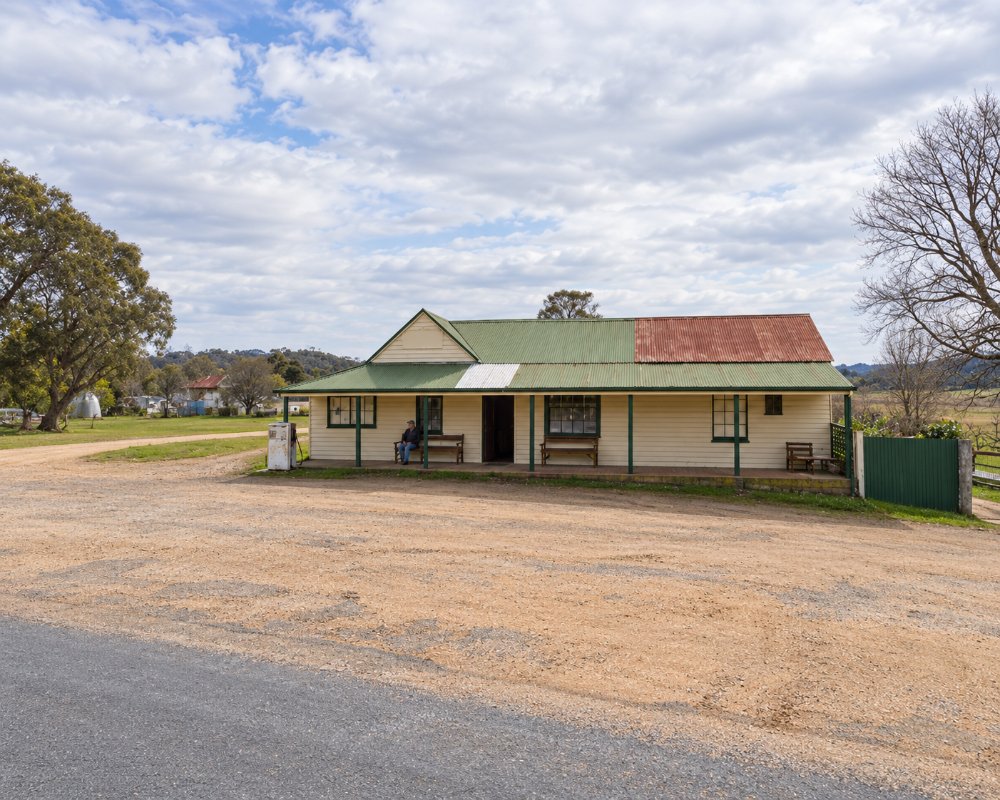
Plaques around the village mark the sites of former hotels, stores and churches, and can be followed as a short walk. Outside the old hall, a wall commemorates the pioneer families. The general store, run by one family for more than a century, is known for its old advertising signs; check whether it is open before relying on it.
The Mount Darragh road east of the village winds down through the South East Forests to the coast, and is a scenic alternative to the highway.
Woolingubrah Inn
Built in 1860, when Cathcart was a busy stop for bullock teams, the Woolingubrah Inn still stands in the village. It is one of only two known prefabricated buildings of its kind in Australia, made off-site and put together here; look at it from the street.
Platypus at Bombala
Bombala, 16 km south-west, is one of the more reliable places on the Monaro to see platypus. Walk the banks of the Bombala River near the caravan park at dawn or dusk and watch for ripples on quiet pools.
Where To Stay
There is no accommodation in the village. Stay in Bombala.
Bombala has the council’s Bombala Caravan Park on the Bombala River, with powered and unpowered sites, three self-contained cabins, a camp kitchen, a laundry and a dump point, where pets are welcome except in the cabins, and Motel Bombala and the Imperial Hotel have rooms. Delegate and Nimmitabel have small council caravan parks, and there are caravan parks at Pambula, Merimbula and Eden on the coast.
The Mount Darragh Road is sealed, but it is steep and winding where it drops off the escarpment through the South East Forests, so take caravans slowly in low gear and watch for fog, log trucks and wildlife.
Eat & Drink
Bombala has the nearest cafes, pubs and supermarket.
Cathcart has nowhere to eat, and you should not count on the old general store being open. Bombala is the place for groceries and fuel, and the Imperial Hotel on Maybe Street serves home-made modern Australian dishes and pub classics, with Club Bombala the other big venue. If you are heading down the Mount Darragh Road to the coast, fill the tank in Bombala, as there are few services until the Princes Highway.
The general store, about a century old, has displays of local history and old advertising posters, but its trading hours are unclear, so don’t rely on it. In Bombala, 15 km away, Kitchen EightyAte does breakfast, lunch and coffee, and Club Bombala’s Woolley’s Bistro serves dinner every night.
History
The place was first called Taylors Flat, after James Taylor, who squatted here with his stock. It was surveyed in 1857 and renamed after General Cathcart, who was killed in the Crimean War.
Cathcart is in the country of the Ngarigo people, who called the area Togranong. It became the meeting point for bullock teams from Bombala, Delegate, Bibbenluke and Cooma, and for teams coming up from Twofold Bay. A sawmill ran from 1865 to 1883 and a co-operative butter factory from 1895 to 1927, and at its peak Cathcart had three hotels, three churches, several stores and two banks. The school closed in 1974 with just ten pupils.
Getting to Cathcart
From Bombala, take Mount Darragh Road for 16 km. The descent to the coast beyond Cathcart is steep and winding.
From Sydney it is about 500 km by Canberra, Cooma, Nimmitabel and Bombala. From the coast, the Mount Darragh Road climbs from the Princes Highway near Pambula through Wyndham.
Experiences
- Historic/Heritage
- Rural/Country
Popular Activities
- Bird Watching
- Driving
- Sightseeing
- Wildlife
About Cathcart
- Locality: Rural locality
- Cathcart Postcode: 2632
- State: New South Wales
- Region: Snowy Mountains
- Latitude: -36.8437
- Longitude: 149.38834
- Elevation: 799m
- Population: 108
- Median Income: $26884
- Area (Sq/km): 188.215
- Timezone: Australia/Sydney
