
Bustard Head Lighthouse, QLD
Bustard Head is a rocky headland about 20 kilometres north-west of the Town of 1770, with a white lighthouse that has guided ships along this coast since 1868. No public road reaches it. Almost everyone who visits arrives in a pink amphibious vehicle that drives along the beach and swims the creeks on the way.
Known For
- A working lighthouse you can climb
- A light station with a dark history
- Getting there by amphibious LARC
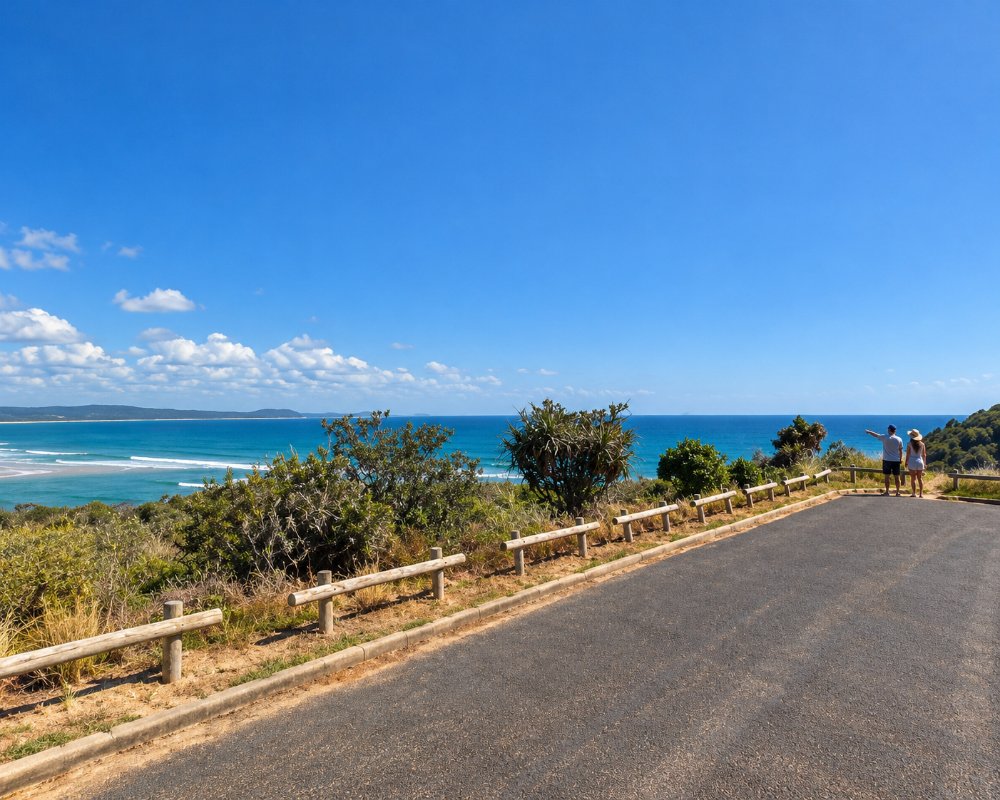
The headland stands between Bustard Bay and the anchorage of Pancake Creek, surrounded by the beaches and bush of Eurimbula National Park. The view from the top takes in an enormous sweep of coast with not a building in sight.
Things To Do in Bustard Head Lighthouse
The lighthouse and museum
Volunteers from the Bustard Head Lighthouse Association look after the station and guide visitors up the tower and through one of the keepers’ cottages, which is now a museum of the light and the families who lived here. A small fee is collected for the upkeep.
The story
This was the first coastal lighthouse built by the Queensland government after it separated from New South Wales, assembled from cast-iron plates shipped from England. Life here was isolated and hard, and the station became known for its run of tragedies, among them drownings, a suicide, and in 1912 a murder and abduction that was never solved. The small cemetery near the cottages tells part of it.
The LARC tour
The full-day tour from 1770 crosses four tidal creeks and travels long stretches of empty beach, with stops for morning tea, a guided visit to the light station, a picnic lunch below the headland and sandboarding on the dunes of Middle Island. It takes about seven hours. Shorter tours do not go as far as the lighthouse.
Climbing the tower
Bustard Head is said to be the only working lighthouse tower in Queensland that visitors can climb, and LARC passengers go right up to the balcony for a view over Bustard Bay, Pancake Creek and Rodds Peninsula. Children under eight are not allowed into the tower under building rules. The fenced cemetery about 300 metres from the station holds nine graves dating from 1879 to 1911, plus two small unmarked ones.
Arriving by boat or kayak
Boat owners anchor in Pancake Creek and walk up to the station, launching from the ramps at 1770 or Turkey Beach. Experienced sea kayakers can follow the Eurimbula sea trail from 1770 through Middle and Pancake creeks, a paddle of about 36 kilometres, to the national park camping area near the headland, from where the lighthouse is a five-kilometre return walk. Plan around the tides, as the creek mouths drain to sandbanks.
Where To Stay
There is no public accommodation at Bustard Head apart from a basic national park camping area reached only by boat or kayak. Stay in 1770 or Agnes Water.
The only place to sleep near the headland is the Bustard Head camping area in Eurimbula National Park, an open bush site for tents reached only by boat, canoe or kayak. It has no toilets, water or other facilities and usually no mobile coverage, so bring everything you need and take all rubbish out; book with Queensland Parks before you set off. Most visitors base themselves at 1770, where the 1770 Caravan Park and Campgrounds has powered beachfront sites a short drive from the LARC departure point at the marina, and 1770 Holiday Village has cabins and bush sites on Captain Cook Drive.
In Agnes Water, Sandcastles 1770 and Pavillions on 1770 both sell packages that include a LARC tour, and NRMA Agnes Water Holiday Park has beachfront cabins and caravan sites with its own dump point. A public dump point is also at the SES Grounds on Captain Cook Drive.
Eat & Drink
Lunch and morning tea are included on the tour. Nothing is sold at the headland.
There is no café, kiosk or shop at Bustard Head. Paradise Tour passengers get morning tea with the 1770 Marina Cafe’s ANZAC biscuits, billy tea brewed over a fire and a picnic lunch of wraps and fresh fruit made by the same café, so mention any dietary needs when you book. Before or after the tour, the 1770 Marina Cafe at the departure point does breakfast and coffee, and Barraca by the Sea next door serves Madeiran dinners beside the creek. Boat campers must carry all food and water.
History
Bustard Head is in Gooreng Gooreng country. James Cook named Bustard Bay in May 1770 after a bird his party shot nearby. The light was first lit in 1868 and was tended by keepers until it was automated in 1986. The empty buildings were then wrecked by vandals, and volunteers rebuilt them over many years before reopening the station to visitors.
Getting to Bustard Head Lighthouse
Book the full-day LARC tour from the marina at 1770; it runs on set days and needs suitable tides. Boat owners can anchor in Pancake Creek and walk up to the station. There is no road access for private vehicles.
Experiences
- Historic/Heritage
- Nature based
- Remote
Popular Activities
- Adventure
- Beach
- Bird Watching
- National Park
- Sightseeing
About Bustard Head Lighthouse
- Locality: Rural locality
- Bustard Head Lighthouse Postcode: 4677
- State: Queensland
- Region: Gladstone
- Latitude: -24.0220
- Longitude: 151.7640
- Timezone: Australia/Brisbane
