
Bowling Green Bay National Park and Alligator Creek, QLD
Bowling Green Bay National Park is a large and varied park that begins about 25 kilometres south of Townsville and runs from the granite summit of Mount Elliot down to the mangroves and salt pans of the coast. Most visitors know just one corner of it: Alligator Creek, where a mountain stream spills over boulders into a chain of clear swimming holes. It is the closest national park camping to the city and a favourite for a swim on a hot day.
Known For
- Rock pools and cascades on Alligator Creek
- Mount Elliot, topped by an isolated patch of rainforest
- Coastal wetlands of international importance
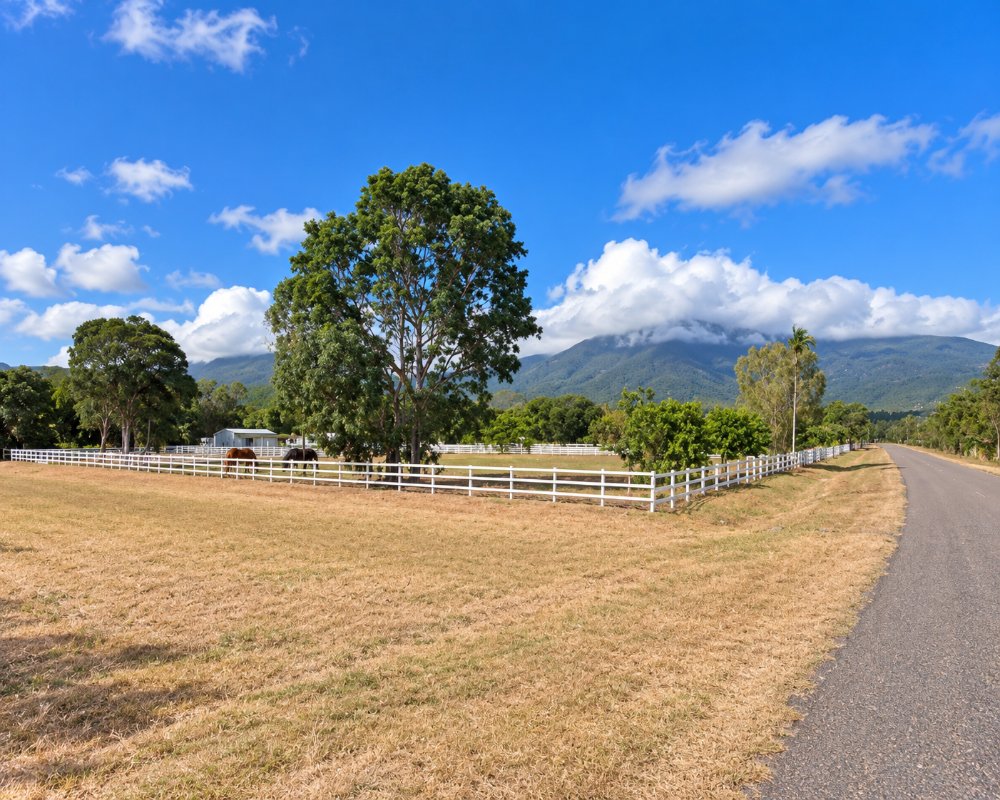
Mount Elliot rises to more than 1,200 metres, high enough to catch cloud and support a pocket of tropical rainforest, the most southerly in Australia, far above the dry woodland of the lower slopes. The mountain is rugged and largely trackless.
The coastal section of the park, around Cape Cleveland and Cape Bowling Green, protects one of the most important wetlands in North Queensland, listed under the international Ramsar convention for its waterbirds.
Things To Do at Alligator Creek
Swim
A short path from the day-use area leads to a lookout over the creek and steps down to the water. Broad, shallow pools near the picnic ground suit families, and deeper holes lie upstream among the boulders. The water is cool and clear in the dry season. After heavy rain the creek rises fast and becomes dangerous, and rangers close it to swimming; obey the signs and never dive, as the pools hide rocks.
Walks
The main track follows the creek upstream to Alligator Falls, a tall cascade on the flank of Mount Elliot. It is 17 kilometres return with several creek crossings and takes five to six hours, so start early and carry plenty of water. A shorter option is to walk the first part of the track to Cockatoo Creek and return.
Wildlife
Allied rock wallabies, agile wallabies and brush turkeys are regular visitors to the picnic and camping areas, especially late in the day, and big lace monitors patrol for scraps. Do not feed them. Birdwatchers should look for sunbirds, kingfishers and, at dusk, bush stone-curlews.
The wetlands and Cape Cleveland
The coastal part of the park is reached by the road to Cungulla and the Australian Institute of Marine Science, off the highway south of the Alligator Creek turn-off. Salt flats, mangroves and lagoons stretch to the horizon, with brolgas, magpie geese and jabiru in season. This is crocodile habitat, so keep away from the water’s edge. The sugar town of Giru lies a little further south.
Billabong Sanctuary
The wildlife park of this name is on the highway close to the Alligator Creek turn-off, and combines well with a visit to the creek.
Overnight at Alligator Falls
Walkers who would rather not rush the 17 km return trip can book the walk-in bush camp in a small clearing near Alligator Falls, 8.5 km from the day-use area. There are no toilets or water, and campfires are not allowed, so carry a fuel stove and everything else in and out. Rangers warn not to camp there during or after heavy rain, because the creek rises fast and the crossings on the way become dangerous.
Where To Stay
The national park camping area at Alligator Creek has sites for tents, camper trailers and caravans, with toilets, cold showers and gas barbecues. It must be booked in advance, and gates are locked overnight.
Other accommodation is in Townsville, half an hour away, and there are caravan parks along the highway to the south of the city.
The Alligator Creek camping area has nine numbered sites set in shady riparian forest a short walk from the day-use area; site 1 is accessible, and some tent sites are a short carry from the car. Check-in is from 2 pm. Bookings are made online with Queensland national parks, and the creek can close access after heavy rain, so check park alerts in the wet season. The walk-in bush camp near Alligator Falls is a second, much more basic option for experienced walkers.
The nearest holiday park is BIG4 Eco Resort Townsville at Nome, about 12 km away beside Billabong Sanctuary, with cabins, glamping tents, powered caravan sites, a pool and an on-site bar and cafe. BIG4 Townsville Gateway Holiday Park at Cluden, on the southern edge of the city about 20 km from the park, is another big family park. Townsville’s motels and the caravan parks of the northern suburbs are 30 to 40 minutes away.
Eat & Drink
There is no kiosk in the park. Bring a picnic or use the barbecues; the small township of Alligator Creek on the highway has a roadhouse and store.
Nothing is sold in the park. The nearest food and fuel is the Ampol Foodary roadhouse on Allendale Drive at Alligator Creek, on the Bruce Highway about 7 km from the day-use area, with takeaway meals, snacks and basic groceries. Blinky Bill’s Cafe at Billabong Sanctuary, about 12 km north, serves scones, light meals and burgers (sanctuary entry needed), and next door BIG4 Eco Resort has the Black Barra Bar and Cafe. For anything more, head into Townsville.
History
The park lies in the country of the Bindal and Wulgurukaba peoples. Cape Bowling Green and Cape Cleveland were named by James Cook in 1770, and a lighthouse has stood on Cape Cleveland since 1879. Despite the name, there are no alligators in Australia; the creek was named in the 19th century, and the freshwater pools of the national park are not regarded as crocodile habitat, though the tidal reaches downstream are.
Getting to Alligator Creek
From Townsville, drive 25 kilometres south on the Bruce Highway and turn right onto Alligator Creek Road, then continue six kilometres to the park entrance. The road is sealed.
Experiences
- Active
- Caravan and Camping
- Nature based
- Self-Drive
Popular Activities
- Bird Watching
- Bush Walking
- Caravan and Camping
- National Park
- Swimming
- Wildlife
About Bowling Green Bay National Park and Alligator Creek
- Locality: Urban locality
- Bowling Green Bay National Park and Alligator Creek Postcode: 4816
- State: Queensland
- Region: Townsville
- Latitude: -19.42492
- Longitude: 146.94720
- Elevation: 26m
- Timezone: Australia/Brisbane
