
Barmah National Park, VIC
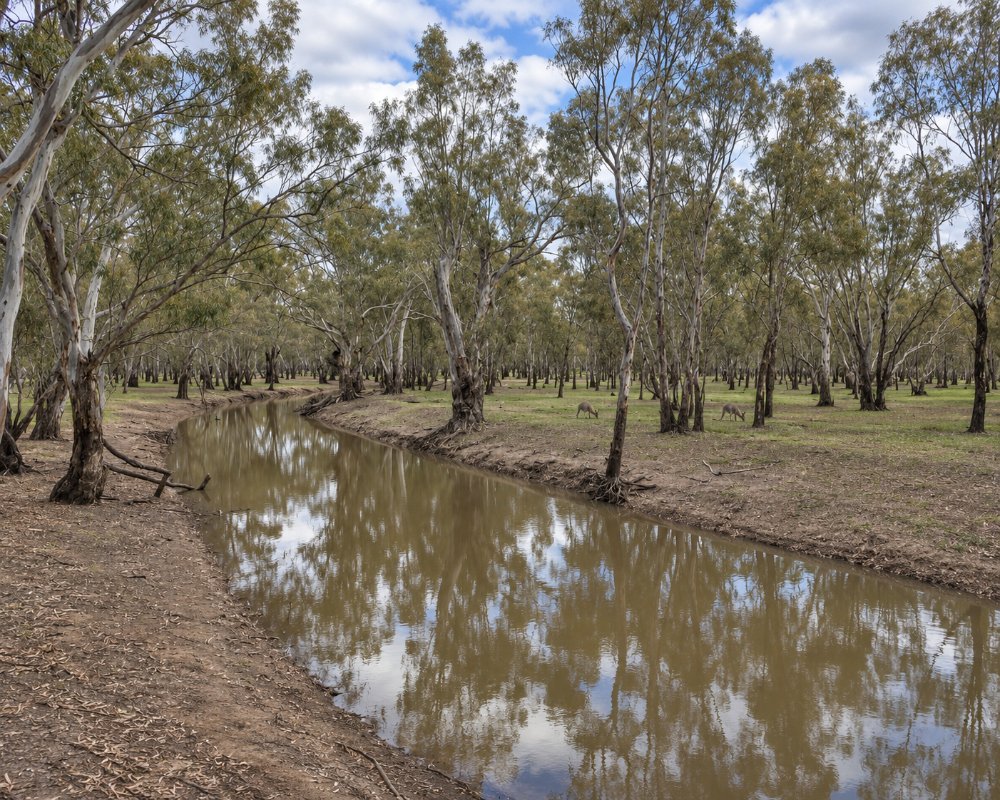
Barmah National Park covers about 28,500 hectares of river red gum forest and wetlands along the Murray River, between Barmah and Strathmerton, about 225 km north of Melbourne. Together with the Millewa Forest across the river in New South Wales, it forms the Barmah-Millewa Forest, often called the largest river red gum forest in the world.
It is the Country of the Yorta Yorta people, who jointly manage the park, and a Ramsar-listed wetland of international importance for its waterbirds.
Known For
- The world’s largest river red gum forest
- Barmah Lakes and the Barmah Choke
- Yorta Yorta culture at the Dharnya Centre
Things To Do in Barmah National Park
Barmah Lakes
Barmah Lakes, near the township, has a day visitor area, a sandy lakeside campground and the start of the Kingfisher Cultural River Cruise, now run by the Dharnya Centre, which travels through the Barmah Choke, the narrowest point of the Murray, where the river runs almost twice its normal speed.
Dharnya Centre
The Dharnya Community and Education Centre, a Yorta Yorta cultural hub, reopened after a major redevelopment in April 2026, with cultural exhibitions, guided walks and school camps.
Walks
The Yamyabuc Discovery Trail, 1.5 km, and the Lakes Loop Track, 4 km past Aboriginal oven mounds, are the main walks.
Birdlife
The forest’s wetlands host large waterbird breeding colonies when flooded, and the rare superb parrot nests in the old red gums. More than 200 bird species have been recorded.
Ulupna Island
Ulupna Island, at the eastern end of the park near Strathmerton, is known for its wild koalas and free river camps.
Feral Horses
Parks Victoria and the Yorta Yorta are removing feral horses from the forest to protect its wetlands, a plan that has drawn strong views on both sides.
Local Tips
Floods close tracks in most springs; in September and October 2026 several tracks and toilets were closed. Check Parks Victoria before you go, carry water and take insect repellent.
When To Visit
Autumn is best for camping and walking, with dry tracks. Spring floods bring birdlife but close tracks, and summer is hot.
Paddling and Fishing
Canoes and kayaks can explore the Murray, Barmah Lakes and the creeks that thread through the forest, and there are boat launching areas along the river. Anglers fish for Murray cod, golden perch and yabbies; a Victorian fishing licence is needed, and cod season closes from September to November. Swim only at the sandy river bends, and watch for fast currents and snags, especially near the Barmah Choke.
Dharnya Walking Trails
Three marked trails start at the Dharnya Centre: the short Yamyabuc cultural trail with its interpretive signs, the Broken Creek Loop of about 4 km through tall red gums to the banks of Broken Creek, and the longer Lakes Loop out to the wetlands of Barmah Lakes. The centre has a printable map, and Yorta Yorta knowledge holders lead guided Yamyabuc walks on set days, which can be booked online.
Where To Stay
For campers, the Barmah Lakes camping area has sandy lakeside sites, and dispersed camps line the Murray, including Ulupna Beach (with toilets), Wasers Beach, Thistle Bend, Tongalong Beach and The Gulf; book through Parks Victoria. Dogs, horses and firearms are not allowed at Barmah Lakes. The Barmah Bridge Caravan Park in the township suits caravans.
Camping in the park is free. The Barmah Lakes camping area takes tents, caravans, camper trailers and big rigs on large shaded sites, with drop toilets, picnic tables and fire pits. Along the river in the Dhungalla zone, a string of numbered bush camps runs downstream from Wasers Beach, with more at spots such as Bunyip Hole, Black Engine Lagoon, Big Woodcutter Lagoon, Boss Beach, Pinchgut Bend, Nestrons Bend and Kiln Bend; most have no facilities, so bring water, a toilet and your own firewood, and take your rubbish out. Dogs, horses and firearms are not allowed at the camps.
The river tracks are dirt and become impassable after rain and in floods, so big vans should stick to Barmah Lakes and the upgraded River Road from Barmah township. There is no dump point or fuel in the park: Barmah township, a short drive from Barmah Lakes, has an Ampol roadhouse with diesel, and the nearest dump points are at Nathalia (Weir Street) and on the Murray Valley Highway at Strathmerton. For powered sites, Barmah Bridge Caravan Park is at the western end, and the Murray River Hideaway Holiday Park on Wasers Road near Strathmerton is near the eastern end.
Eat & Drink
There are no shops in the park. The Barmah Hotel Motel and general store are in the township, and Echuca and Nathalia have more choice.
There are no shops or cafes in the park; the Dharnya Centre’s kitchen serves booked groups only, so bring your own food. The Barmah Hotel in Barmah township, a short drive from Barmah Lakes, serves lunch and dinner from Tuesday to Sunday, and the roadhouse on Murray Street has takeaway and fuel. The Picola Hotel and cafe is about 15 km south. At the eastern end, Strathmerton has a bakery, a cafe and the Taqueria & Bar at Cactus Country.
History
This is the Country of the Yorta Yorta people, who lodged a native title claim over the forest in 1993. The forest was logged and grazed for more than a century, became a state park in 1987 and a national park in 2010, jointly managed with the Yorta Yorta Nation Aboriginal Corporation.
Getting to Barmah National Park
Barmah National Park is about 225 km north of Melbourne, around 3 hours’ drive via Echuca and Barmah, or via Nathalia and Picola. The tracks are unsealed and close after rain. There is no public transport.
Experiences
- Eco Tourism
- Nature based
- Remote
- Self-Drive
Popular Activities
- Bird Watching
- Bush Walking
- Caravan and Camping
- Fishing
- National Park
- Swimming
- Wildlife
About Barmah National Park
- Locality: National park
- Barmah National Park Postcode: 3639
- State: Victoria
- Region: The Murray
- Latitude: -35.98
- Longitude: 145.02
- Elevation: 100m
- Timezone: Australia/Melbourne
