
Cheynes Beach, WA
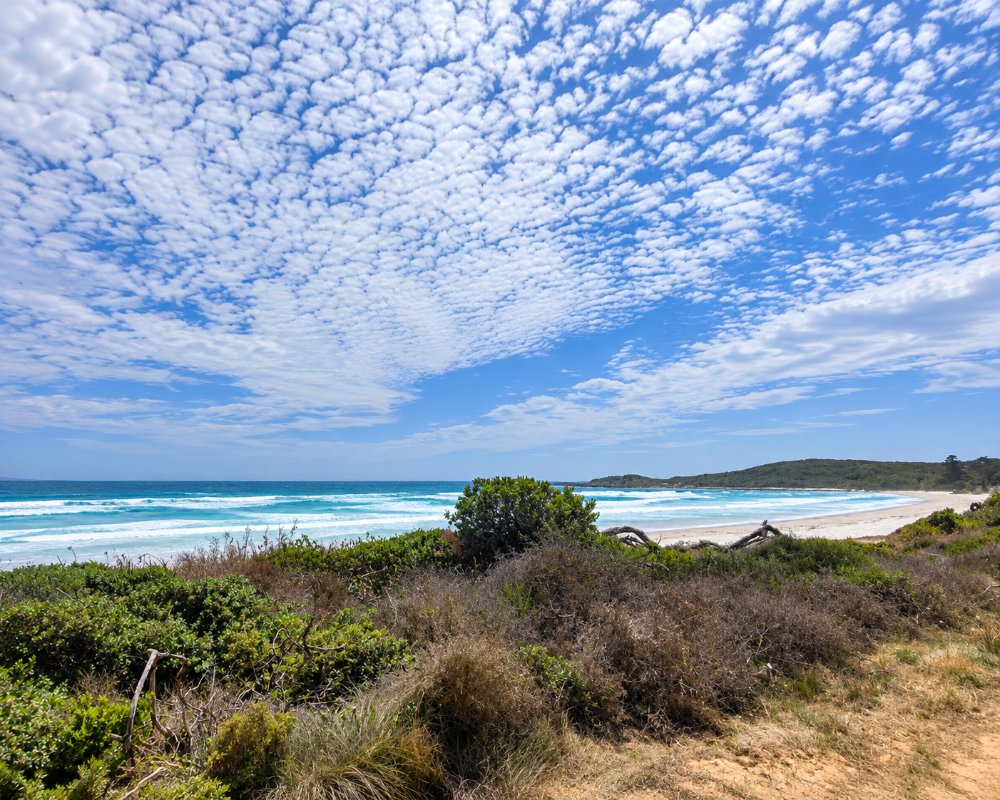
Cheynes Beach is a quiet stretch of coast about 65 km east of Albany, where a long, curving beach ends at a granite headland that shelters a small boat harbour. It’s a favourite with anglers, campers and caravanners who want a slower pace, and with wildlife lovers drawn by the whales and rare birds.
Southern right whales, often mothers with calves, rest close inshore in the cooler months, and humpbacks pass by too. In autumn the beach comes alive with the Australian salmon run. The beach is next to Waychinicup National Park and the Mount Manypeaks area, and Bald Island sits about 1.5 km offshore.
Cheynes Beach is sometimes spelled Cheyne Beach, after George Cheyne, an early Albany settler and whaler. It lies on Menang Noongar country, in the City of Albany.
Known For
- Southern right and humpback whales close inshore
- Australian salmon fishing in autumn
- A popular caravan park by the beach
- Gateway to Waychinicup National Park
- Rare noisy scrub-birds
Things To Do in Cheynes Beach
Whale Watching
From about June to October, southern right whales come close to the beach to rest and calve, and humpbacks pass on their migration. You can often see them from the shore or the headland without needing a boat.
Fishing
Cheynes Beach is known for its salmon run, which usually peaks from about February to May, when schools of big Australian salmon move along the coast and anglers line the beach. Herring, skippy and whiting are caught year-round. Boats can be launched in the sheltered corner by the headland. The beach isn’t patrolled, so take care swimming.
Waychinicup National Park and Mount Manypeaks
Waychinicup National Park, right next door, protects rugged granite coast, heathland and the beautiful Waychinicup Inlet, where a river meets the sea between granite walls. Mount Manypeaks rises behind the coast to the west. Walk trails through the area offer spring wildflowers and big ocean views.
Birdwatching
The thick coastal heath around Cheynes Beach holds a population of the rare noisy scrub-bird, along with other south coast specials such as the western bristlebird. They’re far easier to hear than to see, so listen for their loud calls in the early morning.
Where To Stay
Cheynes Beach Caravan Park, on Bald Island Road behind the beach, is the main place to stay. It has around 70 powered caravan sites, tent and camper trailer sites, cabins and a takeaway serving fish and chips and burgers, and small dogs may be allowed by arrangement. It books out in summer and the salmon season, so plan ahead.
Waychinicup Inlet has a small national park campground with about nine sites, but it isn’t suitable for caravans, has no water and can’t be booked. The road in can flood after rain. Fill up with fuel and supplies in Albany before you come out.
Eat & Drink
The caravan park’s takeaway is the only food outlet at Cheynes Beach, so bring supplies from Albany. Albany has a full range of supermarkets, cafés and restaurants about an hour’s drive away.
History
The Menang people lived along this coast for thousands of years. A shore-based whaling station operated at Cheynes Beach from the 1840s until 1877, with crews rowing out from the beach to hunt whales in the bay. It’s often confused with the much later Cheynes Beach Whaling Company, which worked out of Frenchman Bay near Albany from the 1950s until 1978, on the site that is now Albany’s Historic Whaling Station.
Getting to Cheynes Beach
Cheynes Beach is about 65 km east of Albany, roughly an hour’s drive via Nanarup Road or the South Coast Highway and Cheyne Road. The roads in are sealed. Albany is about 420 km south-east of Perth. There’s no public transport to Cheynes Beach.
Experiences
- Nature based
- Relaxation
Popular Activities
- Caravan and Camping
- Fishing
- Kayaking
About Cheynes Beach
- Locality: Rural locality
- Cheynes Beach Postcode: 6328
- State: Western Australia
- Region: Margaret River & the South West
- Latitude: -34.881
- Longitude: 118.400
- Timezone: Australia/Perth
