
Two Peoples Bay, WA
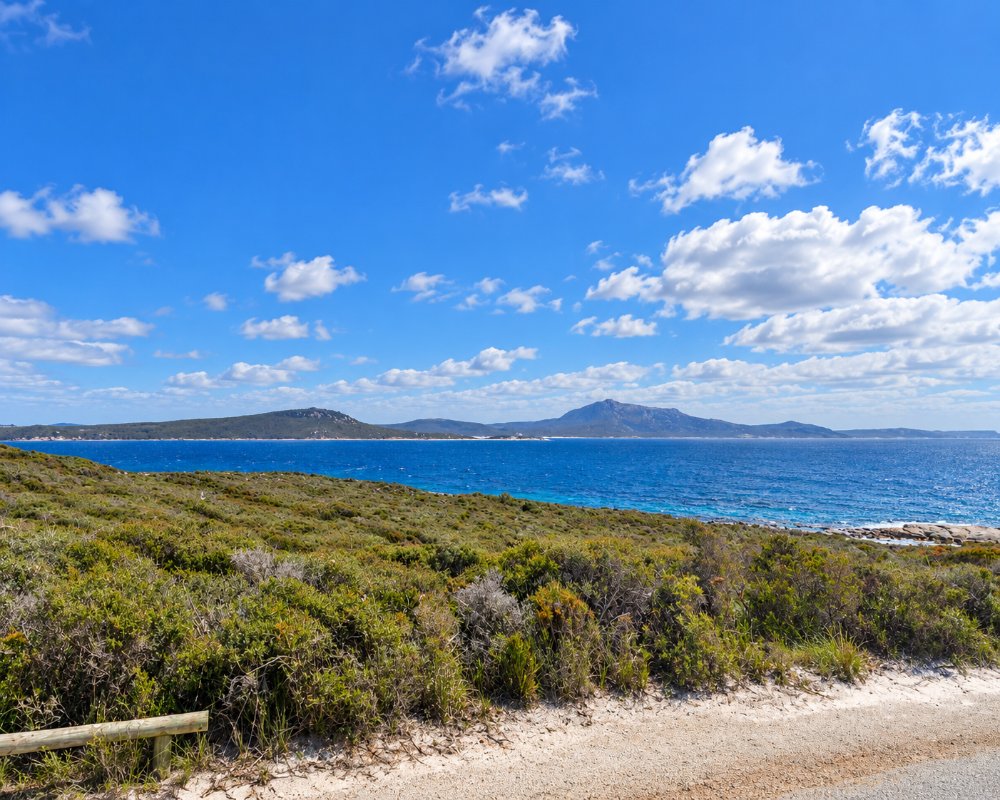
Two Peoples Bay Nature Reserve protects a stretch of granite headlands, heathland and white beaches about 35 km east of Albany. Its star attraction is Little Beach, a small cove of bright white sand and clear green water framed by smooth granite boulders, often rated among the most beautiful beaches in Australia.
The reserve is also famous among naturalists. Two animals long thought to be extinct, the noisy scrub-bird and Gilbert’s potoroo, were rediscovered here, and much of the reserve is managed to protect them. It’s a nature reserve rather than a national park, so the rules are stricter: stay on marked paths, and no dogs.
This is Menang Noongar country, and the bay was an important place for gathering, hunting and fishing long before Europeans arrived.
Known For
- Little Beach and Waterfall Beach
- Rediscovery of the noisy scrub-bird and Gilbert’s potoroo
- Mount Gardner granite headland
- Baie des Deux Peuples Heritage Trail
- Sheltered swimming and fishing
Things To Do in Two Peoples Bay
Little Beach and Waterfall Beach
Little Beach faces east and is sheltered from the prevailing south-westerly winds, so on a sunny day the water is calm and glassy. Climb over the small headland at its northern end, or follow the path, and you’ll reach Waterfall Beach, a quieter cove where a small stream trickles over the rocks in the wetter months. Little Beach was upgraded in 2025 with a sealed car park, including two long-vehicle bays, new paths and an accessible toilet. The beach now gets more than 80,000 visits a year, so come early in summer.
Walking
The Baie des Deux Peuples Heritage Trail runs about 6 km return from the visitor centre to Little Beach and Waterfall Beach via Fairy Rocks, with views over the bay and wildflowers from winter to late spring. Mount Gardner, the big granite headland on the eastern side of the reserve, dominates the view, but much of it is closed to protect wildlife.
Visitor Centre and the Main Bay
The visitor centre near the main bay has displays on the reserve’s history and its rare animals, with barbecues and a grassy picnic area outside. It isn’t open every day, so check before you go. The long main beach is good for fishing and swimming, and small boats can be launched off the sand. Four-wheel-drive tracks in the reserve are for experienced drivers only.
Rare Wildlife
The noisy scrub-bird is a loud but shy little bird that was thought to be extinct until it was rediscovered here in 1961. Gilbert’s potoroo, a small rat-sized marsupial, had not been seen for more than a century when it was found near Mount Gardner in 1994. A fire in 2015 burned most of the potoroo’s habitat in the reserve, and conservation work continues. You’re unlikely to see either animal, but you may well hear a scrub-bird calling from the thick scrub.
Where To Stay
There’s no camping in the reserve. Most visitors base themselves in Albany, where caravan parks include BIG4 Emu Beach at Emu Point, the closest to the reserve, and there are plenty of motels, apartments and holiday homes. Further east, Cheynes Beach Caravan Park is a quieter option. The roads into the reserve are sealed, and an entry fee is collected at a roadside station.
Eat & Drink
There are no shops or cafés in the reserve, so bring a picnic and plenty of water. Emu Point, on the way back to Albany, has a beachside café and fish and chips by the boat ramp, and Albany has the widest choice of places to eat.
History
In 1803 an American whaling ship and a French ship of the Baudin expedition met unexpectedly in the bay. The French named it Baie des Deux Peuples, the Bay of Two Peoples, in honour of the meeting. Whalers and sealers worked the coast through the 1800s.
The noisy scrub-bird was rediscovered at Two Peoples Bay in 1961 by an Albany schoolteacher, Harley Webster, and the reserve was declared soon afterwards to protect it, stopping plans for a new townsite. Gilbert’s potoroo, named after the naturalist John Gilbert, who collected it in the 1840s, was rediscovered in 1994 by a university student trapping quokkas near Mount Gardner. Fires in 2012 and 2015 damaged large areas of habitat, and the Little Beach upgrade was finished in 2025.
Getting to Two Peoples Bay
Two Peoples Bay is about 35 km east of Albany, roughly 35 to 45 minutes’ drive via Lower King Road, Nanarup Road and Two Peoples Bay Road. From Perth, allow about five hours to reach Albany via the Albany Highway. There’s no public transport to the reserve.
Experiences
- Eco Tourism
- Nature based
Popular Activities
- Bush Walking
- National Park
- Wildlife
About Two Peoples Bay
- Locality: Nature reserve
- Two Peoples Bay Postcode: 6330
- State: Western Australia
- Region: Margaret River & the South West
- Latitude: -34.989
- Longitude: 118.184
- Timezone: Australia/Perth
