
Hutt Lagoon, WA
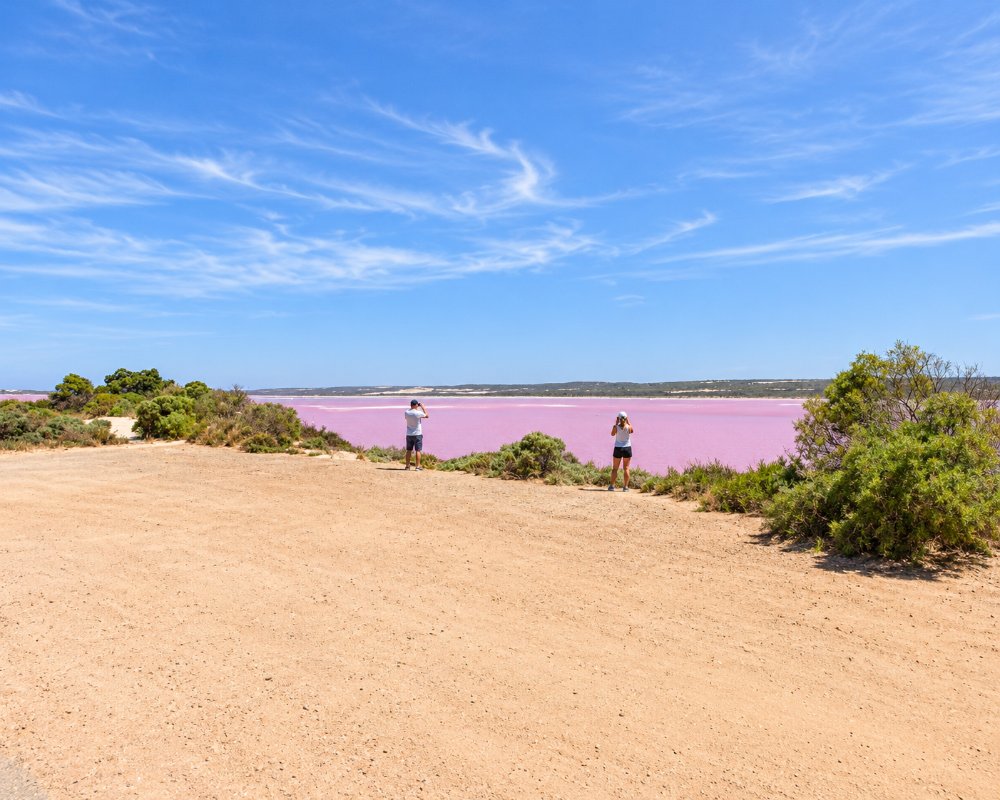
Hutt Lagoon is a large salt lake beside the fishing village of Port Gregory, a little over an hour north of Geraldton and about 45 minutes south of Kalbarri. It is famous as the pink lake: a microalga called Dunaliella salina, which produces beta-carotene, turns the water shades of bubblegum pink, red and lilac depending on the time of day, the season and the cloud cover.
This is Nanda country. Part of the lagoon is farmed for its natural colour pigment, used in food colouring and vitamin supplements, and the gridded ponds can be seen from the air. The lagoon is a popular stop on the coast road between Geraldton and Kalbarri, and a favourite with photographers.
Known For
- A pink lake coloured by the alga Dunaliella salina
- Colours that shift from red to pink to lilac
- Scenic flights and photography
Things To Do in Hutt Lagoon
Pink Lake Lookout
The Pink Lake Lookout on Port Gregory Road has an unsealed pull-off where it is safe to stop. There are also safe places to pull off along George Grey Drive.
Walk to the edge
You can walk to the edge of the lake, but there are no formal trails; wear shoes, as the salt crust is sharp. Swimming is not recommended.
Scenic flights
Scenic flights from Kalbarri and Geraldton show the colours of the lake and the patterns of the algae farm from above.
Lynton Convict Hiring Station
Nearby, the ruins of the Lynton Convict Hiring Station from 1853 have a path up a hill with views over the lagoon.
Port Gregory
The village of Port Gregory has a reef-sheltered beach for fishing, diving and kayaking.
Where To Stay
Port Gregory Caravan Park, a short walk from the lagoon, has powered sites and cabins, and pets are allowed by arrangement. Kalbarri and Northampton have more caravan parks. There are no facilities at the lake itself; public toilets are in Port Gregory. The roads are sealed. Fuel is available in Northampton and Kalbarri.
Eat & Drink
There is nowhere to eat at the lagoon. Port Gregory has a small store, and Kalbarri and Northampton have pubs and cafes.
History
The explorer George Grey named the lagoon and camped beside it in 1839. Port Gregory grew in the 1850s as a port for the Geraldine lead mine, and the Lynton Convict Hiring Station was built in 1853. The lagoon is listed on the Shire of Northampton’s heritage list.
Getting to Hutt Lagoon
Hutt Lagoon is beside Port Gregory, a little over an hour north of Geraldton via the North West Coastal Highway and Port Gregory Road, and about 45 minutes south of Kalbarri on George Grey Drive.
The lake can be visited all year. The colours are best on clear, sunny days, often around the middle of the day or at sunset, and stronger after rain when the lake holds more water. Wildflowers bloom nearby from July to September.
Experiences
- Nature based
- Relaxation
Popular Activities
- Fishing
- Kayaking
- Swimming
About Hutt Lagoon
- Locality: Rural locality
- Hutt Lagoon Postcode: 6535
- State: Western Australia
- Region: Exmouth & the Coral Coast
- Latitude: -28.1560
- Longitude: 114.2530
- Timezone: Australia/Perth
