
Broome Town, WA
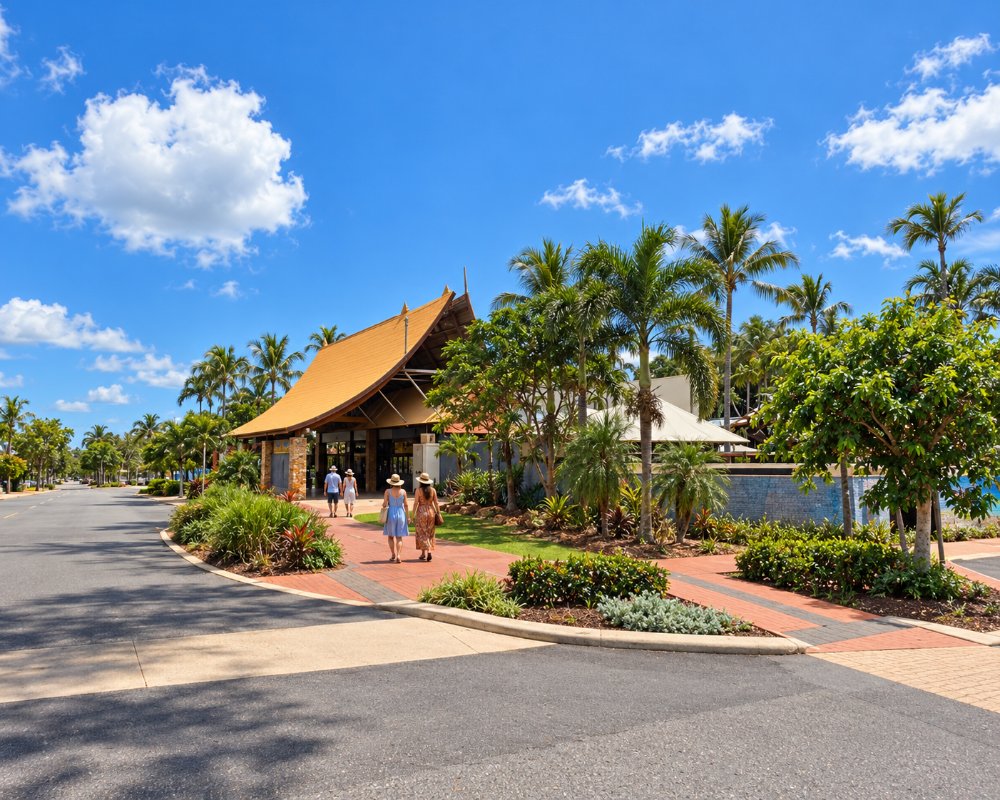
Broome is the largest town in the Kimberley and the gateway to the whole region. It sits on a peninsula between the Indian Ocean and Roebuck Bay, where red pindan earth meets turquoise water and white sand. Once the pearling capital of the world, it still has a lively mix of cultures, from the Yawuru people, whose country this is, to the descendants of Japanese, Chinese, Malay and Filipino pearl divers and crews.
The town centre is compact and easy to explore. Chinatown, with its old pearling-era shopfronts, is the heart of town, and nearby Roebuck Bay is where the famous Staircase to the Moon appears on clear nights around the full moon. Cable Beach, a few kilometres west, has its own guide on this site. In the dry season, from May to October, Broome fills with travellers, many of them caravanners heading to or from the Gibb River Road and the Dampier Peninsula.
Known For
- Cable Beach sunsets and camel rides
- South Sea pearls and a rich multicultural pearling history
- The Staircase to the Moon over Roebuck Bay
Things To Do in Broome
Chinatown
Chinatown, around Carnarvon Street, Dampier Terrace and Short Street, was the old pearling quarter, with Asian stores, boarding houses and gambling dens. Today its corrugated iron and timber buildings house pearl showrooms, galleries, cafes and shops. The mangrove boardwalk and Streeter’s Jetty are a short walk away.
Staircase to the Moon
On two or three nights each month from about March to October, the full moon rises over the exposed mudflats of Roebuck Bay at low tide, and its reflection forms what looks like a staircase to the moon. Popular viewing spots include Town Beach, the Mangrove Hotel and the Roebuck Bay lookout. On some Staircase nights, markets with food stalls run at Town Beach. The Broome Visitor Centre publishes the dates each year.
Sun Pictures
Sun Pictures opened in 1916 and is recognised as the world’s oldest operating picture garden. You watch films in deckchairs under the stars, and planes coming in to land at Broome airport still pass low overhead. In the old days, high tides sometimes flooded the front rows.
Gantheaume Point
At Gantheaume Point, known to the Yawuru as Minyirr, red cliffs drop to the ocean and rock pools. Dinosaur footprints about 130 million years old are on the reef about 30 m out, but are only visible at very low tides; plaster casts sit at the top of the cliff. The rocks are slippery, so take care.
Japanese Cemetery
The Japanese Cemetery on Port Drive is the largest in Australia, with the graves of hundreds of Japanese pearl divers and crew who died from the bends, cyclones and accidents. The Chinese and Muslim cemeteries are next to it, a moving reminder of the human cost of pearling.
Broome Historical Museum
The museum, in the old Customs House on Saville Street, tells the story of pearling, the Second World War raids and the cyclones that shaped the town. Opening hours change with the seasons.
Broome Bird Observatory
About 25 km from town on the shores of Roebuck Bay, the Broome Bird Observatory is one of the best places in the world to see migratory shorebirds. It runs courses, guided walks and has simple accommodation and a bush campground. The access road is unsealed.
Markets
The Courthouse Markets are held on the lawns of the old courthouse on Hamersley Street every Saturday morning, with arts, crafts, food and local produce. In the dry season, night markets run at Town Beach on Thursday evenings most weeks.
Pearl farms
Willie Creek Pearl Farm, about 38 km north of town, runs tours showing how South Sea pearls are farmed, with helicopter flights and a cafe. The road is partly unsealed and tidal, so check conditions or take the coach transfer.
Where To Stay
Broome has plenty of caravan parks, but in June, July and August they fill up fast and many have minimum stays, so book well ahead. In town, choices include Broome Caravan Park on Wattle Drive, Broome Vacation Village on Port Drive and Discovery Parks Broome on Walcott Street, formerly the Roebuck Bay Caravan Park, near Town Beach. Near Cable Beach are Cable Beach Caravan Park, RAC Cable Beach Holiday Park and Tarangau Caravan Park, which is popular with motorhomes and fifth-wheelers. Pet policies vary, so check before booking.
Further out, Broome’s Gateway Caravan Park, about 28 km from town, and Roebuck Roadhouse Caravan Park, about 33 km out, take big rigs and pets. In peak season, overflow parks open for emergencies only. There is no free camping in or around Broome, and fines apply; the nearest free option is the 24-hour rest areas on the Great Northern Highway. Every in-town caravan park has a dump point, and there is a public dump point at the Broome Visitor Centre.
For those not camping, Broome has a wide range of resorts, hotels and apartments, from the Mangrove Hotel overlooking Roebuck Bay to the big resorts at Cable Beach.
Eat & Drink
Broome has the best range of places to eat and drink in the Kimberley, and its food still reflects the pearling days, when Japanese, Chinese, Malay and Filipino crews settled alongside the Yawuru people. Look out for pearl meat, the town’s signature delicacy, and local mangoes in the build-up from about October to December. Many venues shorten their hours or close for a few months in the wet season, from about November to March, so check before you go.
Pubs, brewery and bars
Matso’s Broome Brewery on Hamersley Street, in the 1900 Union Bank building opposite Roebuck Bay, is famous for its ginger and mango beers and tasting paddles, with lunch and dinner every day. The Roebuck Bay Hotel, known as the Roey, is the pearling-era pub of 1890 on Carnarvon Street, with the Pearlers restaurant, the Oasis Bar, one of the town’s main live-music rooms, and Skylla, Broome’s only nightclub. The Bay Club at the Mangrove Hotel serves breakfast, lunch and dinner on lawns over Roebuck Bay, with live music on Fridays, and is a favourite spot on Staircase to the Moon nights. For something smaller, The Broome Closet is an intimate cocktail bar, and Moontide Distillery at Bilingurr pours gin made with native botanicals and monsoon rainwater.
Restaurants
Mr Saigon, near Streeter’s Jetty in Chinatown, serves fresh Vietnamese dishes beside the mangroves, DMK – The Kitchen in Paspaley Plaza cooks Balinese fusion, and Ginreab Thai bases its menu on central and northern Thai recipes. Cairo Cafe on Frederick Street is a busy Lebanese and Egyptian restaurant and takeaway, open every day. In the dry season, Papa Fuego on Louis Street grills South American meats in a tropical garden, and the Broome Fishing Club on Kabbarli Road does fish and chips with views over Roebuck Bay from Friday to Sunday.
Cafés
In Chinatown, Green Mango Cafe on Carnarvon Street is known for its daily curry special and gelato, Haven Broome on Short Street opens early, and the community-run Dragonfly Cafe serves coffee and healthy breakfasts and lunches. Bubble Cat in Paspaley Plaza does bubble tea and waffles, and Land of Pharaohs makes kebabs (closed Sundays and Mondays).
Markets and supplies
The Courthouse Markets on Hamersley Street run every Saturday morning, with extra Sunday markets in the peak season, and the Town Beach Night Markets bring food stalls on Thursday evenings in the dry season and on Staircase to the Moon nights. Coles is in Paspaley Plaza in Chinatown and Woolworths is at Broome Boulevard on Frederick Street, the places to stock up before the Dampier Peninsula or the Gibb. On the highway, the Roebuck Roadhouse has the Croc & Bull Bar, with meals from early till late. Cable Beach, with its sunset bars, a brewery and the Wharf Restaurant, has its own guide on this site.
Day Trips from Broome
Cable Beach
Cable Beach, about 6 km west of the town centre, is 22 km of white sand with famous sunset camel rides and resorts behind the dunes.
Dampier Peninsula
The sealed Cape Leveque Road leads north to the Dampier Peninsula, with the Beagle Bay church, Cygnet Bay Pearl Farm and Aboriginal community tours. It is a big day trip, and better as an overnight stay.
Horizontal Falls
Seaplane tours fly from Broome over the Buccaneer Archipelago to the Horizontal Falls in Talbot Bay, about an hour and a quarter away. Further afield, liveaboard boats leave Broome between September and November for the remote coral atolls of the Rowley Shoals.
Barn Hill and Port Smith
South of Broome on the Great Northern Highway, Barn Hill station stay and Port Smith Lagoon make relaxing beachside stops for caravanners.
History
Broome is Yawuru country, and the Yawuru people’s native title over the town and surrounds was recognised in 2006. The Bardi people of the Dampier Peninsula collected pearl shell long before Europeans arrived. William Dampier sailed this coast in 1699, and the bay is named after his ship, the Roebuck.
The large Pinctada maxima pearl shell was first found by Europeans at Nickol Bay in the Pilbara in 1861, and pearlers moved north to the rich shell beds of Roebuck Bay in the 1880s. The townsite was gazetted on 21 November 1883 and named after the Governor, Sir Frederick Broome. In 1889 a telegraph cable linked Broome to Java, giving Cable Beach its name. By the early 1900s Broome was the world’s largest pearling centre, with hundreds of luggers crewed mostly by Japanese, Malay, Koepanger and Filipino divers, and Aboriginal divers in the early years. Cyclones in 1908, 1910 and 1912 wrecked many boats.
On 3 March 1942, Japanese fighters attacked the flying boats crowded in Roebuck Bay, many carrying Dutch evacuees from Java, killing many people and destroying more than a dozen aircraft. Some wrecks can still be seen at very low tides. After the war, plastic buttons ended the market for mother-of-pearl, but cultured pearls revived the industry, and Broome’s South Sea pearls are now prized around the world.
Getting to Broome
Broome is about 2,240 km north of Perth by the inland Great Northern Highway, and about 2,400 km by the coast. It is about 600 km from Port Hedland, 220 km from Derby and about 1,040 km from Kununurra. Between Sandfire Roadhouse and Roebuck Roadhouse there is a fuel gap of about 287 km, so fill up before you set off. Broome itself is 34 km off the highway at Roebuck Roadhouse.
Broome International Airport is right in town, with flights from Perth, Darwin and Kununurra, and seasonal direct flights from the east coast. Coaches run from Perth and Darwin.
The dry season, from May to October, is the main season, with warm sunny days and no rain. The Shinju Matsuri festival of the pearl is held in late August and early September. The wet season, from November to April, brings heat, humidity, storms and the chance of cyclones, but also green country and lower prices.
Experiences
- Historic/Heritage
- Rural/Country
Popular Activities
- Driving
- Sightseeing
About Broome Town
- Locality: Urban locality
- Broome Town Postcode: 6725
- State: Western Australia
- Region: Broome & the North West
- Latitude: -17.9614
- Longitude: 122.2359
- Elevation: 9m
- Timezone: Australia/Perth
