
Little Desert National Park, VIC
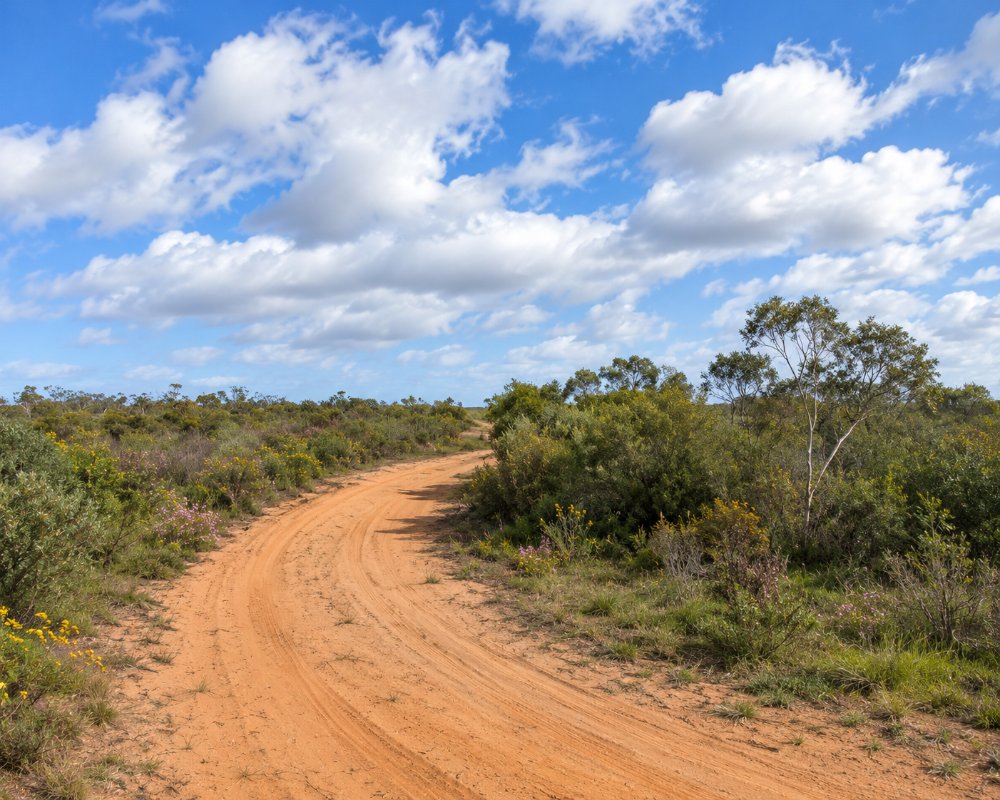
Little Desert National Park stretches for more than 130,000 hectares across western Victoria, from the Wimmera River at Dimboola west to the South Australian border. Despite its name it is not a true desert, but a mosaic of sandy heath, mallee, stringybark woodland and wetlands, famous for its spring wildflowers and as a stronghold of the malleefowl.
In January 2025 a lightning fire burned about 70 per cent of the park. The areas near Dimboola, the central block and the western block have reopened, but the eastern block between the Nhill Harrow Road and the Wimmera River remains closed, so check Parks Victoria before you visit.
Known For
- Heath, mallee and spring wildflowers
- Malleefowl and more than 200 bird species
- Riverside camping at Horseshoe Bend near Dimboola
Things To Do in the Park
Pomonderoo Hill and the Wimmera River
Just south of Dimboola, the 1 km Pomonderoo Hill Nature Walk leads to a lookout over the park and the Wimmera River. The river frontage near Horseshoe Bend and Ackle Bend is lovely for walking, fishing and canoeing among the red gums.
Kiata and the Malleefowl
The Kiata Sanctuary Picnic Ground, south of Kiata, was the heart of the original sanctuary set up to protect malleefowl, which build huge nesting mounds of sand and leaves. The Keith Hateley Nature Walk starts here.
Birds and Wildlife
The park is an Important Bird Area, with more than 200 species, including malleefowl and diamond firetails, and echidnas, kangaroos and many reptiles live in the heath. Spring brings orchids and wildflowers.
Four-Wheel Driving
The central block, which reopened in September 2026, has Broughtons Waterhole, Stans Camp and Red Gum Camp, and the western block is open for four-wheel-drive touring and dispersed camping. Tracks are sandy, some signage has not been replaced since the fire, and four-wheel drive is needed on park tracks. The Little Desert Discovery Walk remains closed.
Billyho Bushwalk
About 10 minutes’ drive south of Kaniva, the 2.6 km Billyho loop winds through yellow gum, twisted brown stringybark, banksia and heath on private farmland at the edge of the park, and gives a taste of the Little Desert without a four-wheel drive. It takes 40 minutes to an hour and a half, and September and October bring wildflowers and orchids; listen for southern scrub-robins in the leaf litter. Dogs on a lead are welcome, and visitors are asked to take all rubbish home.
Central Block Landmarks
East of the Kaniva-Edenhope road, the central block holds Broughtons Waterhole and its bush camp, with the low rises of Mount Turner, the Sister Hills and the Crater close by. Bill’s Gully Hall and Reserve, with a small waterhole and toilets, is on the way back towards the highway, and Yanipy Nature Reserve off the Kaniva-Edenhope road is known for its orchids. Off the sealed roads the tracks are deep sand and can be boggy, so travel with a second vehicle and good maps.
Where To Stay
Horseshoe Bend campground, about 7 km south of Dimboola on an unsealed road suitable for caravans, has 30 unpowered sites, flush toilets and fireplaces, but no drinking water, and must be booked. Ackle Bend, further along the river, has 10 unpowered sites suitable for caravans, reached by two-wheel drive, with non-flush toilets, and also must be booked. The Kiata campground is closed.
For powered sites and full facilities, Dimboola Riverside Holiday Park and Nhill Holiday Park are the nearest. Carry water and supplies, as there are no shops in the park.
In the central block, Broughtons Waterhole, Stans Camp and Red Gum Camp are bush camps reached from the McDonald Highway track. Broughtons has no toilets, and some signs lost in the fire have not been replaced, so carry a map book or offline maps. The western block, which escaped the January 2025 fire, allows dispersed bush camping along its four-wheel-drive tracks. There is no drinking water anywhere in the park; rainwater tanks at some camps hold a little water that is not safe to drink. Campfires are banned on Total Fire Ban days, though gas cookers can be used.
Near the western end, Kaniva Poolside Caravan Park has 15 sites, four of them suited to big rigs, two cabins and an RV dump point, and both Kaniva pubs allow free camping for self-contained vehicles behind the hotel. Lake Charlegrark Caravan Park near Minimay, about 12 km from the park, has lakeside powered sites, cabins and a dump point. The Little Desert Nature Lodge, on the sealed road south of Nhill, has not been taking bookings in 2026, so check before you plan a stay.
Eat & Drink
There is nowhere to eat in the park. In Dimboola, the Victoria Hotel serves pub meals and The Dimboola Store is known for its coffee, and in Nhill, the Farmers Arms Hotel and Nhill Dineinn serve meals.
Dimboola, about 7 km from Horseshoe Bend, has the most choice on the eastern side: the Wimmera Bakery and the Dimboola Cafe on Lloyd Street join the pub and store already mentioned. On the western side, Kaniva has the Windmill Cafe, the Kaniva Bakery, the Commercial Hotel and the Kaniva Community Roadhouse, known for its chips, and Nhill adds Amber’s Sweet Bliss for coffee and cake. Stock up at the supermarkets in Dimboola, Nhill or Kaniva before heading in.
History
This is the Country of the Wotjobaluk Peoples. The Kiata Lowan Sanctuary was created in 1955 to protect the malleefowl and became a national park in the late 1960s. A government plan to clear the Little Desert for farming in 1969 caused a statewide outcry, cost the minister his seat and led to the creation of the Land Conservation Council. The central and western blocks were added in the 1980s, making the park one of Victoria’s largest.
Getting to the Park
The park is about 375 km west of Melbourne. Dimboola, on the Western Highway, is the gateway to the eastern side, and Nhill and Kaniva lead to the central and western blocks. The McDonald Highway through the central block is a four-wheel-drive track.
Experiences
- Eco Tourism
- Nature based
- Remote
- Self-Drive
Popular Activities
- Bird Watching
- Bush Walking
- Caravan and Camping
- National Park
- Wildlife
