
Lake Barrington, TAS
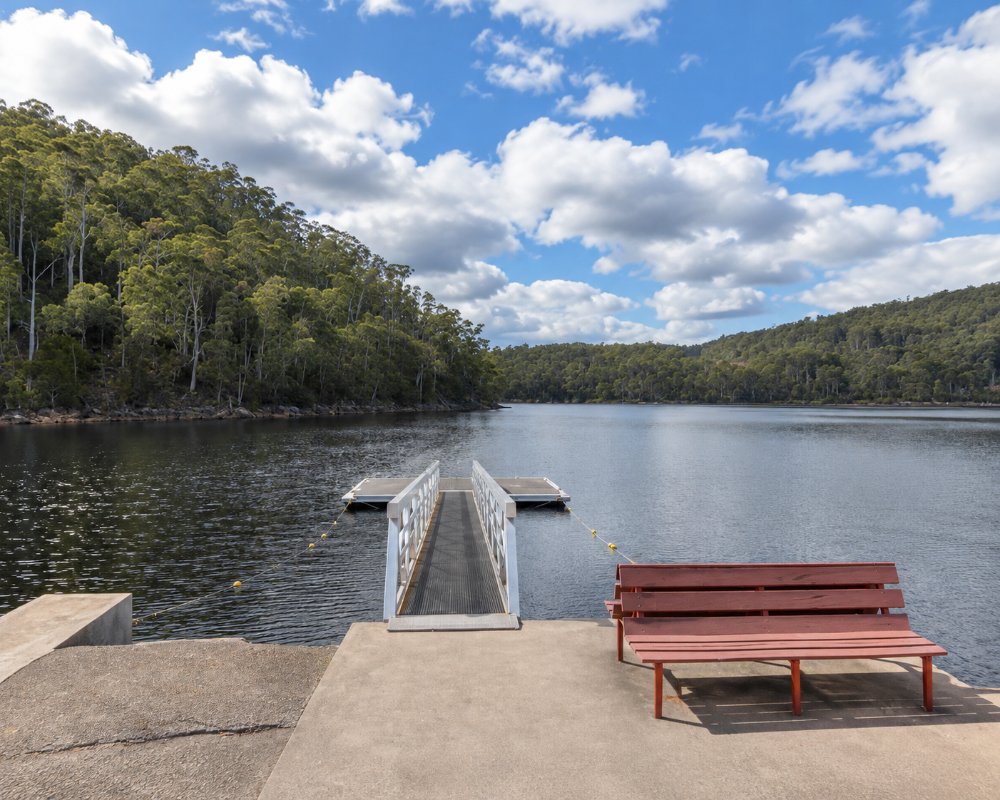
Lake Barrington is a narrow lake 20 km long, held in a deep forested valley between Sheffield and Wilmot. It was formed in 1969 when the Forth River was dammed for hydro-electricity.
Its sheltered, straight water made it a natural rowing course, and the world championships were held here in 1990. For most visitors it is a place for a picnic, a paddle or a day on the water.
Known For
- An international rowing course
- Picnic lawns beside a forested lake
- Devils Gate Dam
Things To Do in Lake Barrington
The Rowing Course
On the eastern shore, reached from Sheffield by way of West Kentish and Staverton Road, a recreation area runs along the finish of the rowing course. It has lawns down to the water, sheltered picnic tables, barbecues and toilets. A kiosk opens on summer weekends and on regatta days.
On the Water
The lake is used for water skiing, canoeing, kayaking and fishing, with separate areas for powered and unpowered craft.
Devils Gate Dam
At the northern end of the lake, a thin concrete arch 84 metres high blocks a narrow gorge. There is a lookout and picnic area at the dam, reached by road from Barrington.
The Wilmot Side
Lake Barrington Park, on the western shore below Wilmot, has a picnic ground and a short forest walk.
Where To Stay
There is no accommodation at the lake.
Camping at Kentish Park, on the eastern shore, has been closed since 2022, though it is still open for day visits. Travellers with a caravan can stay at the O’Neills Creek campground at Gowrie Park, at the Sheffield Recreation Ground, which takes self-contained vehicles for a small fee, or at the holiday village at Gowrie Park. Sheffield and Wilmot have fuel and shops.
Eat & Drink
The kiosk at the rowing course opens only on summer weekends and event days. Bring a picnic, or eat in Sheffield.
History
The Devils Gate Dam and its power station were finished in 1969 as part of the Mersey-Forth hydro scheme. The lake was soon recognised as one of the best rowing waters in the country, and it hosted the World Rowing Championships in 1990. It has been the home of Tasmanian rowing regattas ever since.
Getting to Lake Barrington
From Sheffield, about 25 minutes south of Devonport, follow the signs to Lake Barrington by way of West Kentish. The roads are sealed but drop steeply to the lake; take care with a caravan. Coming from Devonport, the road to Sheffield passes through Spreyton, with its orchards and cider.
Experiences
- Nature based
- Relaxation
Popular Activities
- Fishing
- Kayaking
- Swimming
About Lake Barrington
- Locality: Rural locality
- Lake Barrington Postcode: 7306
- State: Tasmania
- Region: North West Coast
- Latitude: -41.3860
- Longitude: 146.2180
- Timezone: Australia/Hobart
