
Lake Leake, TAS
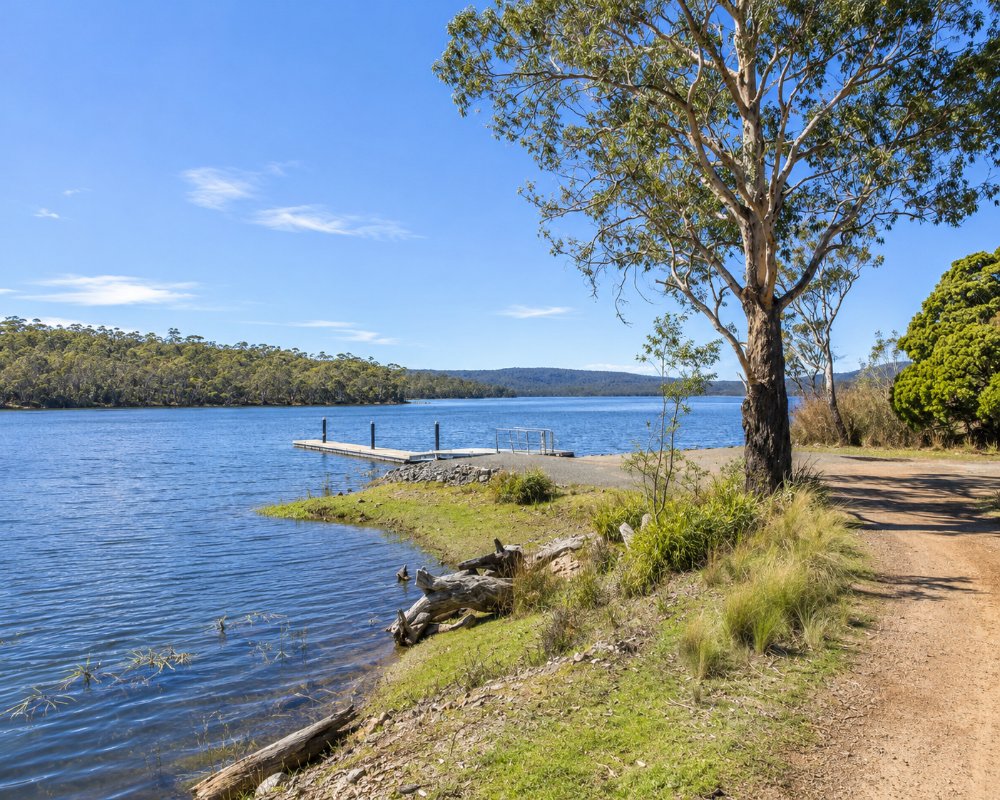
Lake Leake is a small highland lake set among snow gums on the road between Campbell Town and Swansea, about 34 km east of Campbell Town. It was dammed in 1884 to supply water to the Midlands.
A cluster of fishing shacks and an old inn stand near the shore. For travellers crossing from the Midlands to the east coast it makes a quiet stop for a meal, a night by the water or a few casts for trout.
Known For
- A highland trout lake among snow gums
- An old country inn
- Meetus Falls and Lost Falls
Things To Do in Lake Leake
Fishing
The lake is stocked with brown and rainbow trout and is fished from boats and from the shore, with artificial lures and flies only. The season runs from early August to early May, and an Inland Fisheries Service angling licence is required. There is a boat ramp.
Meetus Falls
About ten kilometres north of the Lake Leake Road, by a steep unsealed road, a 15-minute return walk leads to a lookout over the falls on the Cygnet River. The road is not suitable for caravans.
Lost Falls
South of the main road, a short walk from a forest car park leads to another lookout. The falls often run dry in summer.
Boat launches and lake access
Boats must launch from the ramp near the campground or from the second launch at Kalangadoo Bay, and vehicles may only use the tracks to the ramp, the campground, the car park near the dam wall and Kalangadoo Bay. The Inland Fisheries Service tops up the rainbow trout with adult fish; 400 rainbows were released in June 2026. Only lures and flies may be used, and size and bag limits apply, so read the current rules before you go.
Where To Stay
There are two places to stay at the lake.
The Lake Leake Inn, a short walk from the water, has rooms with shared bathrooms and welcomes self-contained caravans and motorhomes on its grounds. The council campground opposite the boat ramp is for self-contained vans only, with a 48-hour limit and limited space; fees apply, and you need to bring drinking water and firewood. There is no fuel, shop or dump point, so fill up at Campbell Town or Swansea.
The Inland Fisheries Service describes one formal campground at the lake, between the boat ramp and the dam wall, with toilets and barbecues. Self-contained travellers also stay on the paddock behind the Lake Leake Inn, which has no facilities, so ask at the bar before you set up. On weekends when the Inn has live entertainment, the paddock can fill with campers, so arrive early.
The lake sits at about 570 metres, so pack warm bedding as well as a full water tank and your own firewood. The nearest council dump point is at the King Street Oval in Campbell Town, about 38 km west, where self-contained vans can also stay free for up to 48 hours at Blackburn Park with a free council permit. Ross Caravan Park, about 50 km away via Campbell Town, has powered sites beside the Macquarie River and self-contained studio rooms for a night with full facilities. Fill up with fuel in Campbell Town or Swansea before you come.
Eat & Drink
The Lake Leake Inn serves counter meals. Phone ahead to check its opening days.
The Lake Leake Inn, about 100 metres from the water, is the only place to eat at the lake, serving old-fashioned counter meals, and it puts on live music on some weekends. There is no shop, so bring your own supplies. In Campbell Town, about 38 km west, the Campbell Town Hotel and its attached JJ’s Bakery serve pub meals, pies and coffee, and Banjo’s Bakery Café on High Street is handy for an early start.
History
The lake was a wetland and meeting place for the Aboriginal people of the North Midlands, and its Aboriginal name is kunawi. Settlers knew it as Kearneys Bogs. The dam was completed in 1884, and the lake was named for Charles Leake, a member of the Legislative Council. The inn was built to serve the anglers who followed.
Getting to Lake Leake
The Lake Leake Road (B34) is sealed throughout and links the Midland Highway at Campbell Town with the Tasman Highway near Swansea. The turn-off to the lake is 34 km from Campbell Town, and the last four kilometres to the boat ramp are unsealed. The descent towards Swansea is steep and winding.
Experiences
- Caravan and Camping
- Nature based
- Relaxation
- Remote
- Self-Drive
Popular Activities
- Bird Watching
- Bush Walking
- Caravan and Camping
- Fishing
- Kayaking
- Swimming
About Lake Leake
- Locality: Rural locality
- Lake Leake Postcode: 7210
- State: Tasmania
- Region: Launceston & North
- Latitude: -42.0128
- Longitude: 147.8008
- Elevation: 579m
- Timezone: Australia/Hobart
