
Gundabooka National Park, NSW
Gundabooka National Park takes in Mount Gunderbooka, a rust-red range that rises 500 metres above the mulga plains about 50 km south of Bourke, and runs north to the Darling River. It is the most rewarding park within easy reach of the Kidman Way, with Aboriginal rock art, walking tracks and two campgrounds that take caravans.
Known For
- Yapa (Mulgowan) Aboriginal rock art
- Walks on Mount Gunderbooka
- Mulga plains and Darling River camps
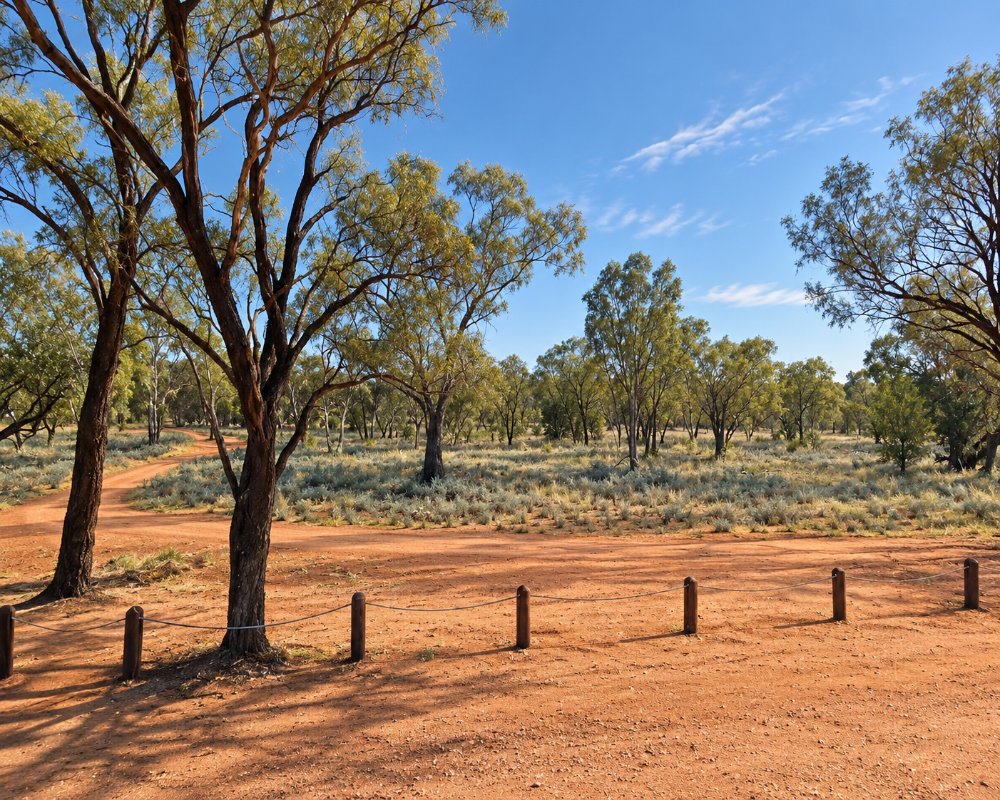
The range is a place of great significance to the Ngemba and Paakandji people, who share in managing the park, and its overhangs hold paintings of dancers, animals and hunting tools. Around it stretch red soil plains, mulga and, after rain, wildflowers. The park is made up of three former sheep stations, and it is quiet: you may well have a walk to yourself. Roads inside are unsealed and are closed after rain.
Things To Do in Gundabooka National Park
Yapa (Mulgowan) Art Site
A walk of about 1.4 km return crosses Mulareenya Creek to rock overhangs painted in ochre and white, viewed from a platform. There is a picnic area at the car park.
Valley of the Eagles
From the Bennetts Gorge picnic area a track leads towards the foot of the mountain, the first kilometre easy going. Fit walkers can continue on a hard climb to the summit for views over the whole district; start early and carry plenty of water.
Little Mountain
A track of about five kilometres return from Dry Tank campground climbs gently to a lookout facing the range, best in late afternoon when the rock glows.
The Darling at Yanda
In the State Conservation Area on the northern side, reached from the Bourke to Louth road, the park fronts the Darling River, with fishing, birdwatching and shady red gums.
Wildflowers and Wildlife
After good rain, the red plains around the range fill with wildflowers, usually from late winter into spring. Kangaroos, euros, emus and goannas are common, wedge-tailed eagles circle over the range, and early morning and late afternoon at Dry Tank and Bennetts Gorge are the best times for birds.
Discovery Tours
National Parks lists Discovery tours in the park in spring, the best way to learn about the country from people who know it; the Ngemba and Paakantyi people share in managing the park. Dates and content change each year, so check with the National Parks office in Bourke or the park page before you go.
Where To Stay
Dry Tank campground, in the mulga near the range, has 20 marked unpowered sites for tents, camper trailers and caravans, with toilets, barbecues and picnic tables but no water. Book online before you arrive.
Caravans and Camping
Yanda campground, on the river, has six sites and also takes caravans, though its black-soil road is the first to close in the wet. Redbank Homestead on the river can be rented. There is no power, water, fuel or dump point in the park, and wood fires are banned over summer. Bourke, with two caravan parks, is the base if you would rather visit for the day.
Hamilton Park Homestead, as well as Redbank, can be booked by families or small groups who want a roof over their heads. Pets are not allowed in the park, and mobile coverage is patchy. Bourke, about 52 km north, is the best base for day trips, with Kidman’s Camp, the Mitchell Caravan Park, several motels and the only dump points nearby, and from the south, Cobar Caravan Park is about 110 km from the turn-off.
Eat & Drink
There is nothing to buy in the park, so bring all your food and drinking water, plus spare water in case rain closes the roads for a few days. Bourke, about 50 km north, is the nearest town for supplies, with supermarkets and fuel, Morrall’s Bakery for pies and bread, Kazzas Cafe for coffee, and the Port of Bourke Hotel and The Northy in North Bourke for a pub meal. Coming from the south, Cobar is the last full-service town, with two IGA supermarkets, Cobar Hot Bake, several cafes, three hotels and fuel. There is no fuel at all on the Kidman Way between Cobar and Bourke, so leave Cobar with a full tank.
History
Charles Sturt noted the range in 1829. Pastoral runs were taken up later in the century, and the stations of Ben Lomond, Belah and Mulgowan were bought for the national park, which was created in 1996. The spelling Gundabooka is used for the park and Gunderbooka for the mountain.
Getting to Gundabooka National Park
From Bourke drive 49 km south on the sealed Kidman Way, then turn west on the unsealed Ben Lomond Road for about 20 km to Dry Tank. From Cobar the turn-off is about 110 km north. The park roads are suitable for ordinary cars and caravans in dry weather only; ring the National Parks office in Bourke or check the park alerts if there has been rain.
Experiences
- Cultural
- Eco Tourism
- Nature based
- Remote
- Self-Drive
Popular Activities
- Bird Watching
- Bush Walking
- Caravan and Camping
- National Park
- Outback
- Wildlife
About Gundabooka National Park
- Locality: Rural locality
- Gundabooka National Park Postcode: 2840
- State: New South Wales
- Region: Outback NSW
- Latitude: -30.5200
- Longitude: 145.7000
- Timezone: Australia/Sydney
