
Scarborough, Clifton and the Sea Cliff Bridge, NSW
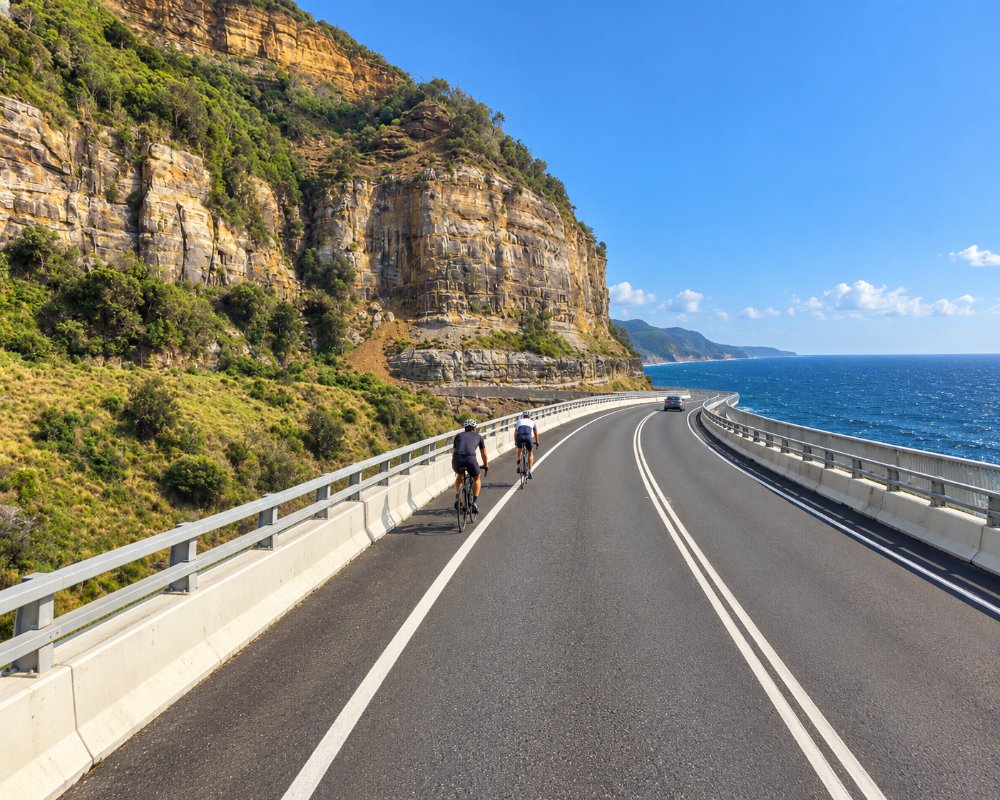
Scarborough and Clifton are two of the smallest villages on the Illawarra coast, strung along Lawrence Hargrave Drive where the escarpment drops almost straight into the sea. There is barely room here for a road, a railway and a single row of houses. Between Clifton and Coalcliff, the road leaves the cliff altogether and swings out over the water on the Sea Cliff Bridge, the most photographed stretch of road in New South Wales.
Known For
- The Sea Cliff Bridge
- Clifftop pubs with ocean views
- Old mining villages under the escarpment
Things To Do
Walk the Sea Cliff Bridge
The bridge is 665 metres long and curves out from the cliffs about 40 metres above the rock platforms. It opened in December 2005, two years after rockfalls had closed the old road cut into the cliff. A footpath runs along the seaward side, so the best way to see it is on foot: park at either end and walk across and back, about half an hour. Whales pass close below from June to November.
Scarborough
Scarborough has a small beach reached by steps from the road, good for surfing and rock fishing, and an ocean pool just south at Wombarra. Its hotel, built in the 1880s, sits on the very edge of the cliff, with a large garden looking straight out to sea.
Clifton
Clifton has a School of Arts of 1911 that hosts exhibitions and a restored hotel, the Imperial, built in 1884 and reopened in 2021, with a restaurant facing the ocean. A small park at the northern end of the village has the classic view back along the bridge.
Grand Pacific Drive
The villages are part of the signposted coast drive from Royal National Park to Wollongong. Stanwell Park and Bald Hill are ten minutes north; Austinmer and Thirroul are ten minutes south.
Scarborough-Wombarra Cemetery
On the headland at the southern edge of Scarborough, this small cemetery looks straight out to sea from the cliff top, with old headstones from the mining era. Visitors are welcome to walk through quietly.
The Bowlo
The Scarborough Wombarra Bowling Club, known as the Bowlo, opened in 1956 and has ocean views, free barefoot bowls from Monday to Thursday, live music and the Black Duck Bistro serving Thai and classic Australian food.
Where To Stay
There are a few bed and breakfasts and holiday houses, most with remarkable views.
Wollongong, 25 minutes south, has hotels.
For caravans, Coledale Beach Camping Reserve, a beachfront campground run by the Coledale surf club with powered, unpowered and beachfront sites (no pets or campfires, bookings by phone), is about 4 km south, and Wollongong City Council’s tourist parks at Bulli Beach, Corrimal and Windang have van and tent sites and cabins. With a big van, take the M1 over Mount Ousley and Memorial Drive north to Bulli rather than the steep descents from Bald Hill or Bulli Pass.
Eat & Drink
The two hotels are the main places to eat, and both are busy on fine weekends. Coalcliff has no cafe; the nearest are at Stanwell Park and Coledale, and the Wombarra Bowlo has a bistro.
The Scarborough Hotel’s kitchen opens from 11am on weekdays and from 9am on Saturday and Sunday, and its garden, “the Yard”, is walk-in only on weekends. The Imperial serves lunch every day, breakfast and dinner from Friday to Sunday, and makes up picnic hampers. There are no shops in either village, so buy groceries and fuel in Thirroul or Helensburgh.
The Scarborough Hotel, licensed since 1886, is the oldest licensed premises in Wollongong, and the village took its name from the pub in 1903. The Imperial at Clifton, a restored miners’ pub of 1884, sits on the cliff above the Sea Cliff Bridge with a restaurant and a cafe. Up on Bald Hill, the Flying High Cafe kiosk has fish and chips with a view down the coast, and the orchard at Darkes Forest, with its cider and apple pie, is about 15 minutes inland.
History
Coal was discovered in these cliffs in 1797 by survivors of a shipwreck, and mining began at Coalcliff in 1878, with coal loaded onto ships from a jetty below the cliff. Clifton and Scarborough grew up to house the miners. The coast road was built in the 1860s and has been fighting the unstable escarpment ever since.
Clifton grew from 1877, when the Coal Cliff Colliery was opened, and the Imperial Hotel followed in 1884. The Scarborough Hotel opened in 1887, and in 1903 South Clifton was renamed Scarborough, after its hotel, to avoid confusion between the stations. Striking miners built the School of Arts in 1910-11.
Getting to Scarborough and Clifton
Leave the M1 Princes Motorway at Helensburgh and follow Lawrence Hargrave Drive south, about an hour and a quarter from Sydney. Scarborough station, on the South Coast Line, is a short walk from both villages.
Experiences
- Historic/Heritage
- Nature based
- Relaxation
- Self-Drive
Popular Activities
- Beach
- Driving
- Fishing - Beach
- Food and Wine
- Sightseeing
- Surfing
- Swimming
About Scarborough, Clifton and the Sea Cliff Bridge
- Locality: Suburb
- Scarborough, Clifton and the Sea Cliff Bridge Postcode: 2515
- State: New South Wales
- Region: South Coast
- Latitude: -34.25941
- Longitude: 150.96888
- Elevation: 84m
- Timezone: Australia/Sydney
